
Holger Hoffmann
Norilsk: Stopover in Russia’s Most Polluted City
Holger Hoffmann © All rights reserved.
We have just landed in Norilsk. It is 8 a.m., and the first rays of sunshine are already hitting the snow-covered runway. It is early April, and the day promises to be frosty.
Norilsk can only be reached by plane or, in winter, via the frozen rivers and, in the short summer, by boat on the Yenisei River. There is no road or railway line to Norilsk. As Norilsk is located 300 kilometers north of the Arctic Circle and thus in the Arctic border area, tourists must present a permit issued by the local internal security service (FSB, formerly KGB) upon landing. Our first attempt to get to Norilsk failed a year ago because, despite applying early, we only received the permit after our visas had expired. But now everything is going smoothly.
Holger Hoffmann © All rights reserved.
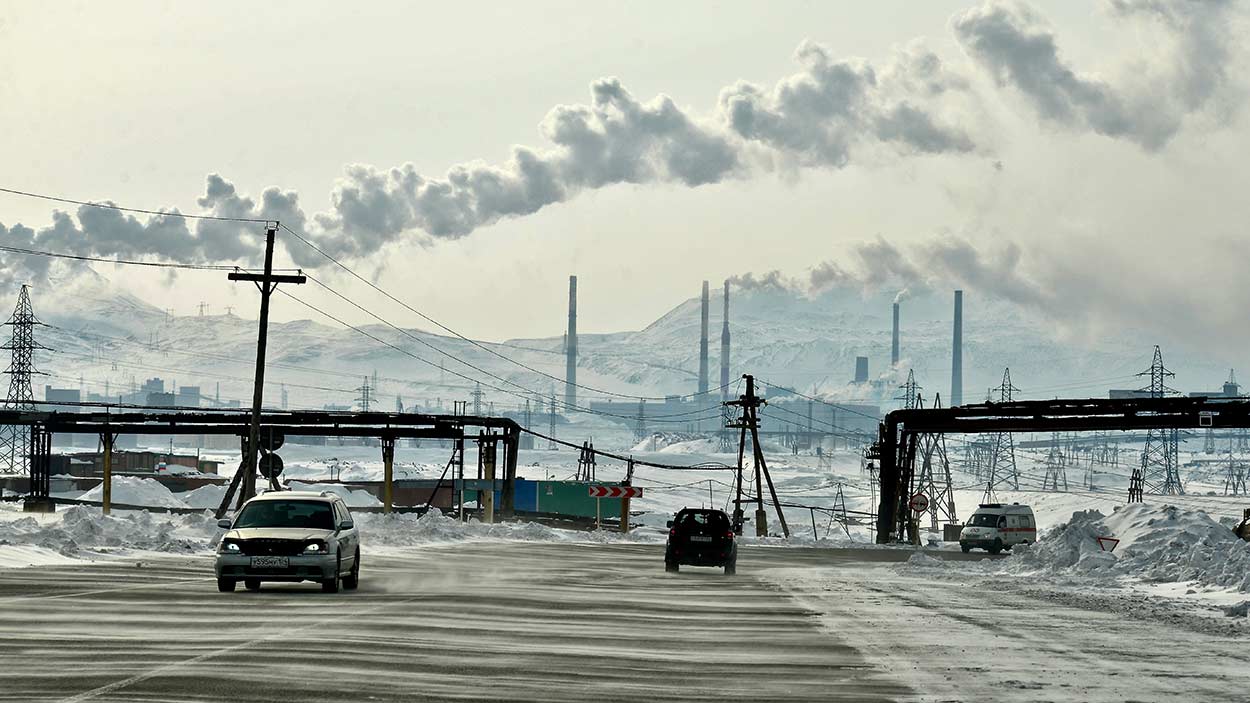
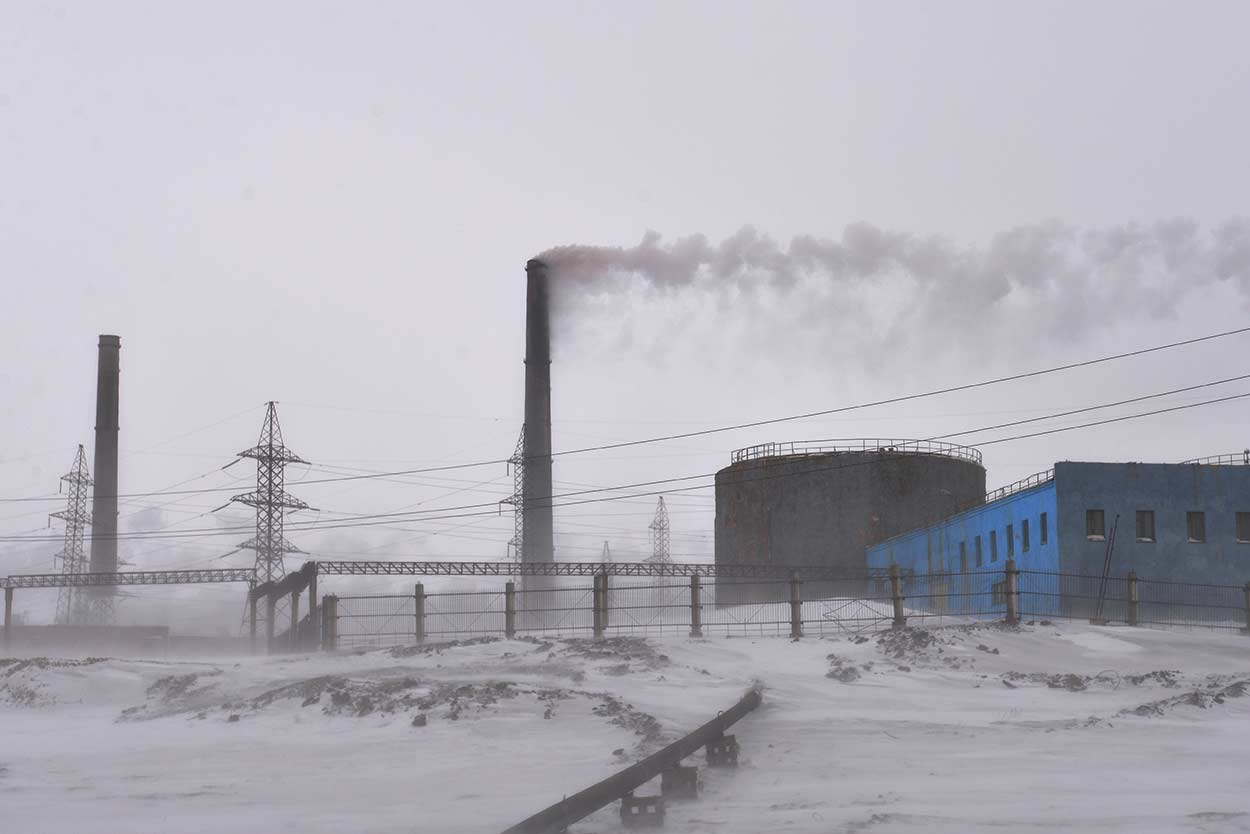
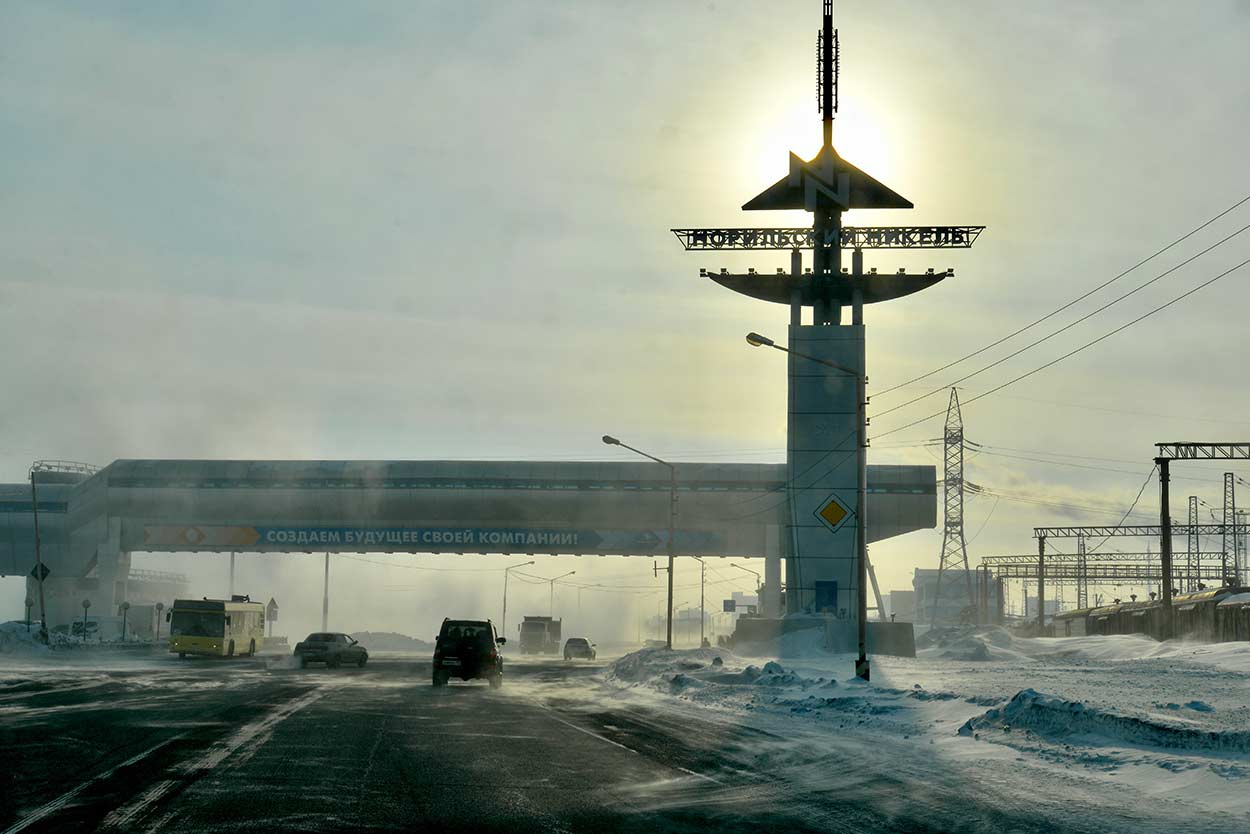
The Taimyr Peninsula to the northeast is considered the “graveyard of cyclones.” All Atlantic hurricanes end their life cycle here. That’s why there is always a biting wind that can reach speeds of up to 40 meters per second. In front of our car, it whips the snow across the road, and excavators are constantly at work against the meter-high snow drifts, which are held back in places by specially designed board walls.
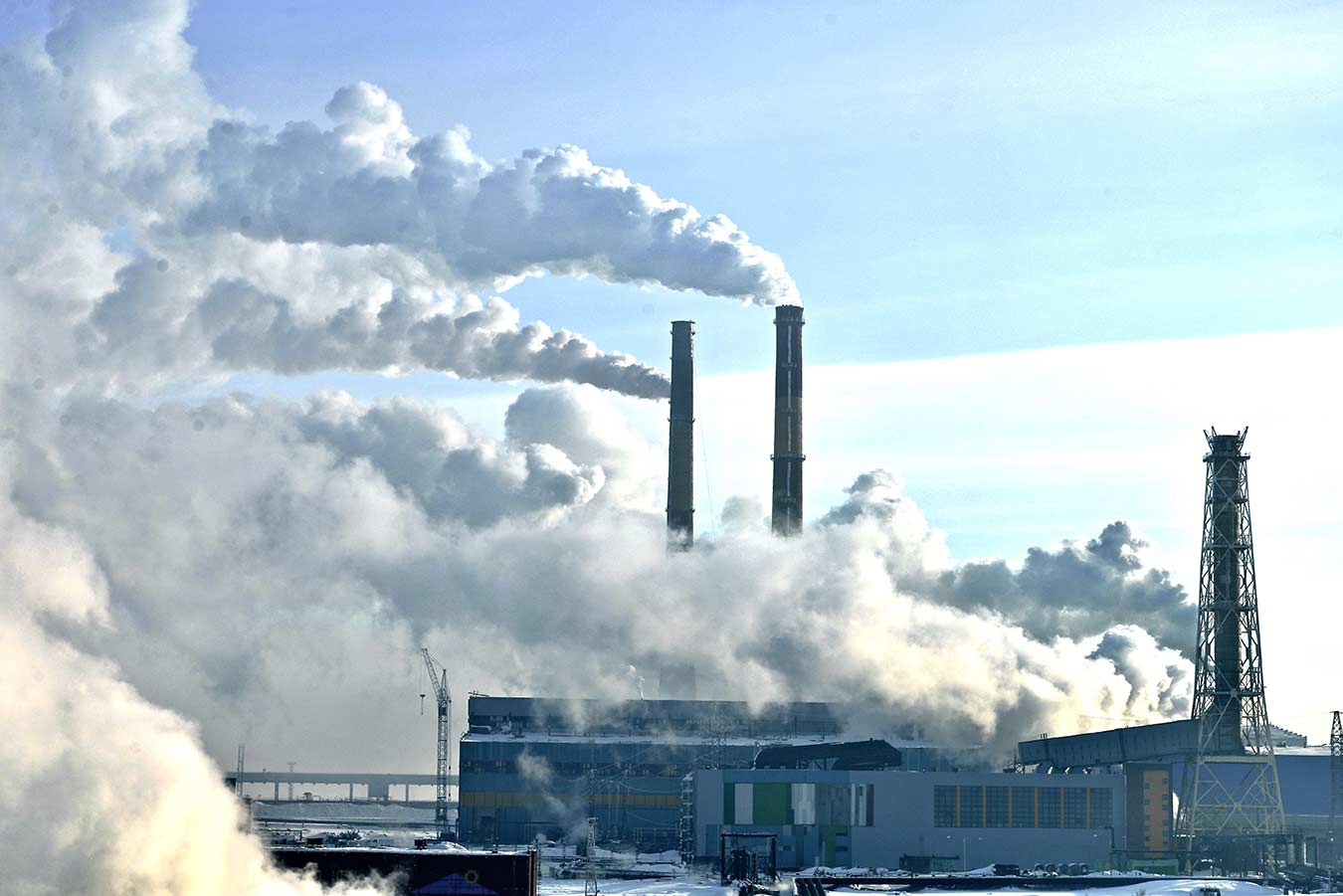
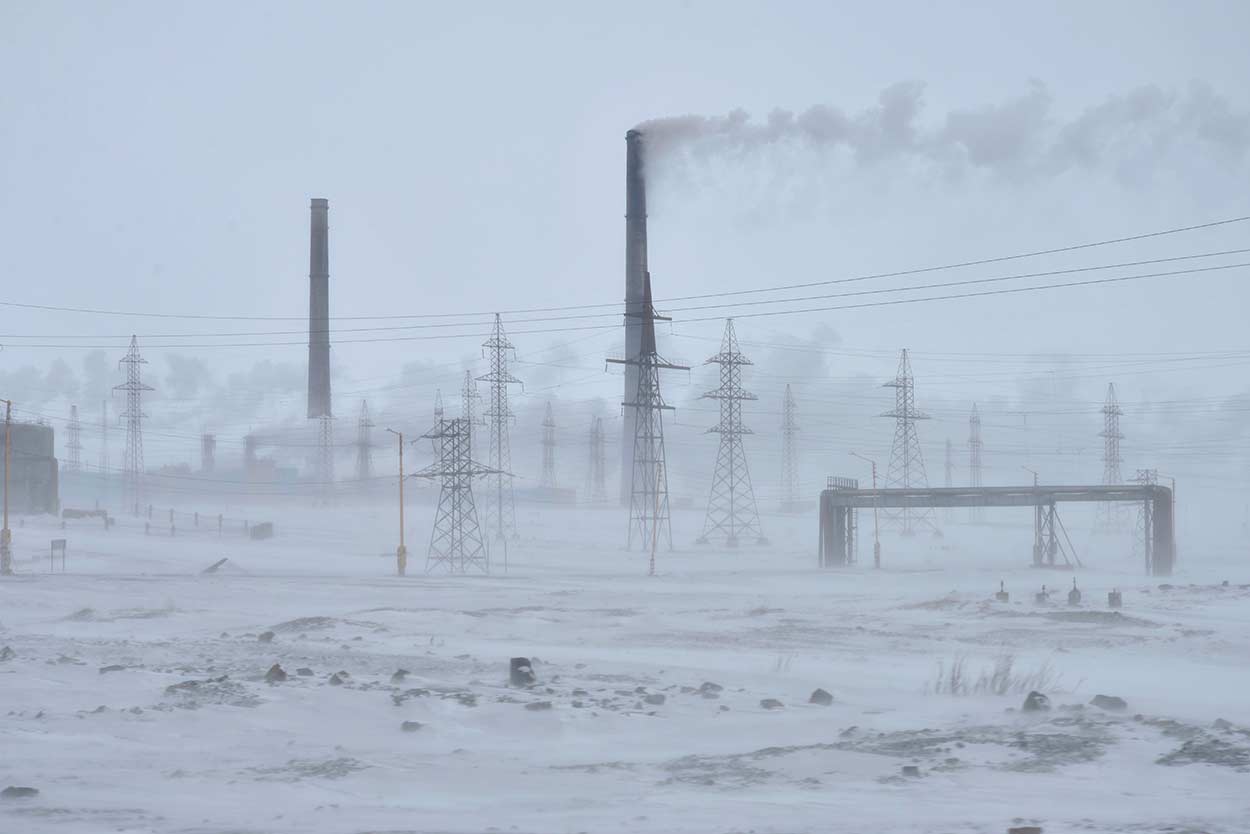
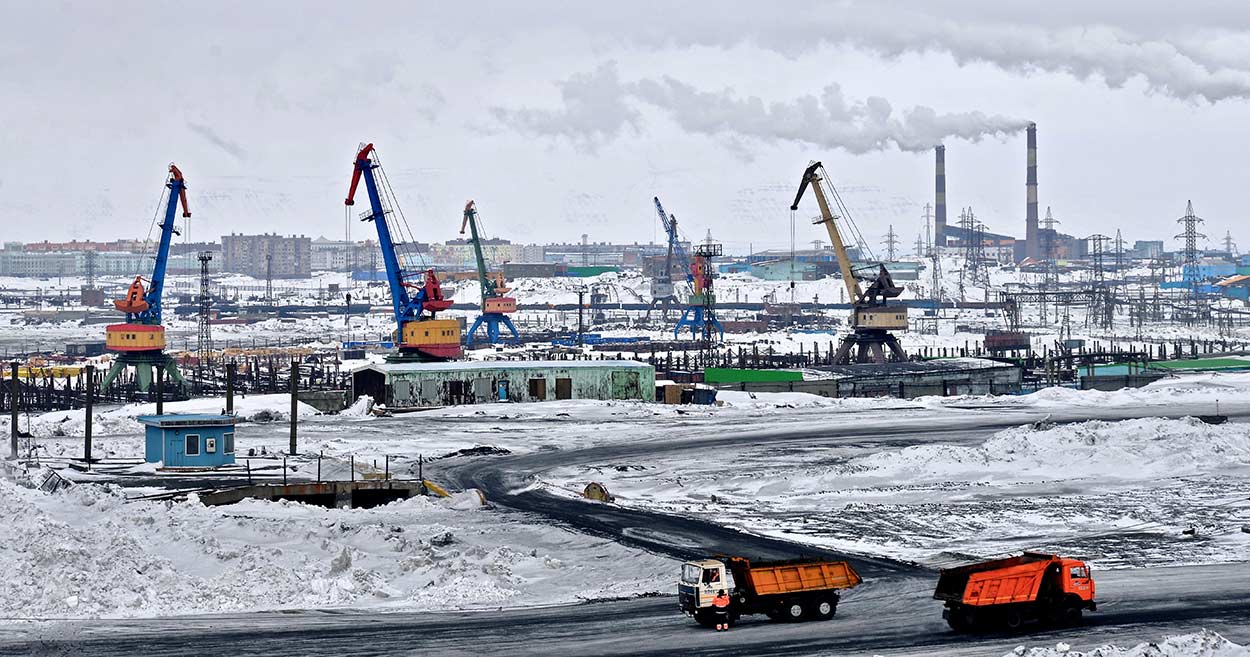
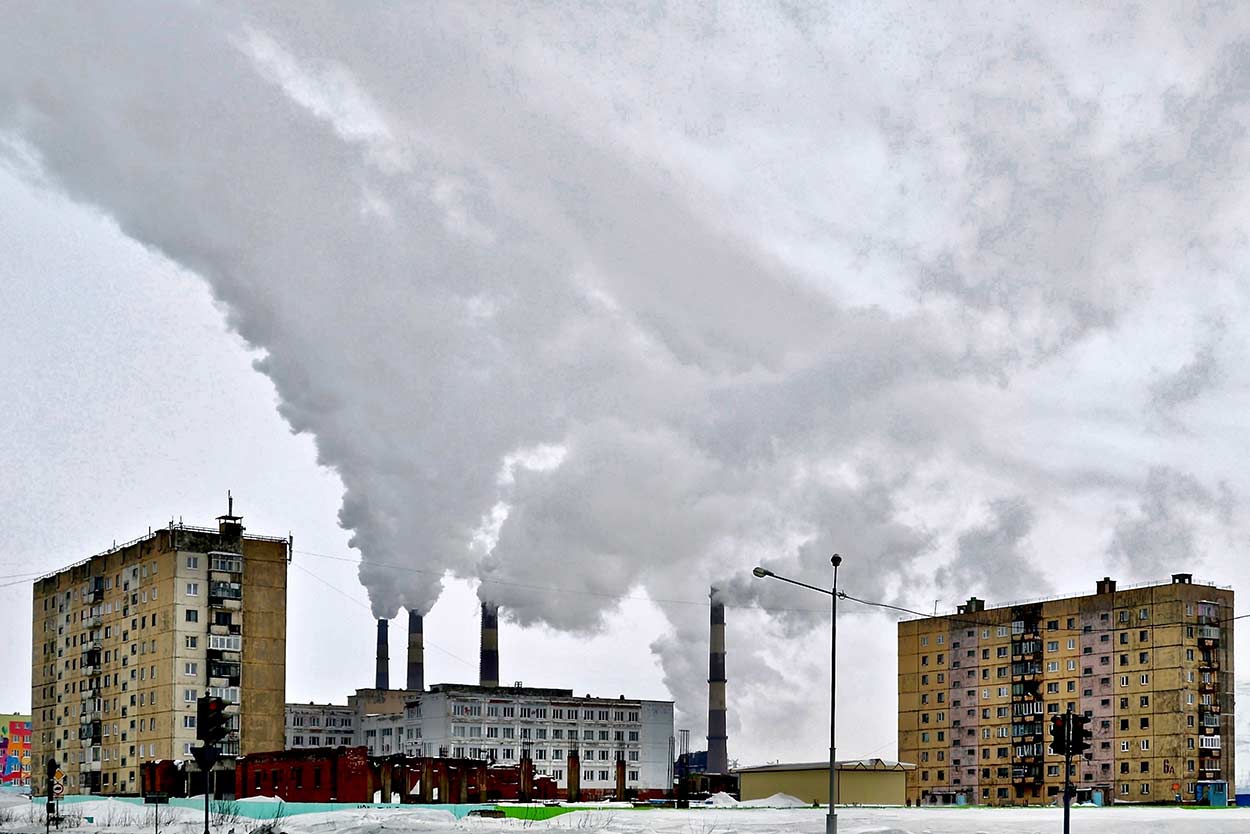
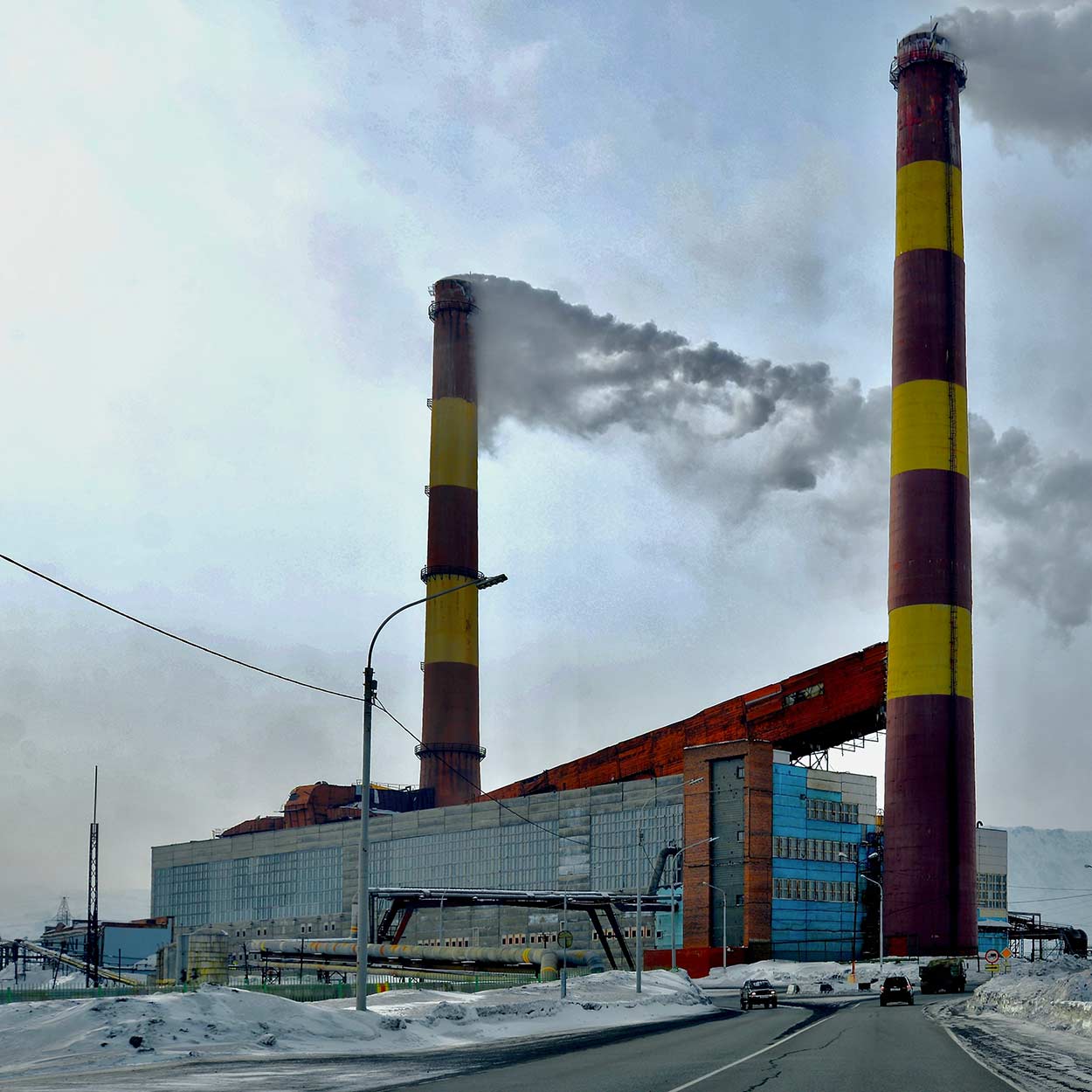
In Norilsk, there is snow 285 days a year. The closer we get to the city, the more chimneys rise into the sky from all the factories that process the nickel, copper, cobalt, platinum, and palladium mined here day and night. Huge clouds of smoke, driven by the wind, darken the morning sky. Most of the plants in operation today date back to the Soviet era. Their annual emissions of pollutants amount to almost 2 million tons, which is twice as much as those of the 11-million-strong metropolis of Moscow and equal to those of the whole of France. No wonder Norilsk is one of the most polluted cities in the world.
Holger Hoffmann © All rights reserved.
Holger Hoffmann © All rights reserved.
The Nadezhda smelter is also on the route. It is the world’s largest metallurgical plant and is owned by Nornickel, Russia’s largest mining company. Without Nornickel, Norilsk would not exist. The city was founded in 1935 at the same time as the Norilsk Combine. In the first two decades, it was operated almost exclusively by Gulag prisoners. Their number rose to around 70,000-90,000 by the time of Stalin’s death in 1953. Three years later, the camp was closed. After the collapse of the Soviet Union, Norilsk Nickel was privatized. Russian Deputy Prime Minister Vladimir Potanin bought most of the shares and became a billionaire. Today, 80% of Norilsk’s inhabitants are employed by Nornickel. Their life expectancy is ten years below the Russian average, but they receive more vacation time, better social benefits, and higher wages.
Holger Hoffmann © All rights reserved.
We drive through a sprawling, dystopian landscape that looks like it has been ravaged by an environmental disaster, with huge factory buildings, blast furnaces, smoking chimneys, high-voltage pylons, pipelines laid above ground due to the permafrost, from which bizarre ice sculptures emerge when they burst, stacks of containers, colorful cranes and trucks, rubbish dumps, abandoned buildings, rusted reinforcing bars and floodlight masts, interspersed with quarry ponds and wasteland covered in grayish snow. Suddenly, the first apartment blocks emerge from the haze on the other side of the road.
The taxi takes us to the Lenin monument at the beginning of the avenue named after him. When we get out to explore the city center on foot, we are amazed.
Holger Hoffmann © All rights reserved.
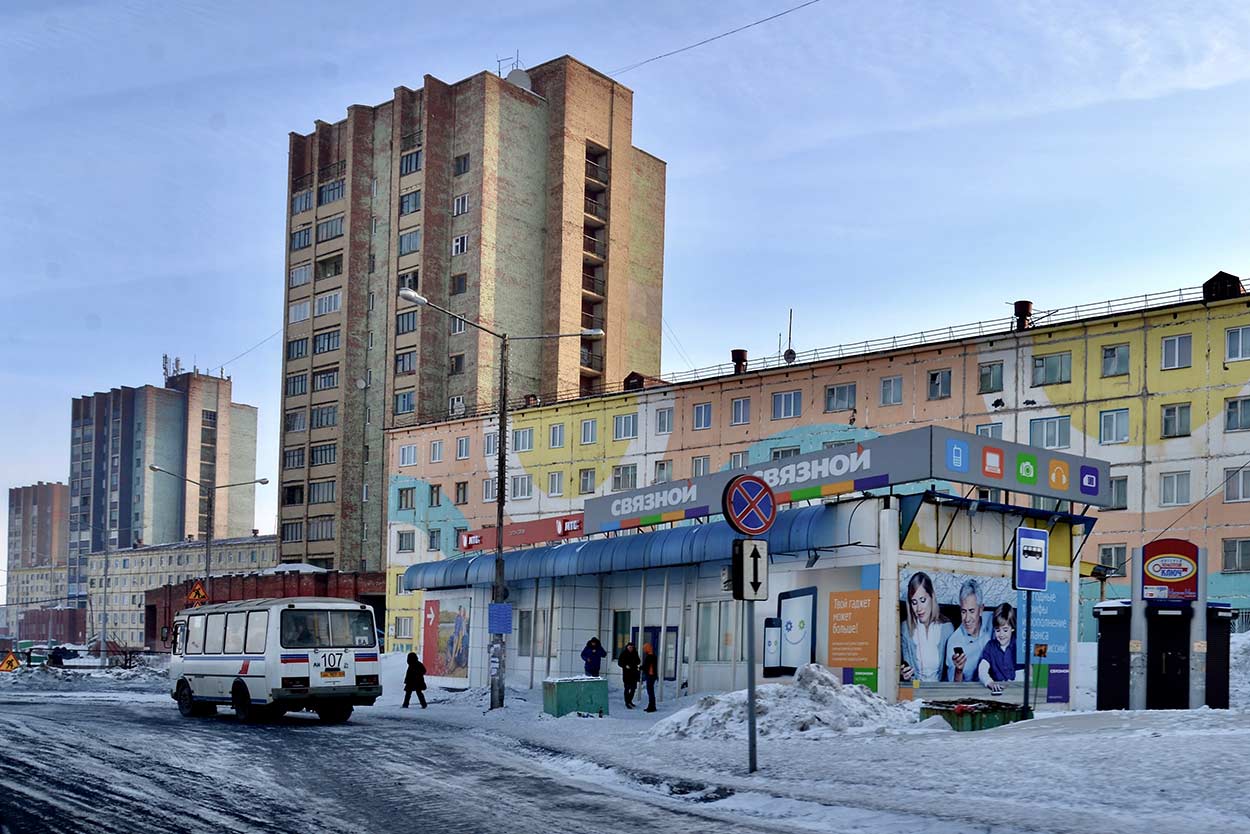
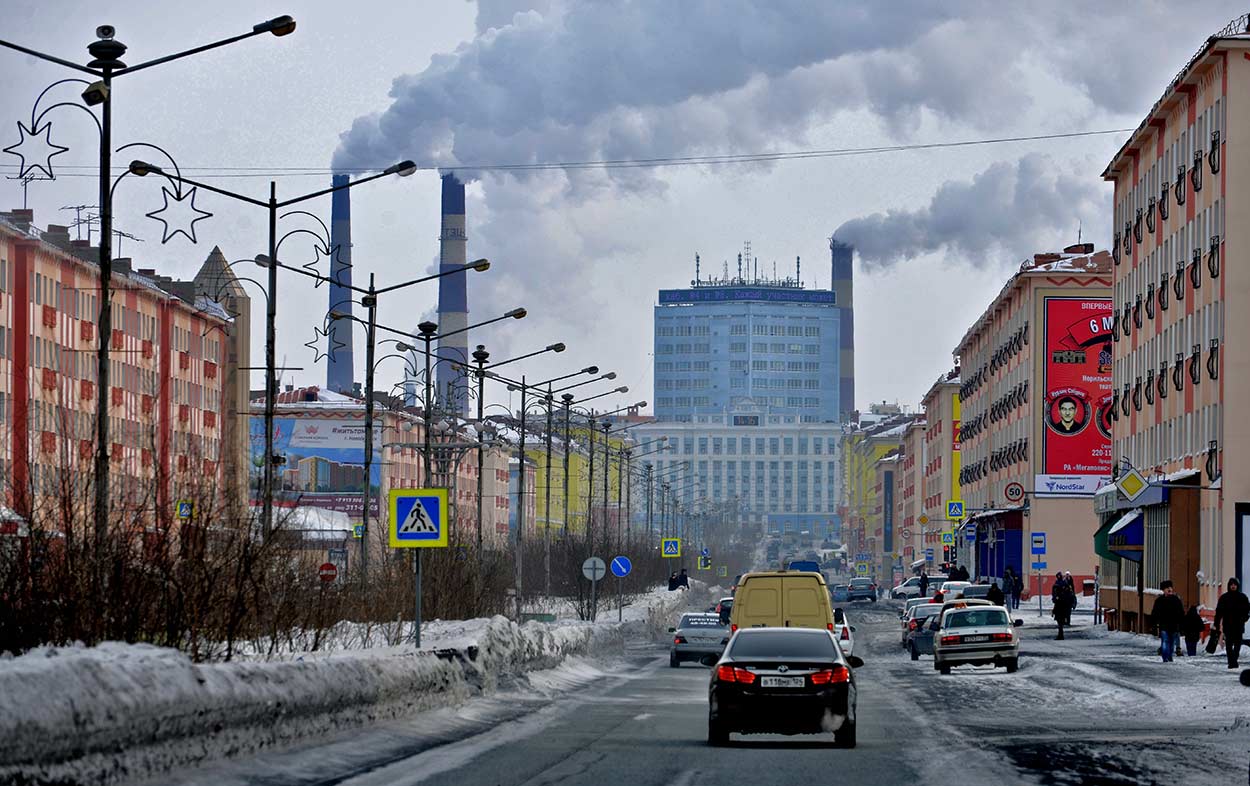
We are surrounded by turquoise-green, magnificent buildings in the style of Socialist Classicism. This “confectionery style” characterizes the entire first half of Leninsky Prospekt, with only the colors of the houses changing to vermilion, light blue, or yellow. They are the work of St. Petersburg architect Witold Nepokojtschizkij. In 1939, he received an invitation from the then camp director to turn the Gulag into a respectable city, replacing the barracks with tenements and creating cultural, theater, and cinema palaces to raise the cultural level of the working people.
Holger Hoffmann © All rights reserved.
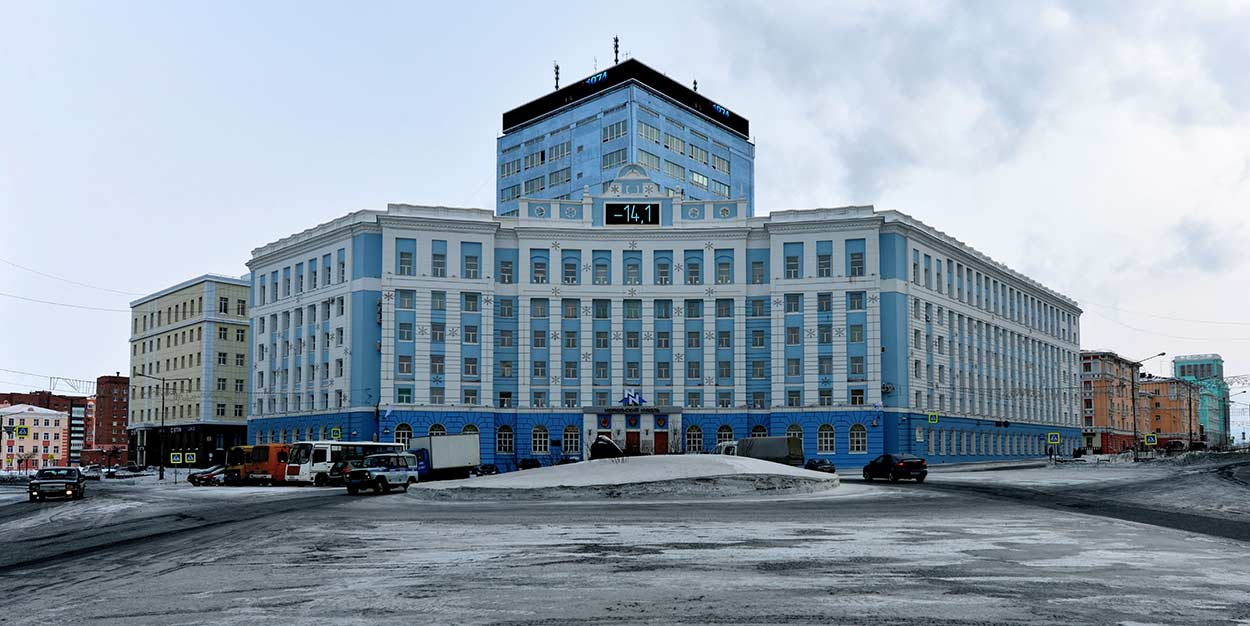
The blue-and-white administration building of Norilsk Nickel was given a particularly prominent place. Wherever you are on Leninsky Prospekt, you never lose sight of it, nor the digital temperature display on the roof: today it is a mild -14.1°C, but during the polar night it can drop to -50°C. However, Nepokojchizky’s grandiose master plan was never fully realized. After Stalin’s death in the mid-1950s,
a nationwide campaign against architectural extravagance began. These buildings were replaced by prefabricated concrete blocks typical of Norilsk today.
Holger Hoffmann © All rights reserved.
We end our city tour at the memorial to the heroes of the Great Patriotic War (1941-1945) and drive from there to “Golgotha.” Built in the 1980s on the site of a former prison cemetery, the memorial is intended to preserve the memory of the victims of one of Russia’s worst gulags. For over 30 years, a total of more than 400,000 prisoners were sentenced to forced labor here, including 300,000 political prisoners under particularly harsh conditions. Revolts after Stalin’s death were brutally suppressed.
Holger Hoffmann © All rights reserved.
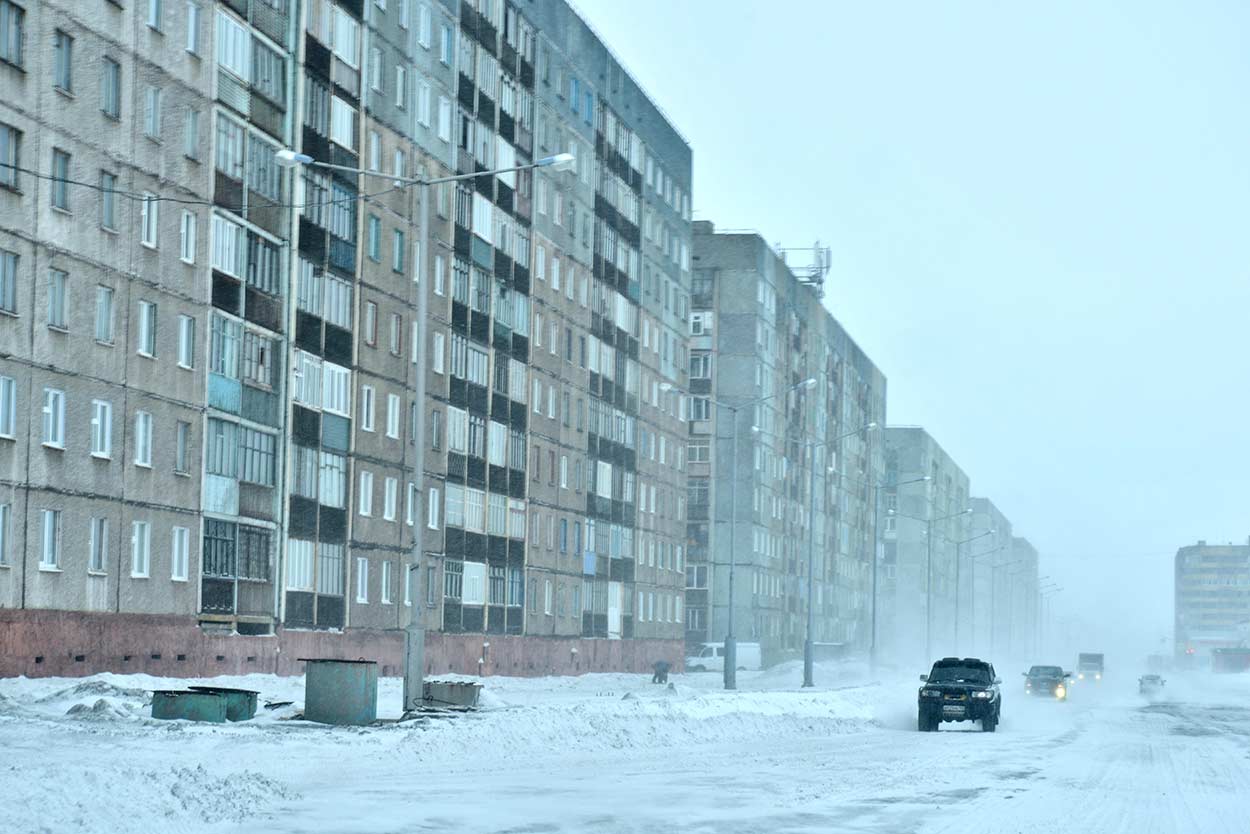
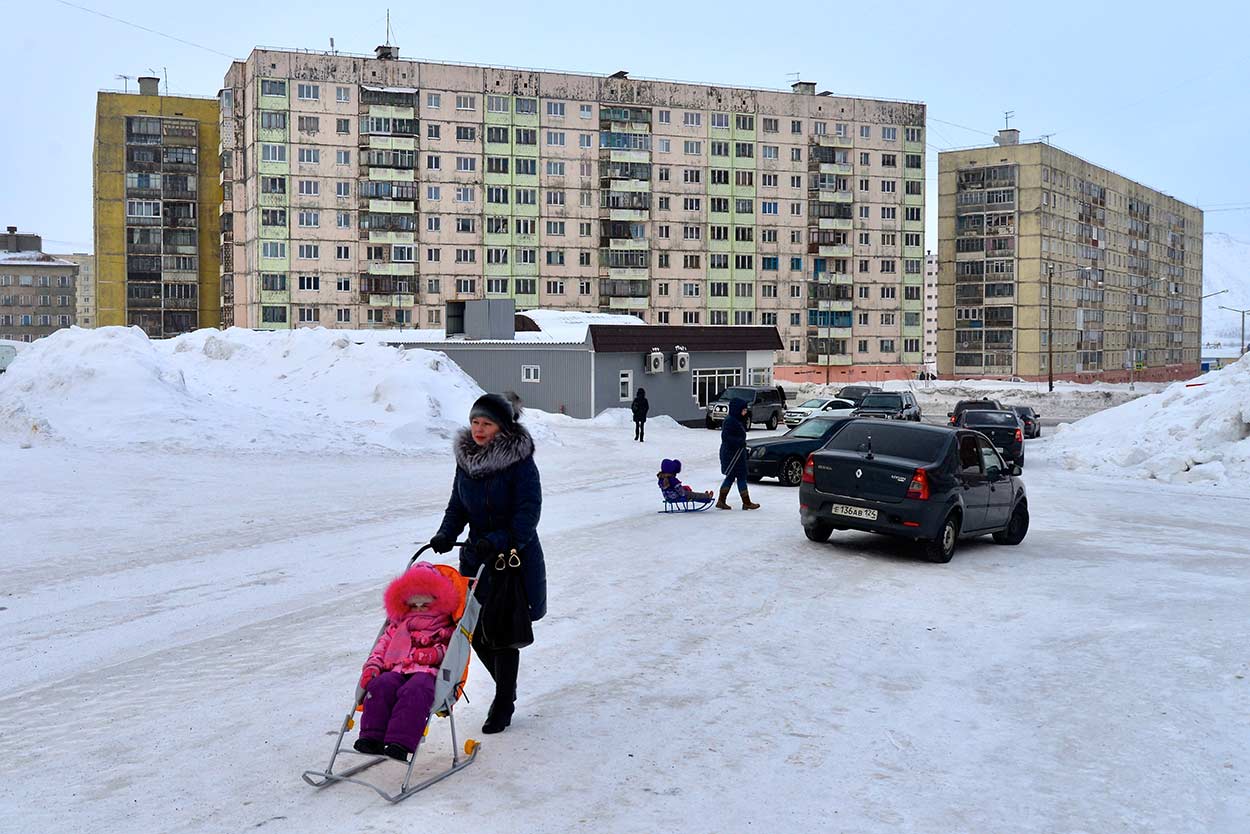
It is now afternoon, the sun is already setting behind the hill, and we are heading for the hotel. It is located 25 kilometers away in the satellite town of Talnach, founded in 1960 due to ore deposits discovered there, and has been part of Norilsk since 2005. Today, 47,000 people live here, mostly in nine-story prefabricated buildings.
Due to the permafrost, all buildings stand on concrete stilts that reach deep into the ground. The house itself begins one meter above the ground, and the entrance is accessible via an external staircase.
Holger Hoffmann © All rights reserved.
It is always located on the side protected from the wind. Usually, several houses form a courtyard and are built so close together that a person can squeeze between them, but not the wind.
The house numbers are painted on the facades in meter-high digits so that you can find the right house even in a snowstorm. Since all the houses date from the 1960s and 1970s and have not been renovated since, they are very similar to each other. For outsiders like us, finding our way around this uniform, ice-cold dreariness is not easy, even without a snowstorm.
The next morning, we continue our journey to Kathanga on Taymir in a 36-seat Antonov turboprop. We are denied a second night in Norilsk on the return journey. The airport is closed due to strong winds.
HOLGER HOFFMANN
Holger Hoffmann © All rights reserved.
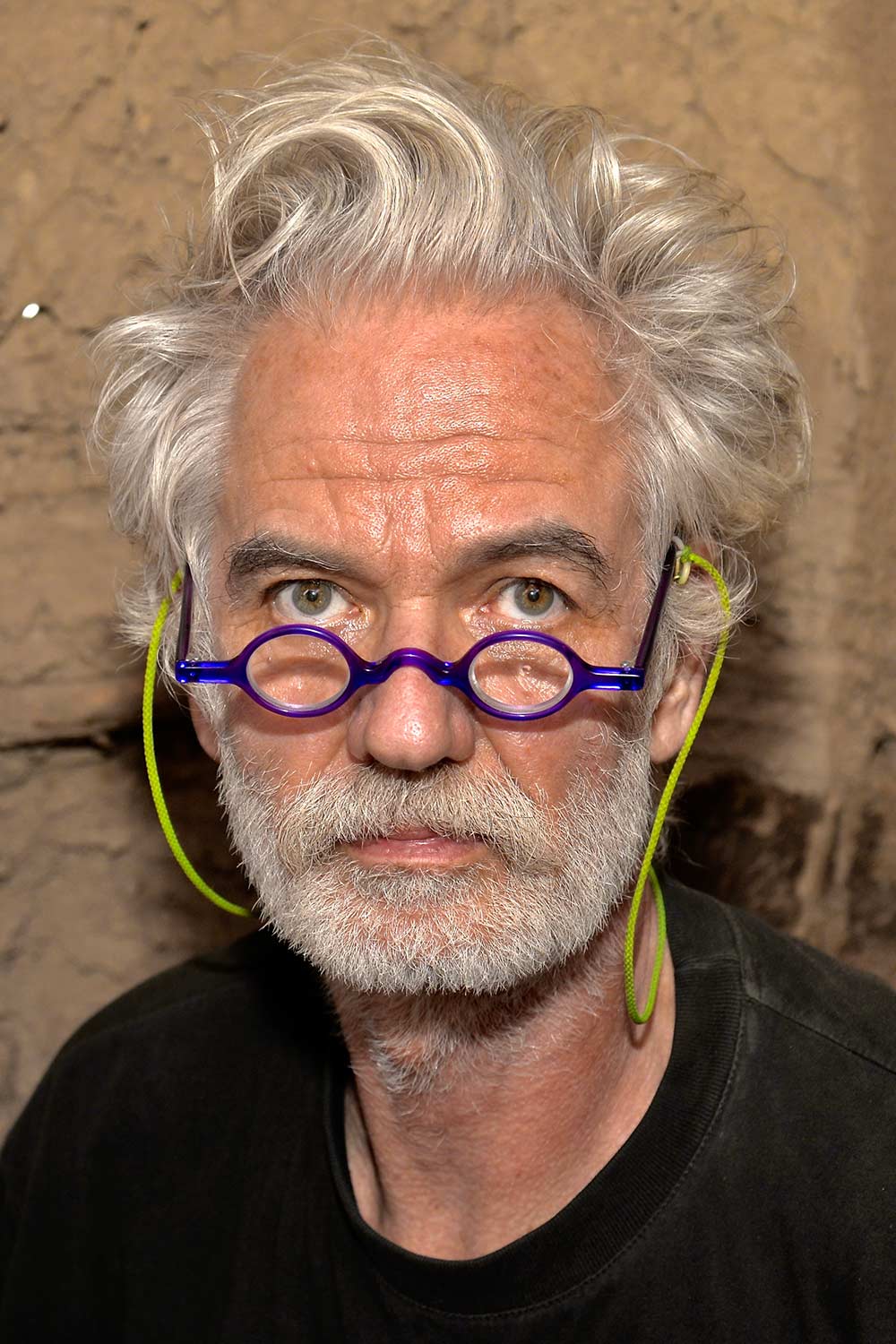
Holger Hoffmann is a Swiss travel and documentary photographer.
To date, he has traveled to 110 countries. He is particularly fascinated by the customs and daily life of people who have preserved their traditional culture. He is deeply impressed by how they cope and adapt to the advances and pressures of the modern world. He has published numerous travel and photo reports in various magazines.
Holger Hoffmann © All rights reserved.