
JAMES T GUNDERSON | FIRE AND FOG
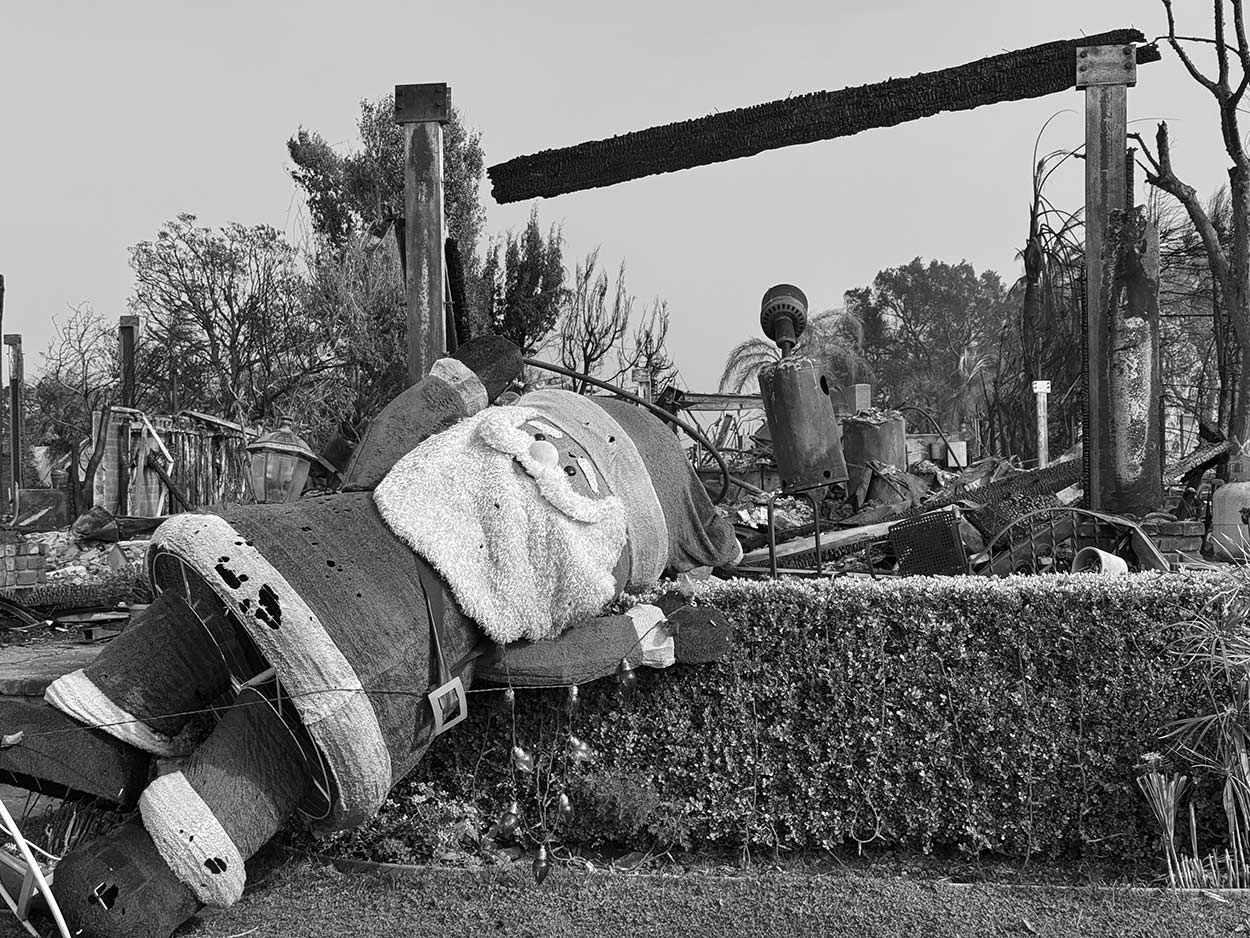
The aftermath of the 2025 Palisades Fires
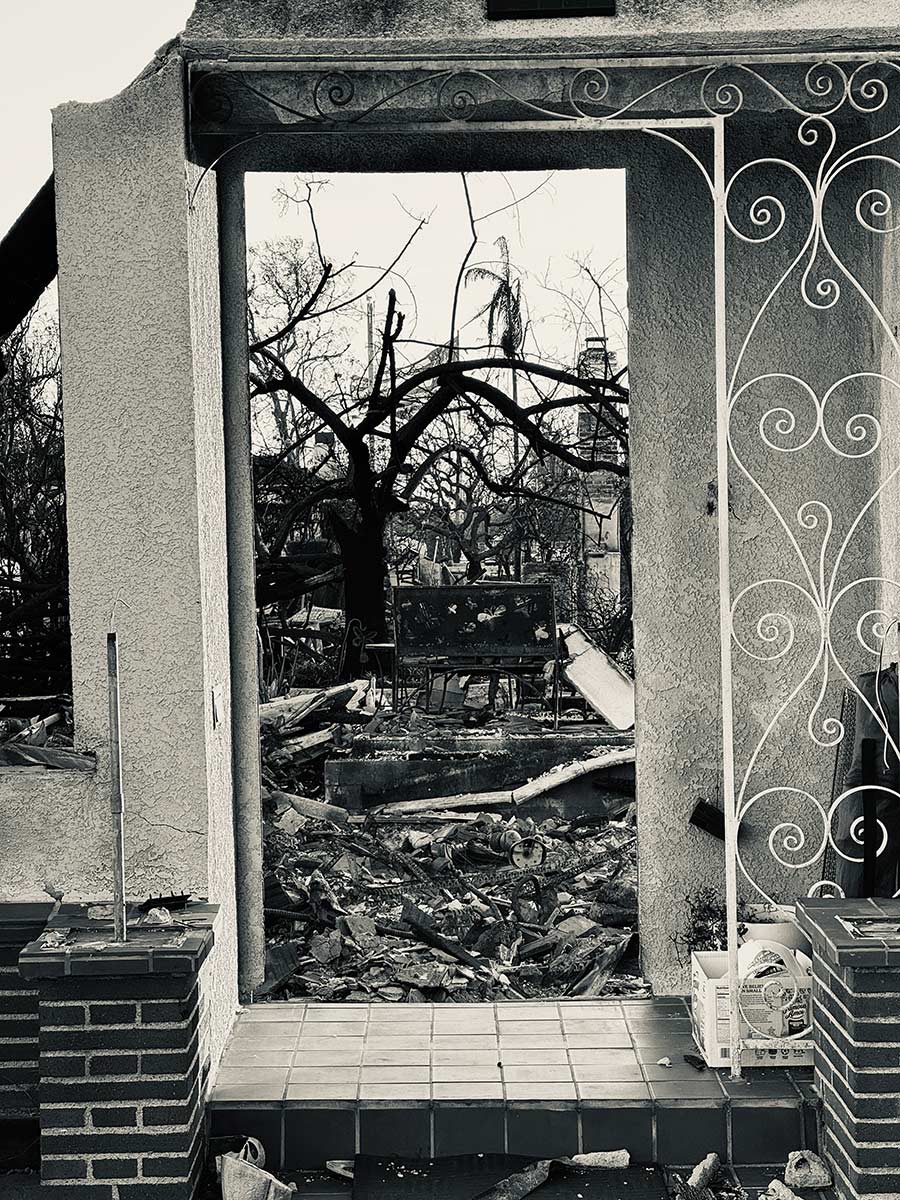
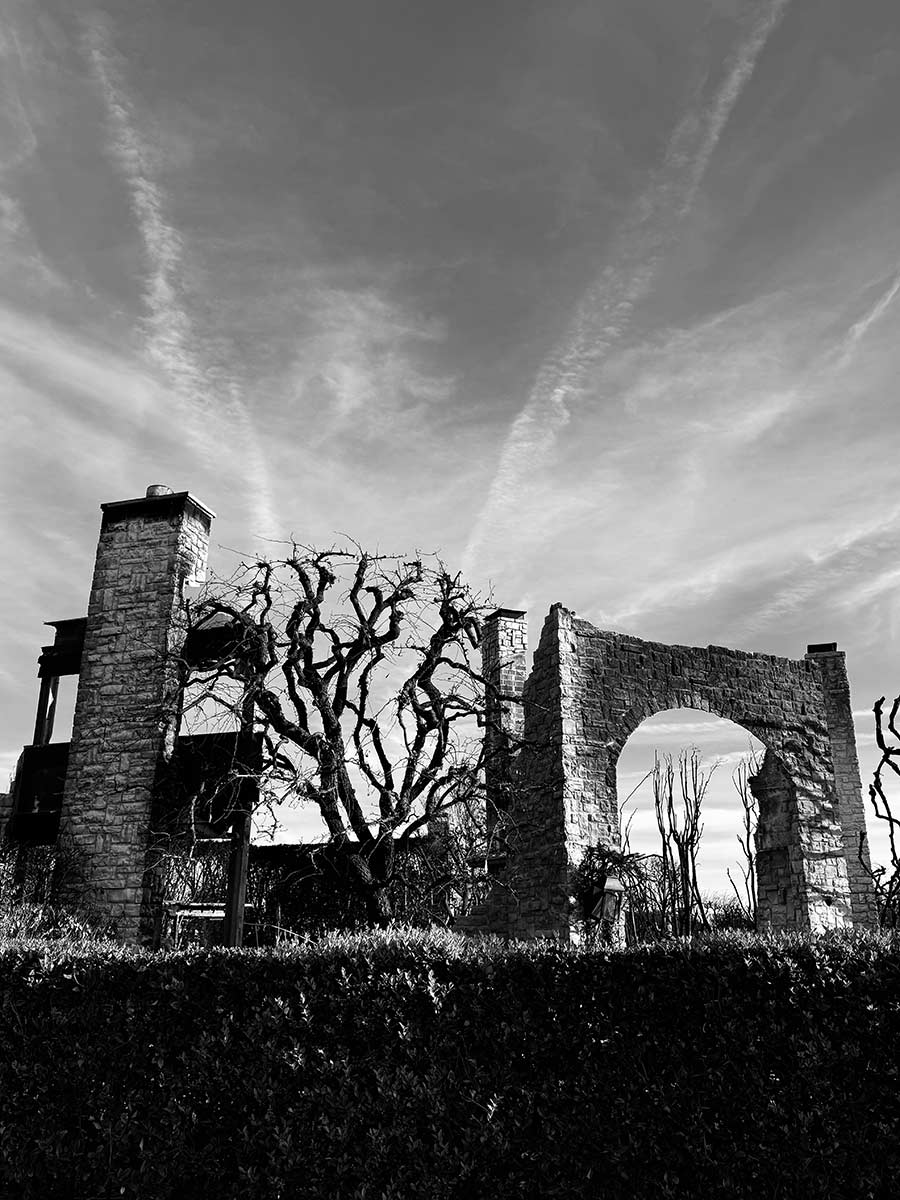
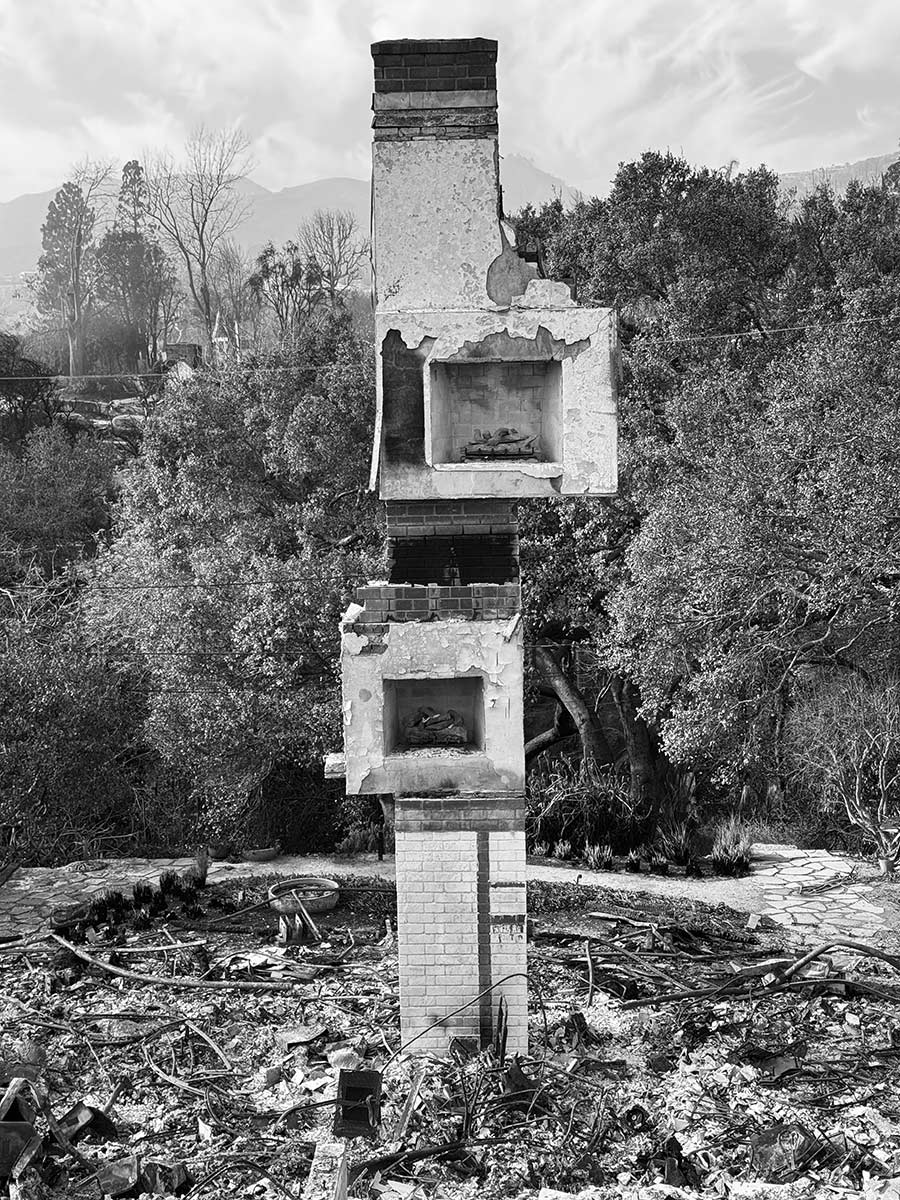
Right: Fire and Fog – Hall of Loss
James T Gunderson © All rights reserved.
On January 1st, 2025, New Year’s fireworks started a small blaze along the Temescal Canyon Trail near Skull Rock in Pacific Palisades. Firefighters thought it was out, but they never used thermal detection equipment to confirm it was. It wasn’t.
One week later, on January 7, strong Santa Ana winds reignited the fire, which exploded and led to the 10th-deadliest and third-most destructive wildfire in US history.
100% containment was declared on January 31, 2025, after 24 days.
The Palisades Fire burned over 23,448 acres, destroyed 6,837 structures, and resulted in 12 deaths.
Along with the Eaton, Lidia, Archer, Woodley, Sunset, Kenneth, Hurst, Auto, and Hughes fires, the January Los Angeles fires burned over 57,000 acres in 24 days. Southern California experienced a record dry fall and winter.
James T Gunderson © All rights reserved.
In the last three months of 2024, Los Angeles International Airport (LAX) received a mere 0.03 inches of rain.
The first significant rains after the fire came on January 26th, three weeks later. While the rain brought much-needed relief and helped firefighters, it also triggered mudslides and debris flows in burned-out areas.
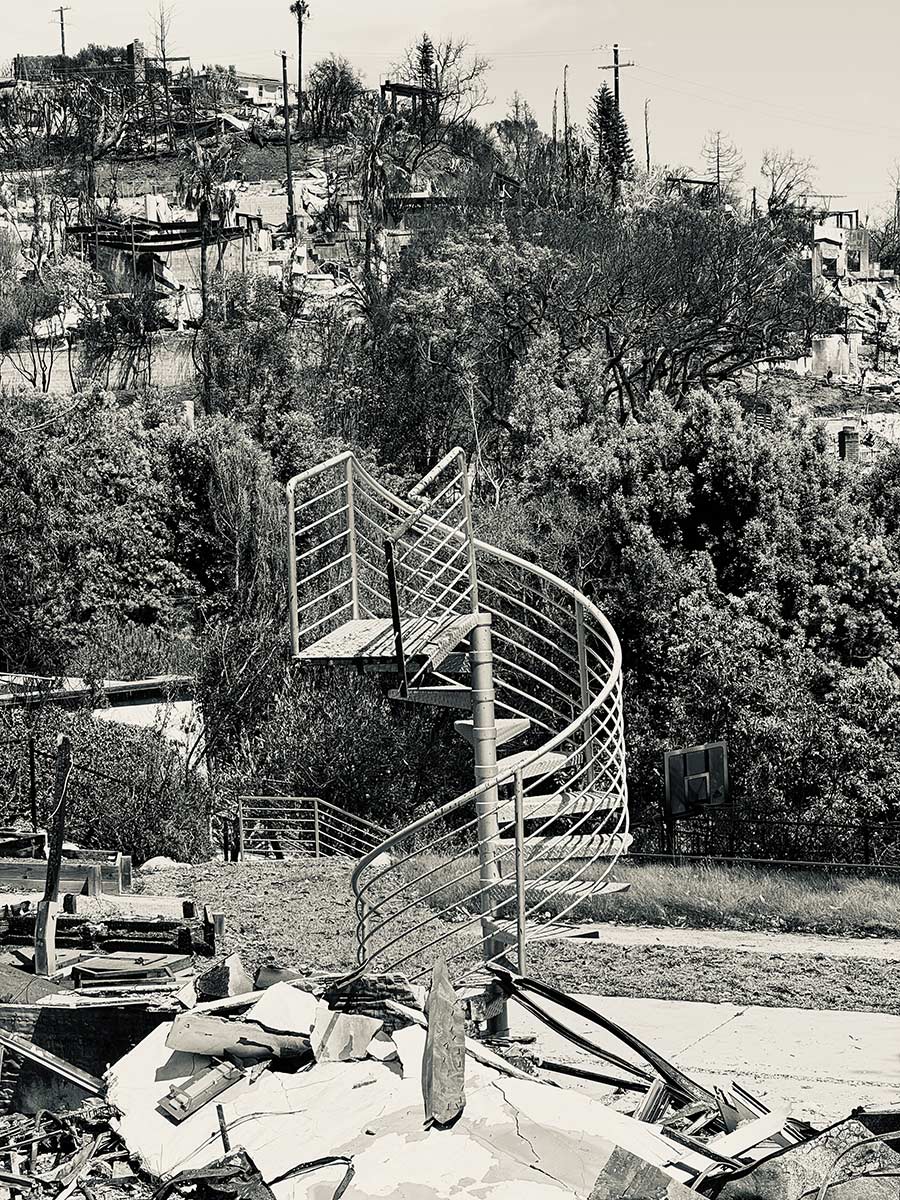
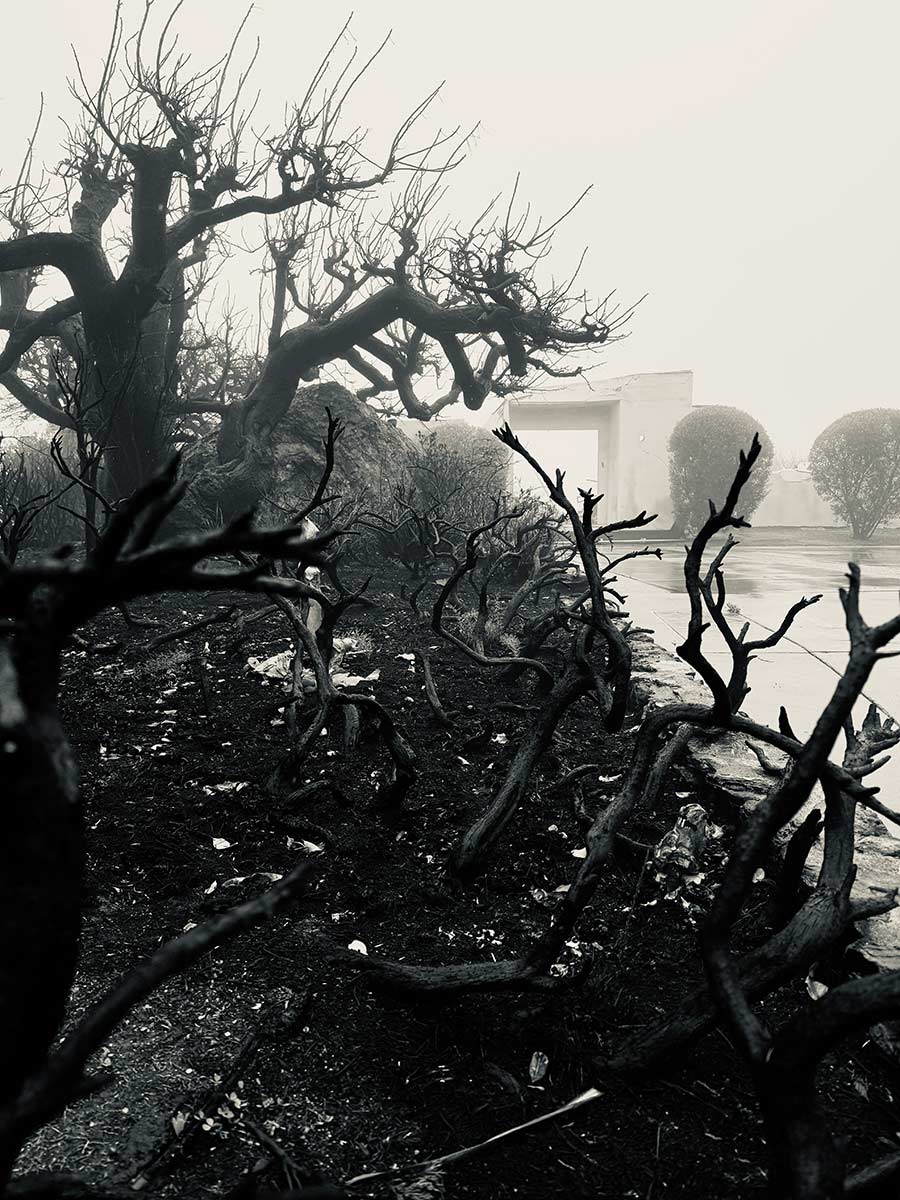
Right: Fire and Fog – Stairway
James T Gunderson © All rights reserved.
HISTORY
In 1922, the Rev. Charles H. Scott of the Southern California Methodist Episcopal Church founded Pacific Palisades, envisioning an elaborate religious-intellectual commune.
By 1925, the Palisades had 100 homes. In one subdivision, streets were named in alphabetical order for Methodist missionaries (the “Alphabet Streets”). The tents eventually were replaced by cabins, then by bungalows, and ultimately by multimillion-dollar homes.
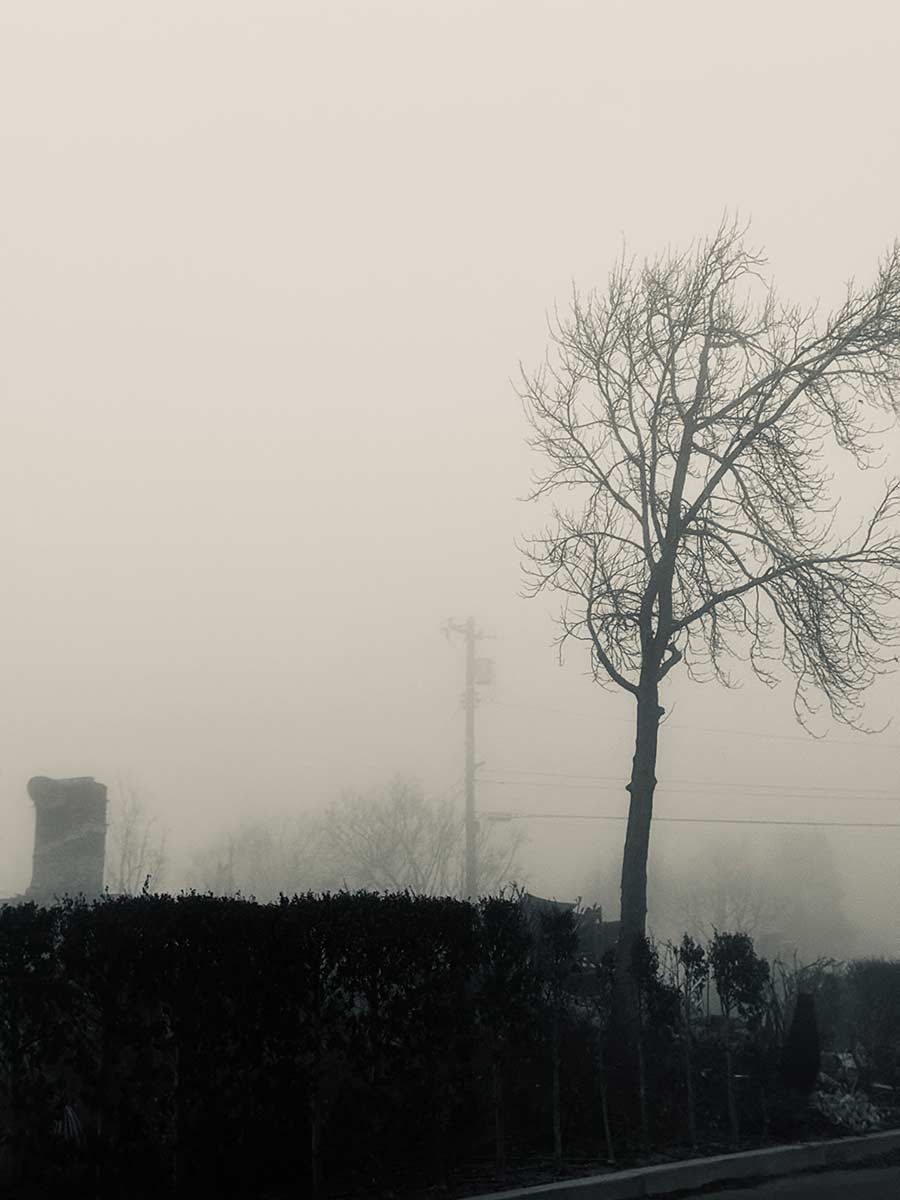
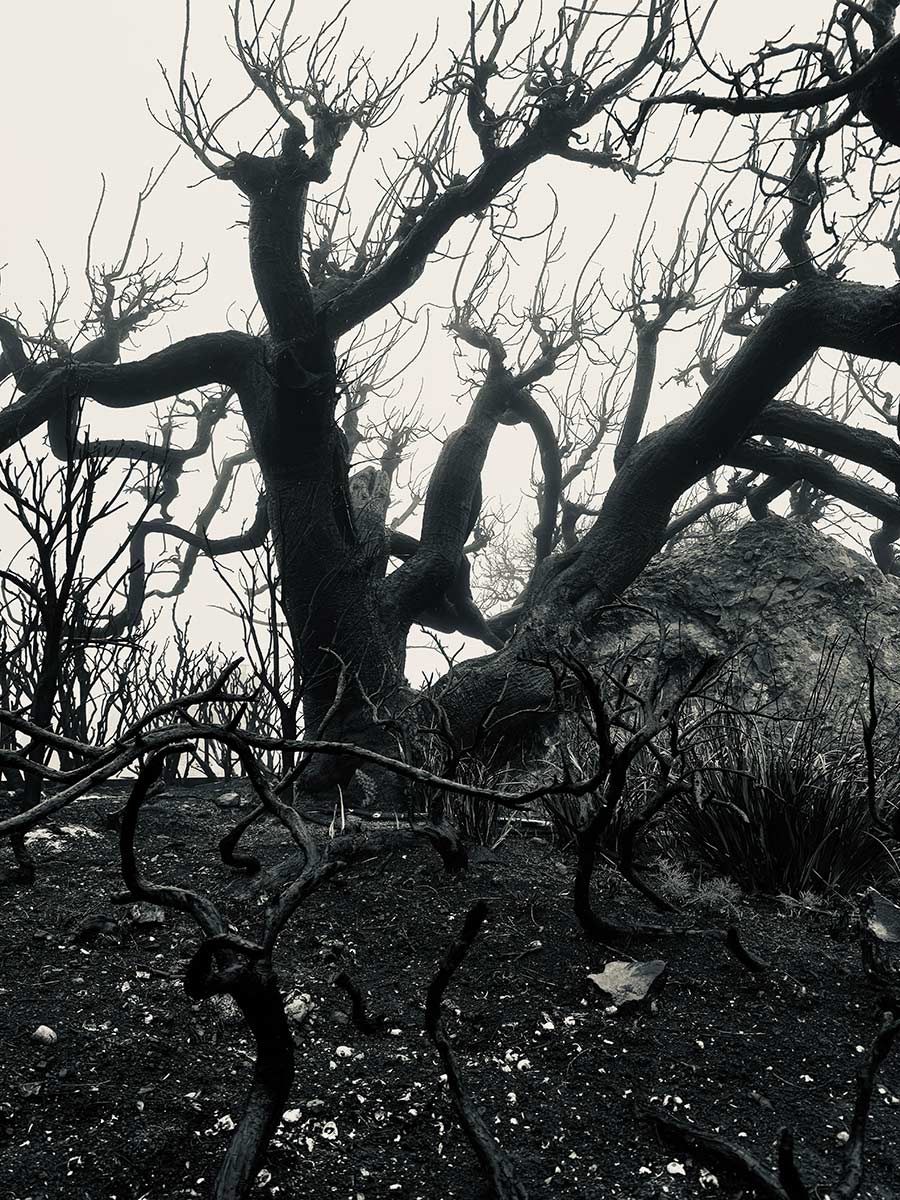
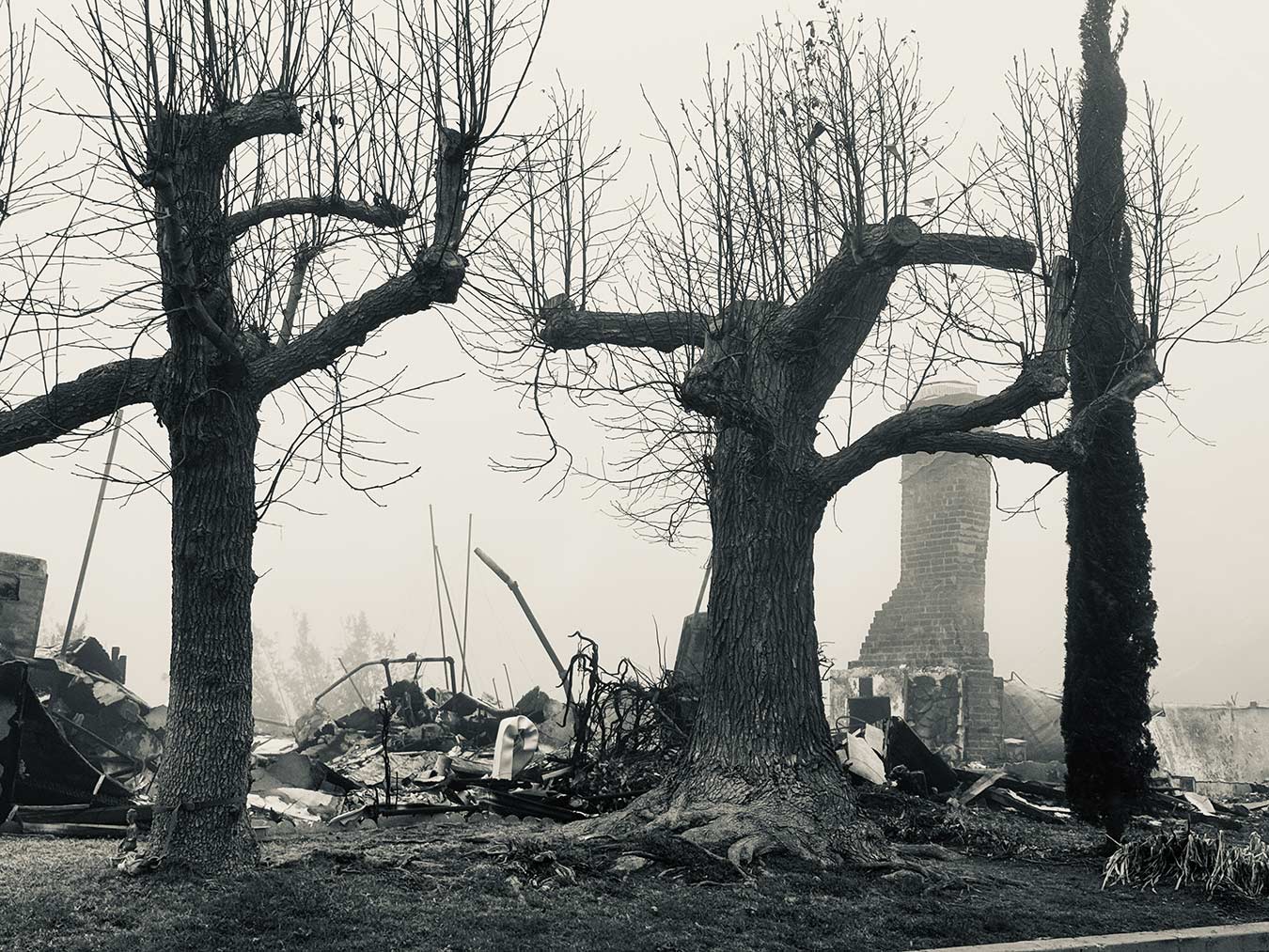
Right: Fire and Fog – Trees
James T Gunderson © All rights reserved.
A realtor estimated that 99.5% of the 1,200 homes in the “Alphabet Streets” were reduced to rubble.
For those whose homes survived the fire, relief mingles with a lingering sense of loss. The destruction of the community was catastrophic.
A Washington Post article from February 20, 2025, detailed the stories of survivors of the LA fires who did not lose their homes but could not move back in for months or years.
- Text by Reis Thebault with contributions by N. Kirkpatrick, Alice Li and Maeve Reston and photos by Melina Mara.
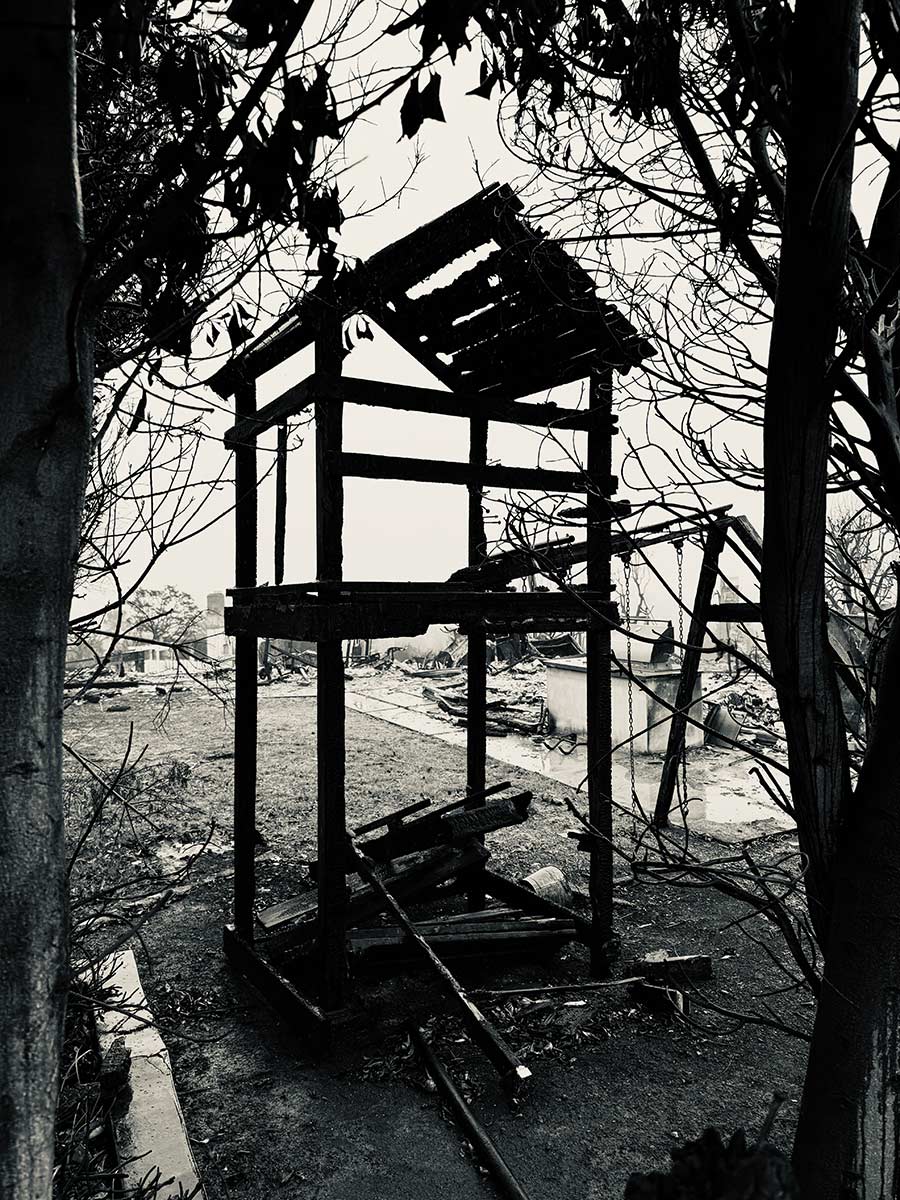
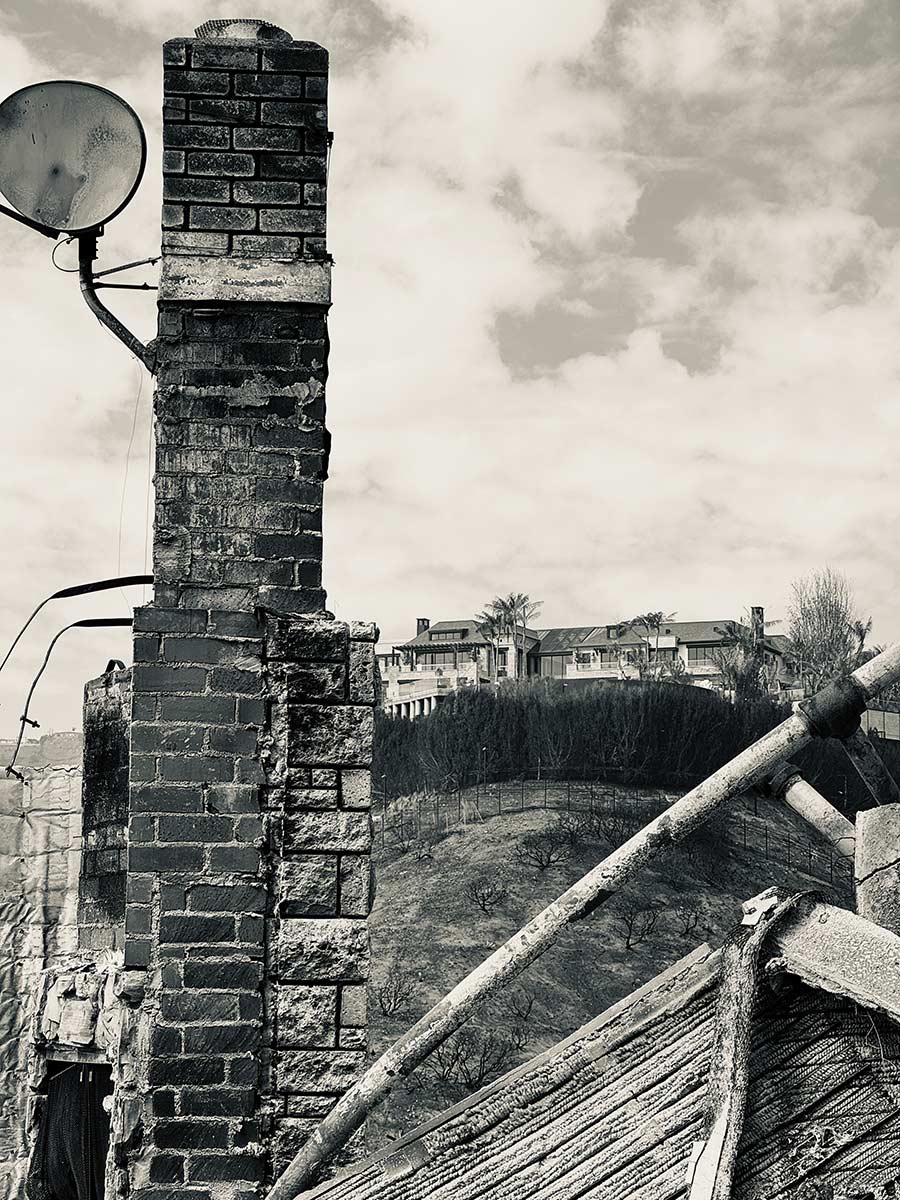
Right: What Survived and What Did Not
James T Gunderson © All rights reserved.
JAMES T GUNDERSON
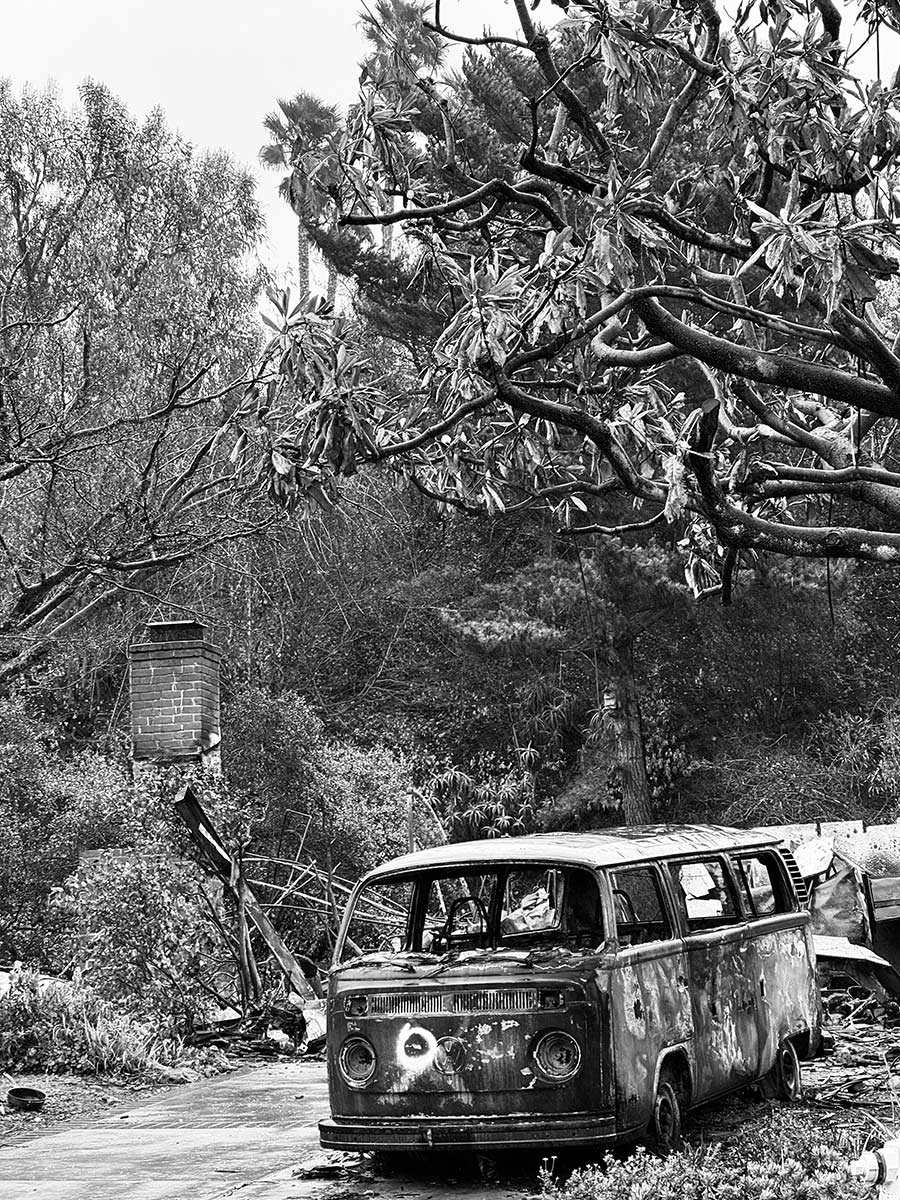
James T Gunderson © All rights reserved.
“On January 7th, 2025, I first saw smoke in the Palisades Highlands at 10:38am. By 12:09 p.m., the fire had raced across the hills and was bearing down on our house, and we were forced to evacuate. Throughout that day and night, my wife and I watched the news reports in horror from a nearby hotel in Santa Monica. We assumed our house was gone. We were forced to move further south as the fires encroached on Santa Monica.
The house survived, but we were not able to re-enter it until February 2. Ash had pushed its way under the doors and in between the sliding glass doors and windows. Layers of ash coated everything.
Testing did not show asbestos, but lead dust was in every room.
Every house across the street was destroyed. Recovery couldn’t even begin until what was left of those houses was demolished and cleaned up. There were many setbacks in the cleanup.
As of December, we are looking at a move-back date of Late January – Early February. It will have been over a year since the fire.”
James T Gunderson © All rights reserved.
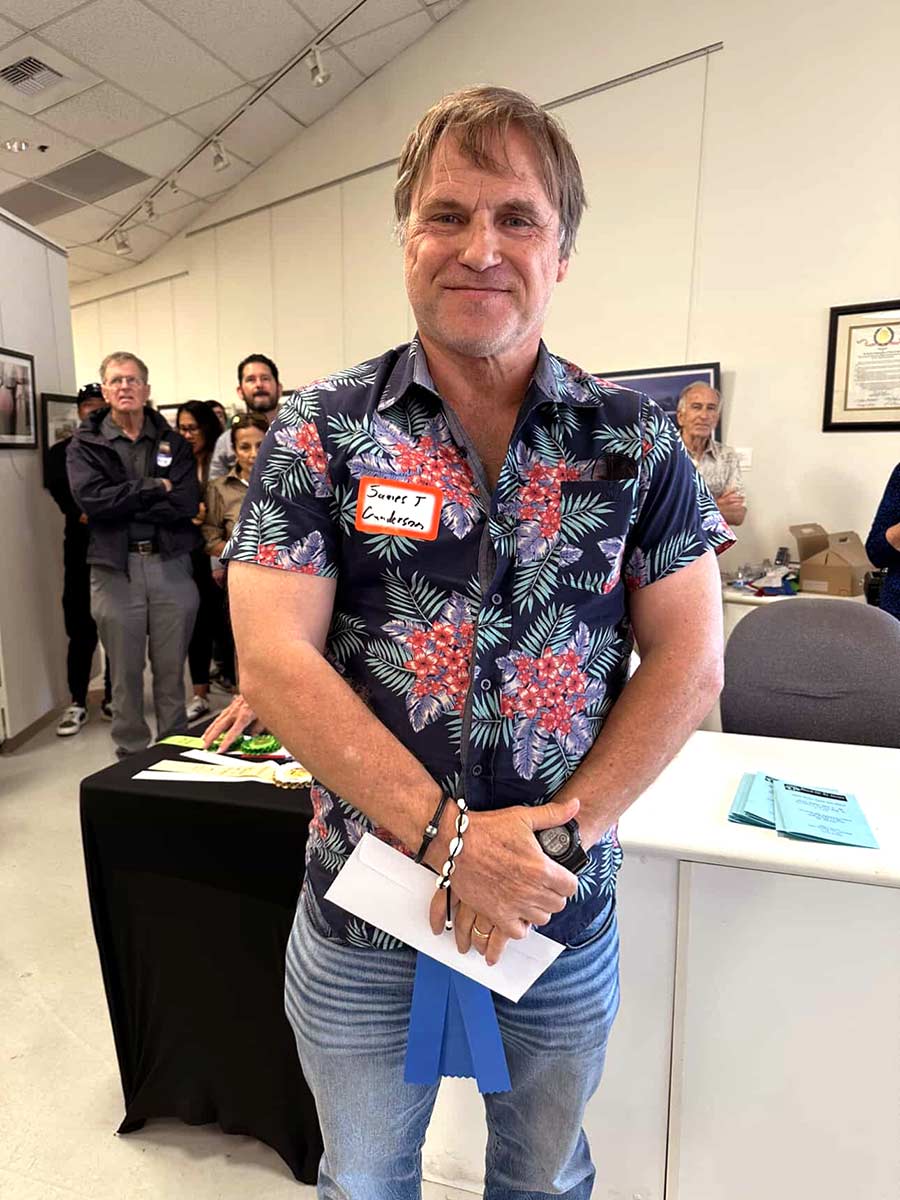
I was born in Fort Worth, Texas, but consider myself a native-born Californian. I grew up in Austin and immigrated to California back in the early ‘90s, where (like many people) I thought he could be an actor. That never worked out (I have a Screen Actors Card, though), but I did work in the film industry as a software developer at Harris Broadcasting, Technicolor, and Deluxe.
My current creative passions include photography, ghost towns, Route 66, and black-and-white photographs of urban areas. Three photo books are currently available on the website.
I live with my wife, photographer Miriam Schulman.