
JM SIMPSON l The Humanity of the Moment
“Documentary photography is the art of telling a story through images.
It involves creating a connection between the photograph’s subject and the viewer; in a way, the photograph conveys its message.
These images of homeless individuals are expressing something to you. How you interpret their message is entirely your own decision.”
-JM Simpson
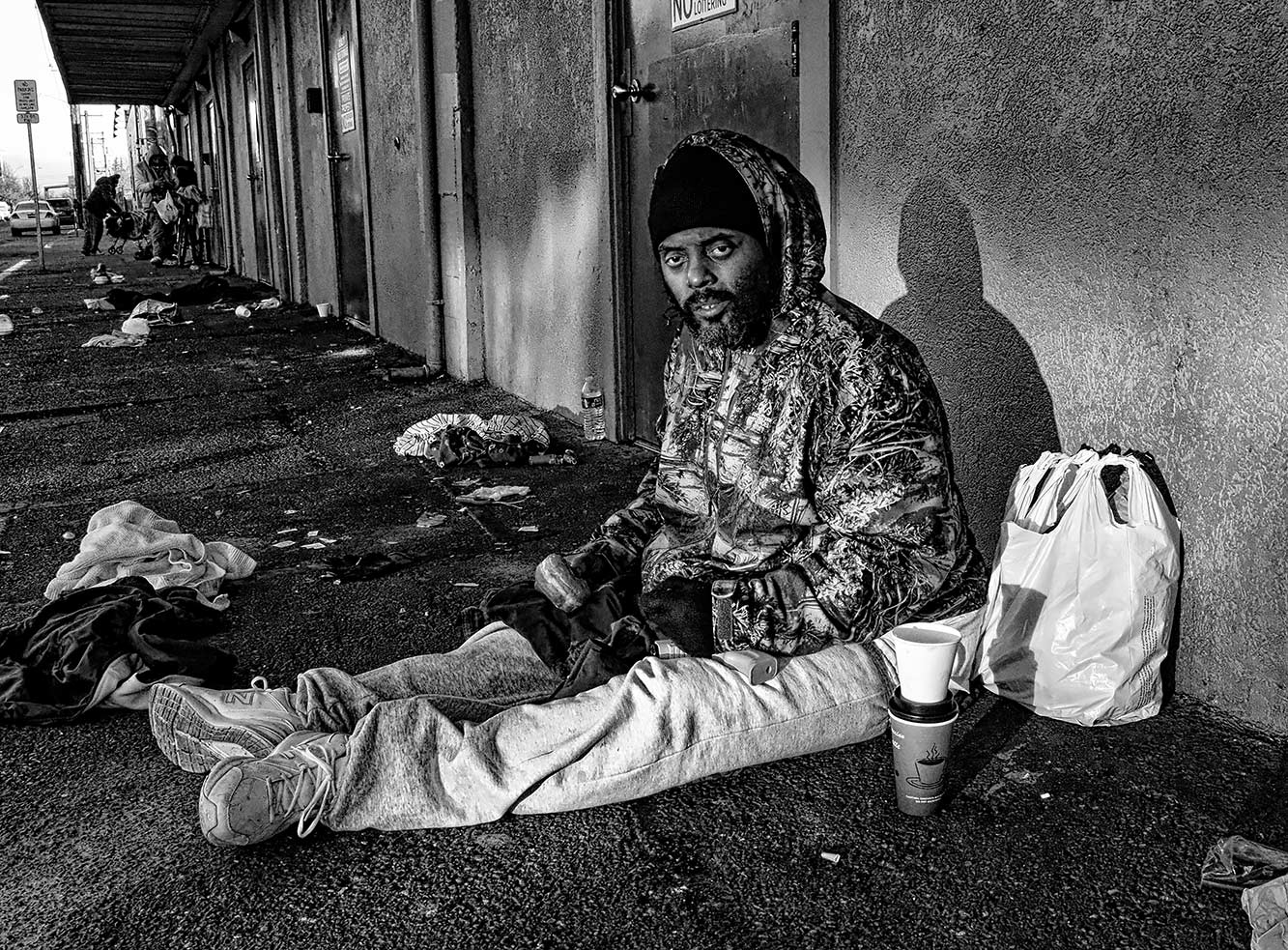
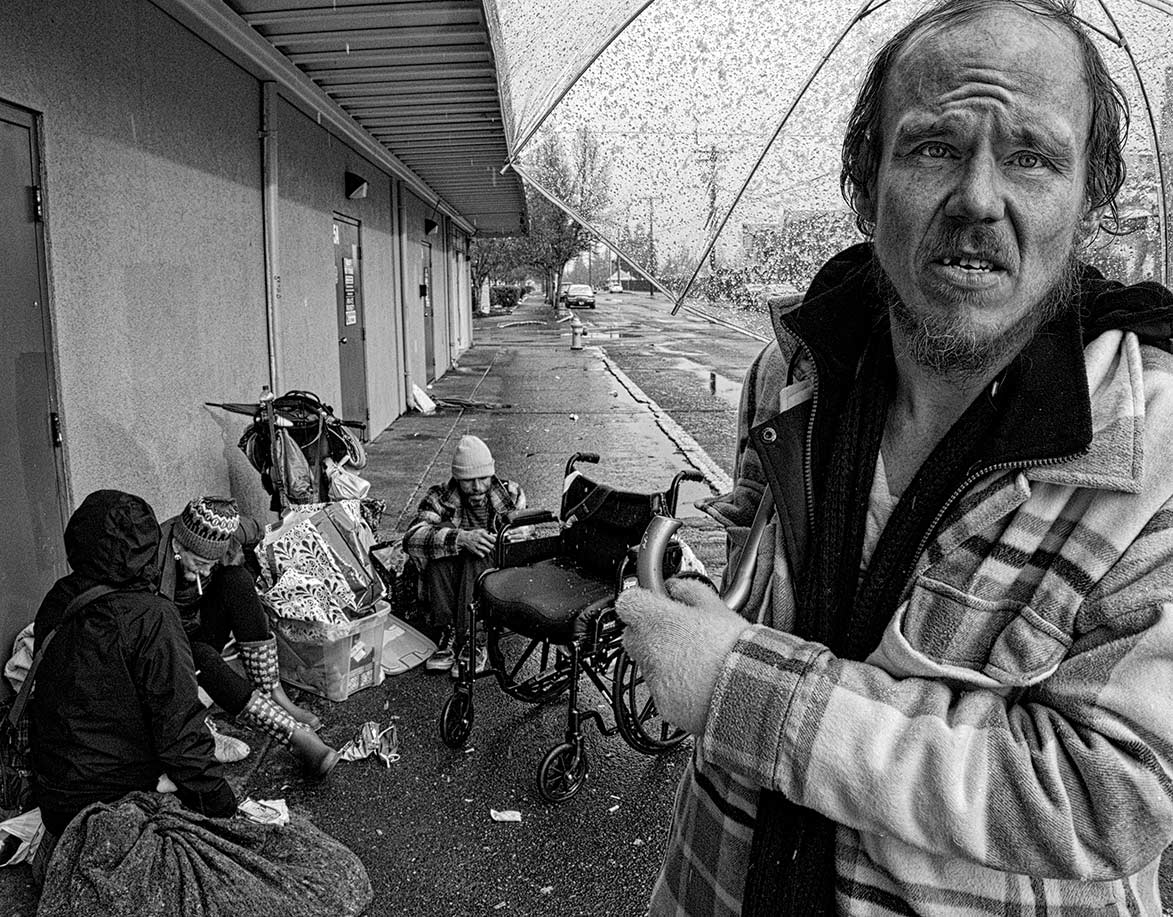
My documentary photography is not about perfection but about connection to and emotion about homeless individuals.
In photographing the homeless in downtown Olympia, Washington, my connection to them begins by treating them with respect.
I sit, talk, walk, and learn about and from many of these fellow human beings. Once I have established a connection, I will ask their permission to take several photographs.
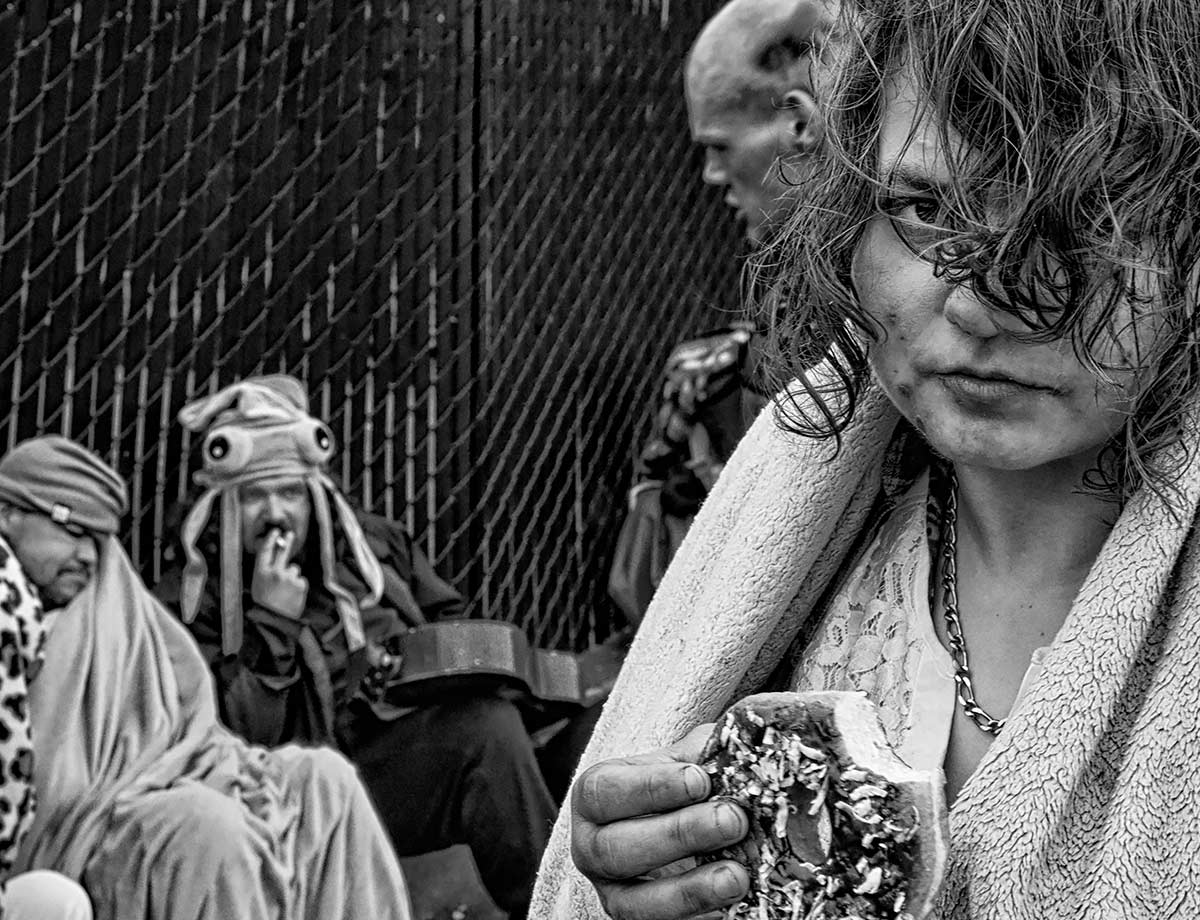
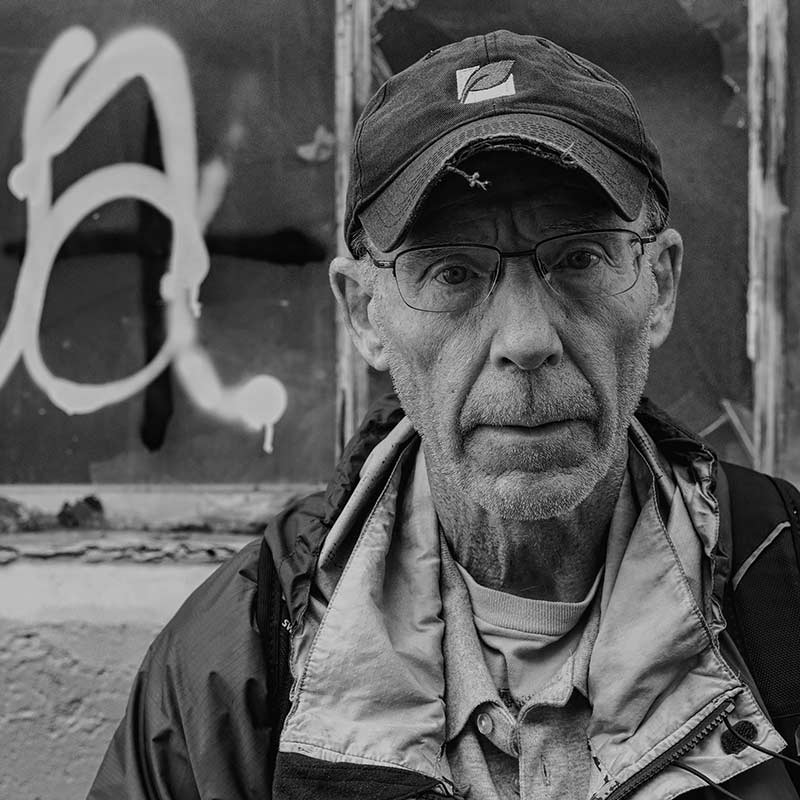
Given my personal—and sometimes fleeting—connection with the homeless, I intend to deepen this connection by presenting photographs that look at the viewers as they look into the eyes of the homeless.
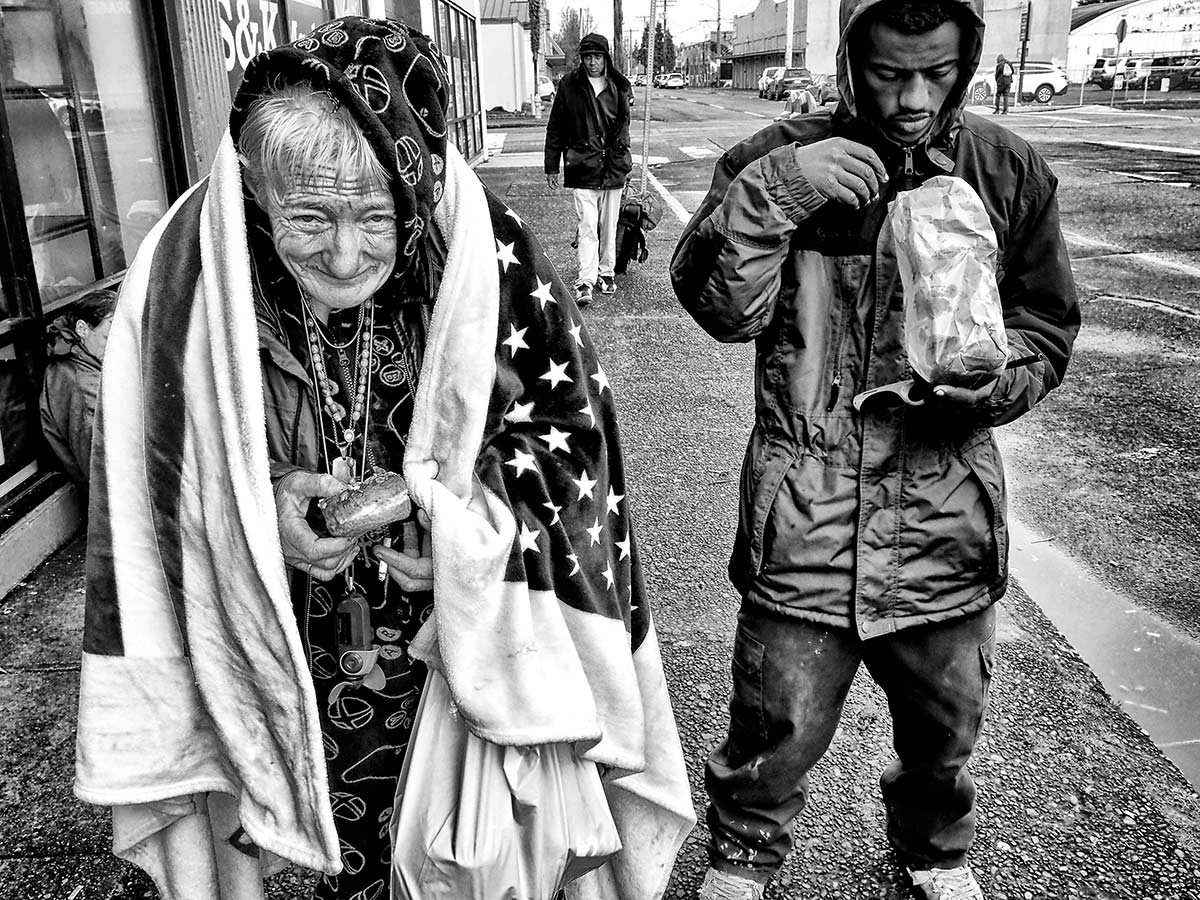
“In my case, I am honestly portraying the homeless in Olympia, Washington—to show them as human beings who should enjoy the basic human right of having a place to live.”
– JM Simpson
JM Simpson © All rights reserved
JM Simpson © All rights reserved
I work alone; I carry one camera; I use one lens. I spend hours walking a nine to eleven-square-block area of the downtown. While the streets and buildings remain the same, the lighting, the weather, and the people I meet do not.
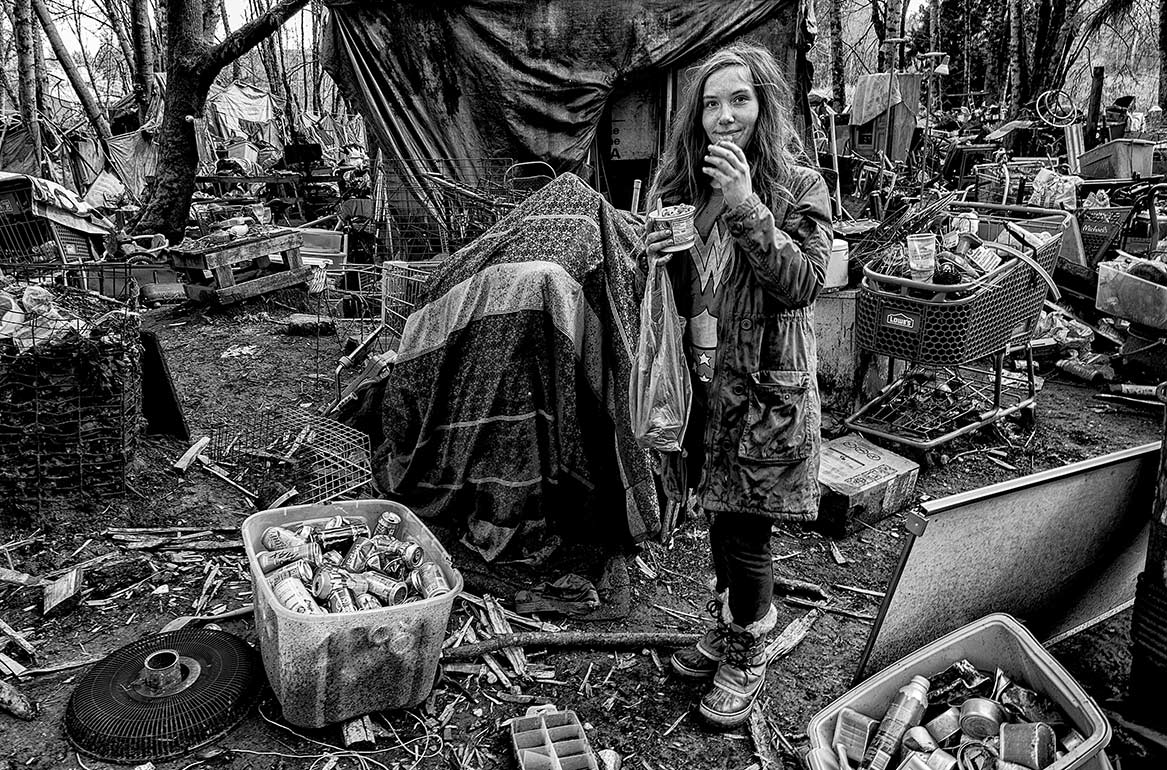
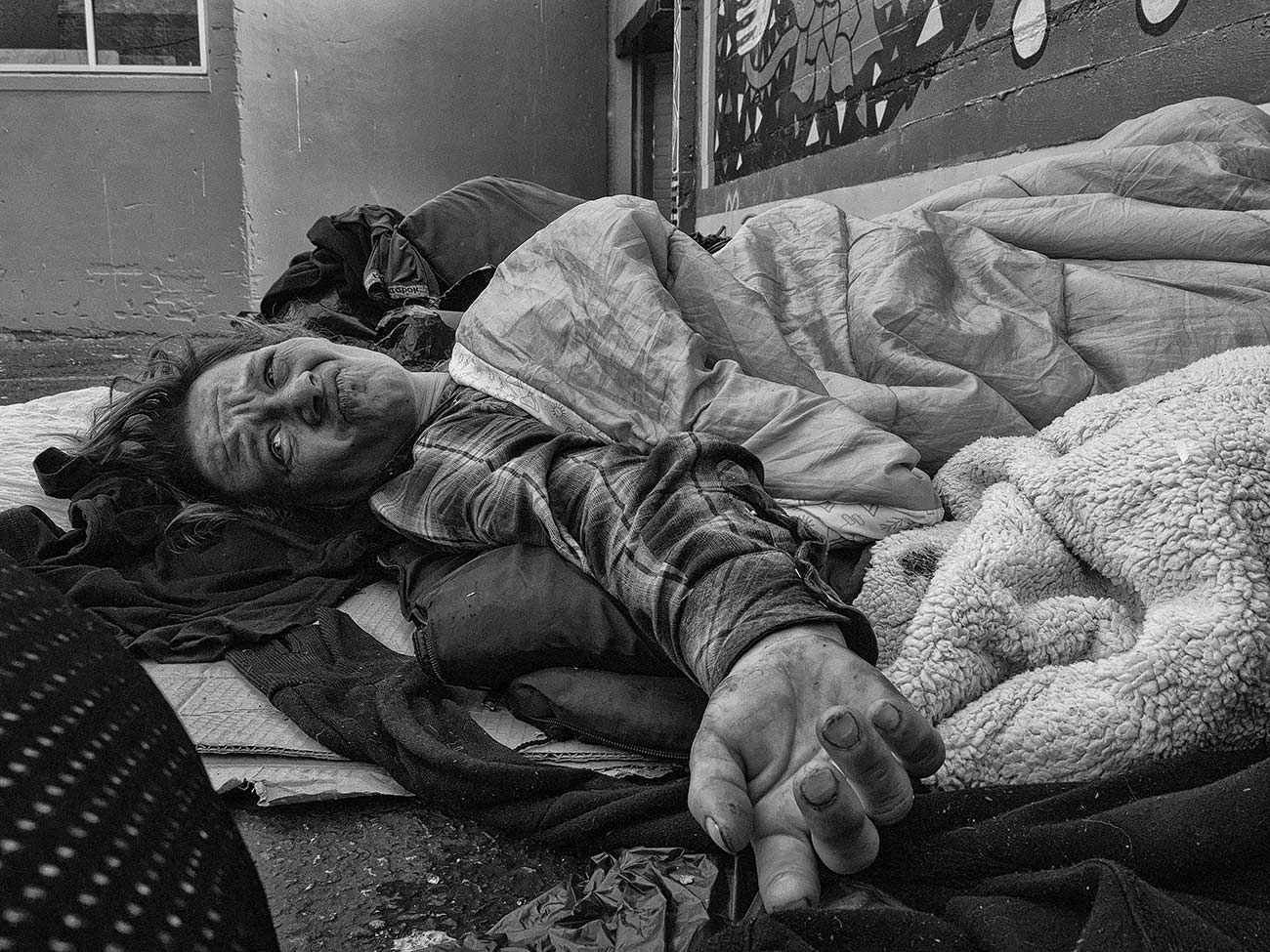
I have known some of the homeless I photograph for the two years I’ve worked on this documentary; others I meet for 10 or 15 minutes and never see them again.
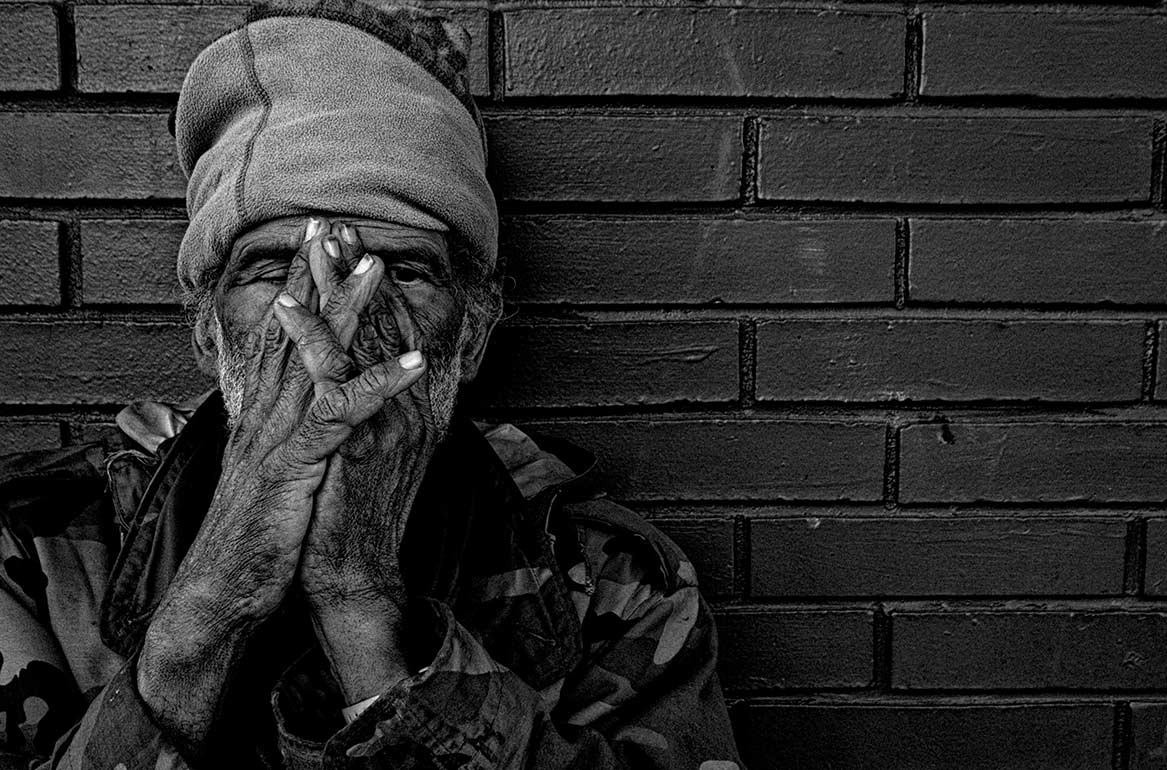
Mental health issues, substance abuse, poverty, domestic violence, and economic disparities all play a role in creating homelessness for the majority of the individuals I interact with. But all of them are human beings with a story unique to themselves.
JM Simpson © All rights reserved
JM Simpson © All rights reserved
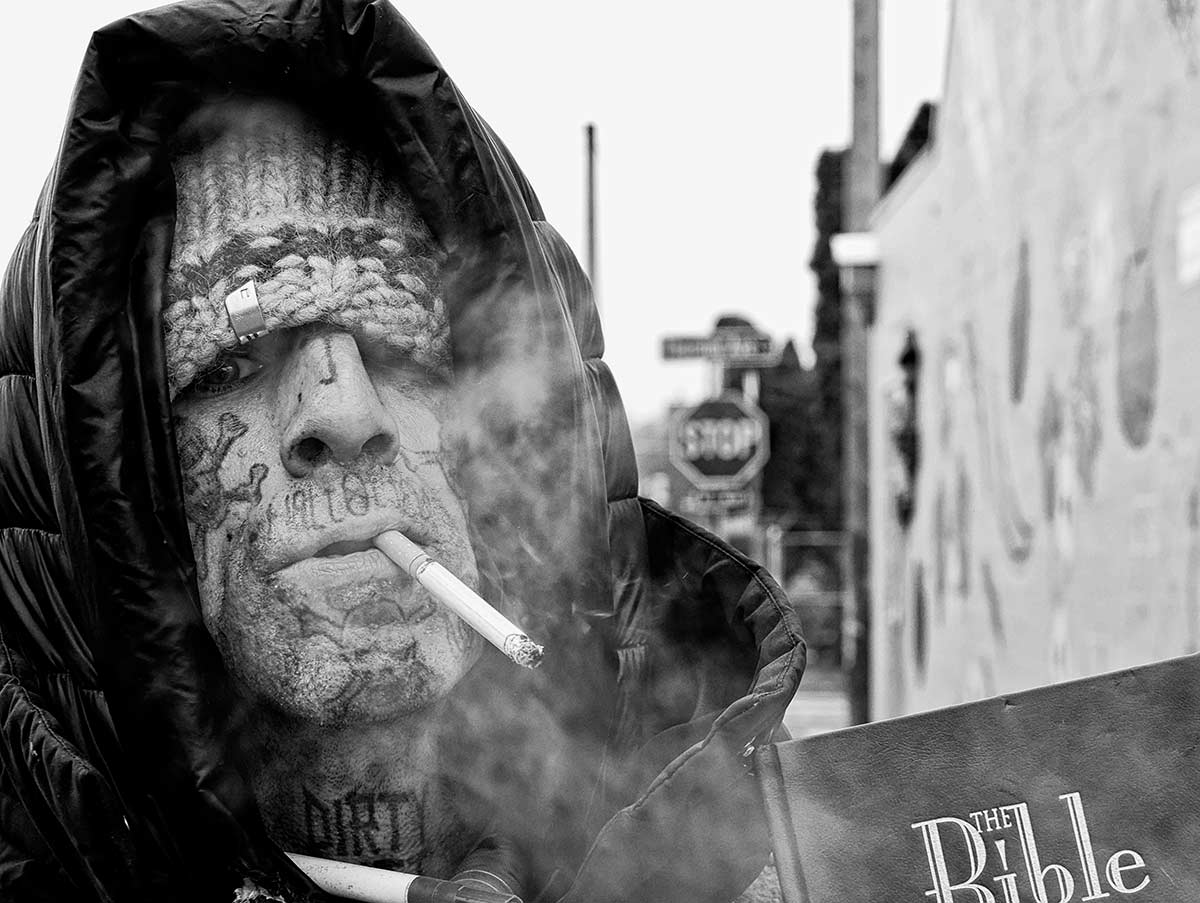
Sometimes, I am asked why I photograph the homeless, and I answer that I do not want society to ignore and/or forget them. Sometimes, I am asked why I photograph only in black and white, and I answer that color photography can be distractive but that a black-and-white photograph makes a clear and sharp connection with the viewer.
The whole point of my documentary photography is to tell the truth about any and all societal issues that many individuals would prefer to ignore. In my case, I am honestly portraying the homeless in Olympia, Washington—to show them as human beings who should enjoy the basic human right of having a place to live. As the documentary photographer Robert Frank once said, “There is one thing the photograph must contain, the humanity of the moment.”
Any culture’s humanity refers to the large and diverse set of mostly intangible aspects of social life—it consists of the values, beliefs, systems of communication, and practices that people share in common.
My work is dedicated to ending the inhumanity of the homeless.
JM Simpson © All rights reserved
JM SIMPSON
JM Simpson © All rights reserved
“I have known some of the homeless I photograph for the two years I’ve worked on this documentary; others I meet for 10 or 15 minutes and never see them again.”
-JM Simpson
JM Simpson is a retired community college history instructor, self-taught journalist, and photojournalist who resides in Lacey, Washington, USA.
He earned a Cable Act Award in 1994 for writing about the collapse of the first Tacoma Narrows Bridge; he was nominated for an Emmy Award in photojournalism in 2007 for his coverage of Joint Base Lewis-McChord soldiers during combat operations in Baghdad, Iraq; and he earned the Washington Press Association’s “Communicator of Excellence Sweepstakes Award” in both 2007 and 2008.
The US Army Heritage and Education Center and the Fort Lewis Museum house a significant collection of Simpson’s photography documenting the Iraq and Afghanistan wars from 2005 to 2012.
JM Simpson’s work has been published in the Canadian Camera Magazine, Olympus Passion, Photo PXL, and Street Photography Magazine.
“Sometimes, I am asked why I photograph the homeless, and I answer that I do not want society to ignore and/or forget them. Sometimes, I am asked why I photograph only in black and white, and I answer that color photography can be distractive but that a black-and-white photograph makes a clear and sharp connection with the viewer. “
He recently appeared on KBCT’s Northwest Now, a PBS affiliate.
To watch, visit www.pbs.org/video/jm-simpson-ugrazq
A native of Indiana, Simpson earned a BA in history from Central Michigan University and an MA in social science from Pacific Lutheran University.