

Documenting Cultural Beauty
by Michel Pedrero
Featured Projects:
Larim — Dance, Colors, and Cultural Marks
COLLECTION: Ethiopia, Papúa, Benín

Michel Pedrero © All rights reserved.
Larim — Dance, Colors, and Cultural Marks

Michel Pedrero © All rights reserved.
Larim women participate in a collective dance performed in dresses particularly striking for their intense and contrasting colors, a characteristic feature of their traditional clothing. The Larim, agro-pastoral people of South Sudan, maintain cultural practices in which dance and body ornament take a central place within community life.
Colorful fabrics and flags they carry not only bring visual strength to the scene, but also serve as markers of identity and social cohesion. In this context, dance becomes a space of meeting and cultural affirmation.

Michel Pedrero © All rights reserved.
In eastern South Sudan, three young larim move together to the beat of music. They wear fabrics in intense colors with their characteristic wide skirts and overlapping beaded necklaces, indicating belonging and stage of life.
In the second scene, a scarred back occupies the frame. The reliefs draw precise geometric patterns, inscribed as a sign of identity and social transit. The skin acts as a cultural archive.
The third scene shows another larim girl. Their presence, serene and discreet, continues the same visual narrative: color, body, and tradition as forms of collective memory.


Michel Pedrero © All rights reserved.
This photographic series documents the cultural expressions of the Larim people of South Sudan, focusing on the powerful visual language of dance, vibrant colors, and cultural body markings.
Through ceremonial dances, painted bodies, and symbolic adornments, the Larim community expresses identity, social bonds, and ancestral heritage. Movement, rhythm, and color become essential elements through which tradition is preserved and transmitted from generation to generation.

Michel Pedrero © All rights reserved.
In the eastern savannas of South Sudan, Larim women stand out for intensely colourful aesthetics. Her dresses and beaded necklaces bring in reds, whites and other vivid hues that contrast with the skin and the landscape. Visible scarifications on torso and arms form part of local ideals of beauty and social identity.
The environment combines red soil, areas of green grass and scattered trees. Among them is the so-called “desert rose”, a succulent shrub of the genus Adenium, adapted to dry climates and characterized by its thick trunk that stores water and its flowers of an intense pink. That vibrant pink resonates with the colors of fabrics and beads, creating a scene where body, dress, and landscape share the same chromatic palette.
In this series, Michel Pedrero captures moments when human expression, ritual, and visual symbolism converge, revealing how dance and body markings function not only as artistic forms but also as cultural narratives that embody the community’s memory and identity.

Michel Pedrero © All rights reserved.
Larim women participate in a collective dance performed in dresses particularly striking for their intense and contrasting colors, a characteristic feature of their traditional clothing. The Larim, agro-pastoral people of South Sudan, maintain cultural practices in which dance and body ornament take a central place within community life.
Colorful fabrics and flags they carry not only bring visual strength to the scene, but also serve as markers of identity and social cohesion. In this context, dance becomes a space of meeting and cultural affirmation.

Michel Pedrero © All rights reserved.
Michel Pedrero

My life is on the road. Along the way, I tell stories through my experiences to all who want to hear or feel. I am a nomad at heart, passionate about all things wild. Photography is my life. My photographs are feelings, frozen souls, and my only truth.
Michel Pedrero (Plasencia, Spain) is a Spanish photojournalist and documentary photographer known for his immersive, humanistic visual storytelling. Working across five continents, his work explores identity, culture, and the resilience of communities, combining ethnographic sensitivity with a strong aesthetic language rooted in natural light and atmosphere.
His photography has received international recognition, including acknowledgment from World Press Photo. He is a recent finalist of The Independent Photographer and was selected as Photographer of the Week by All About Photo. His work has been featured in leading international publications such as National Geographic, The Times, and Vogue, with several images selected by PhotoVogue.
Michel Pedrero © All rights reserved.
Pedrero’s photographs have been exhibited in major cultural capitals including Paris, London, and New York, and his projects document communities and traditions across Africa, Asia, the Americas, Europe, and the Middle East.
Working under the professional name Wildnomadphoto, he pursues long-term visual narratives that go beyond documentation, seeking to reveal the emotional and cultural essence of the people and places he encounters. His work stands at the intersection of documentary photography and visual anthropology, creating images that are both intimate and timeless.

Michel Pedrero © All rights reserved.
COLLECTION: Ethiopia, Papúa, Benín

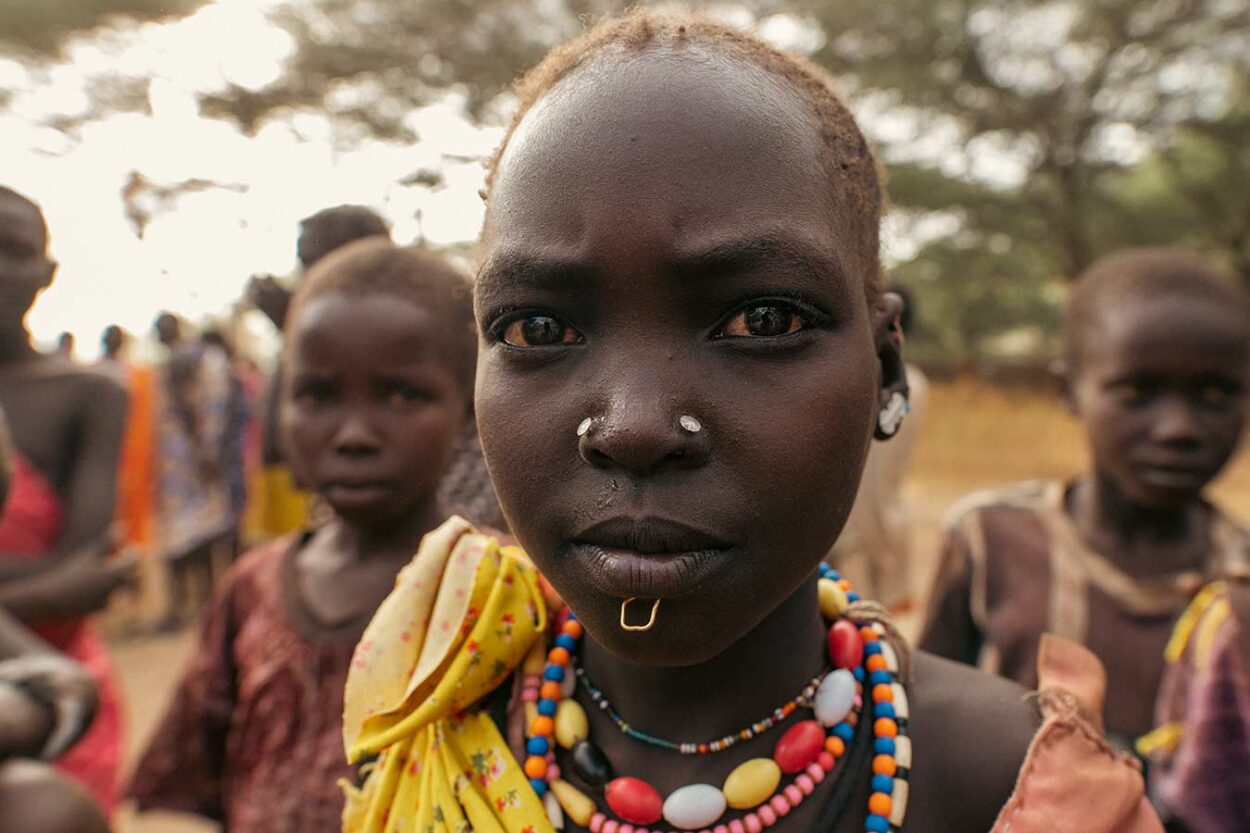
Banna children. Key Afer, Etiopía. 2024.
Michel Pedrero © All rights reserved.
Working under the professional name Wildnomadphoto, Michel Pedrero pursues long-term visual narratives that go beyond documentation, seeking to reveal the emotional and cultural essence of the people and places he encounters. His work stands at the intersection of documentary photography and visual anthropology, creating images that are both intimate and timeless.


Michel Pedrero © All rights reserved.

The Bopa Priest.
Bopa, Benin 2025.
Michel Pedrero © All rights reserved.

The Bopa Priest.
Bopa, Benin 2025.
Michel Pedrero © All rights reserved.

Michel Pedrero © All rights reserved.

Michel Pedrero © All rights reserved.
Markus is one of the last Korowai chiefs remaining in the remote jungles of West Papua. The Korowai people live in tree houses at more than 30 metres high. Here I photograph him climbing from the top of a treehouse in the village of Erwek in Western Papua. Plus I was lucky enough to live and sleep in one of these houses with Markus and his friend. You can see it in the @lethalcrysis_ documentary about the Korowai.
Markus is one of the last remaining Korowai chiefs in the remote jungles of West Papua. The Korowai live in tree houses more than 30 meters high. Here I photograph him climbing from the top of a tree house in the village of Erwek, West Papua.
Michel Pedrero © All rights reserved.
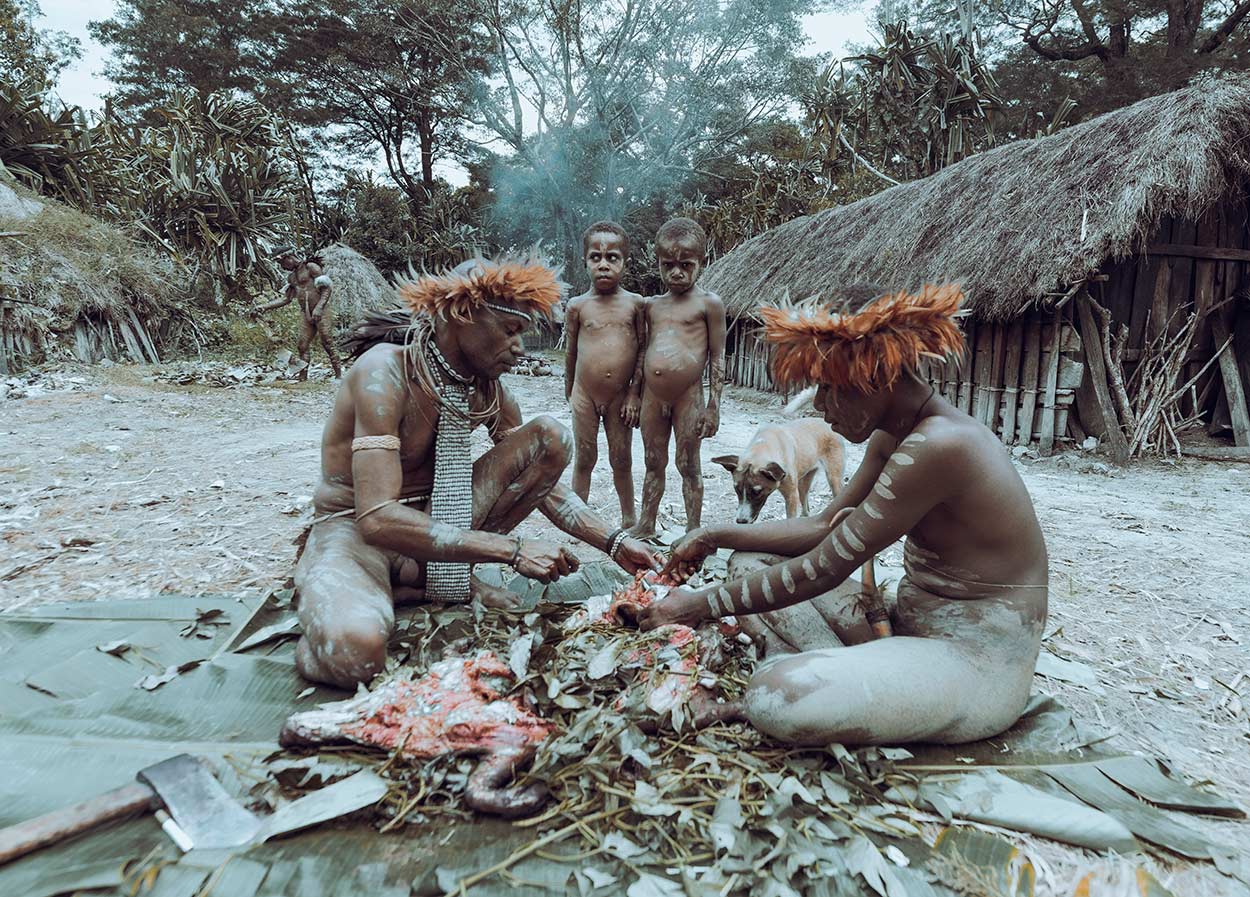
In the highlands of Papua, the Dani tribe preserves one of their most significant practices: the pig ceremony. The first image documents two children solemnly contemplate the newly slaughtered animal. The second image shows the initial phase of the despiece, carried out by the village men, who prepare the meat for the ritual feast, which usually includes the technique of mumu (a traditional underground cooking with hot stones and banana leaves).
Los niños observan en silencio cómo los hombres mayores desmiembran su cuerpo con precisión ritual, entre hojas, humo y gesto contenido.
This isn’t just an act of livelihood: it’s a learning scene. In every cut, children absorb roles, gestures, and meanings that will one day be their own.
Knowledge is not taught, it is inherited through sharing.
Here, knowledge is not transmitted in words, but through glance, repetition and ritual participation.
Pig is food, but it’s also memory, hierarchy and belonging.
A livelihood scene that is, above all, a culture lesson.

Michel Pedrero © All rights reserved.