
A Night of Faith in Stone: Christmas in Lalibela
By Frank Binder
St Mary’s Church
Frank Binder © All rights reserved.
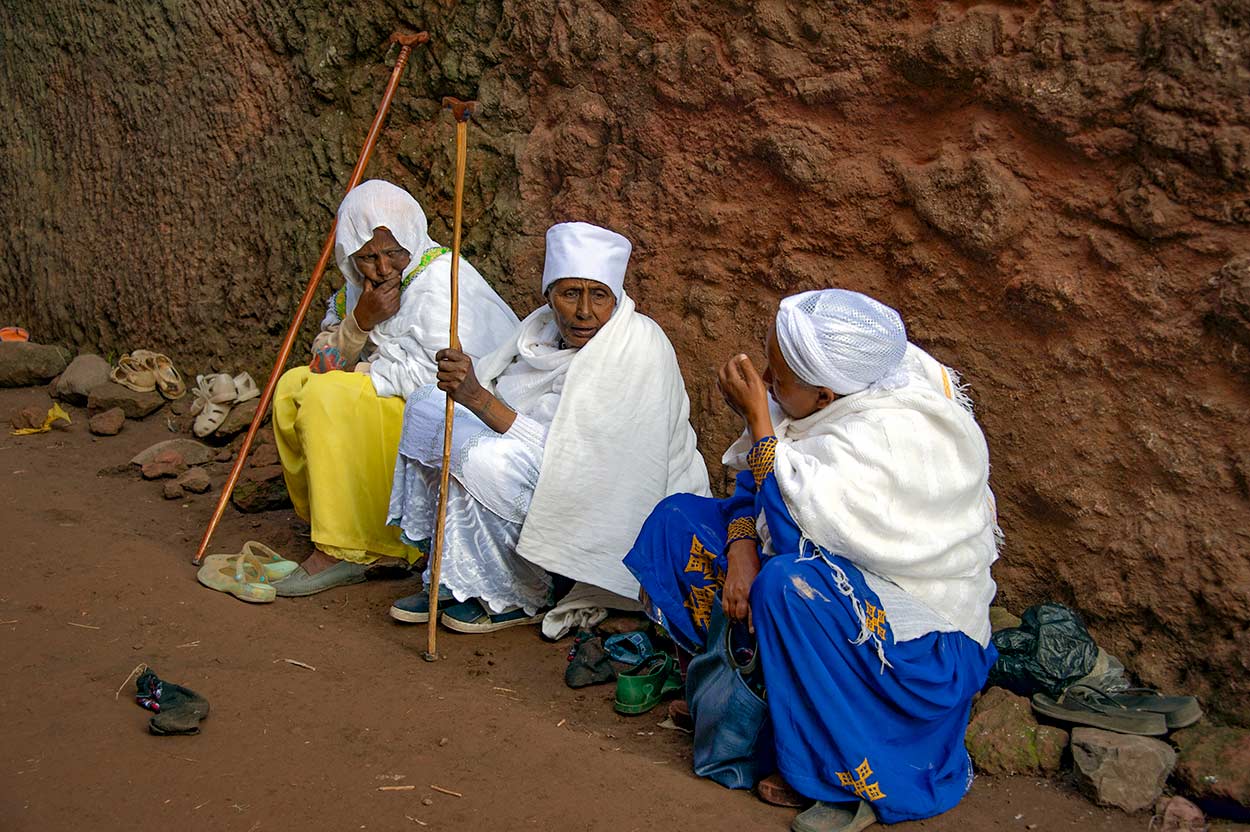
As darkness settles over the highlands of northern Ethiopia, the town of Lalibela begins to glow—not with electric lights or holiday decorations, but with the soft flicker of thousands of candles carried by pilgrims wrapped in white cotton shawls. Their chants drift through the cool mountain air, echoing among some of the most extraordinary churches ever created by human hands.
This is Genna, the Ethiopian Orthodox celebration of Christmas.
Frank Binder © All rights reserved.
Each January, tens of thousands of pilgrims journey to Lalibela, a sacred town often described as the spiritual heart of Ethiopia. They arrive on foot, by bus, and from distant villages scattered across the Ethiopian highlands. Many have traveled for days. Their destination is a remarkable complex of eleven medieval churches carved directly into solid volcanic rock more than eight centuries ago.
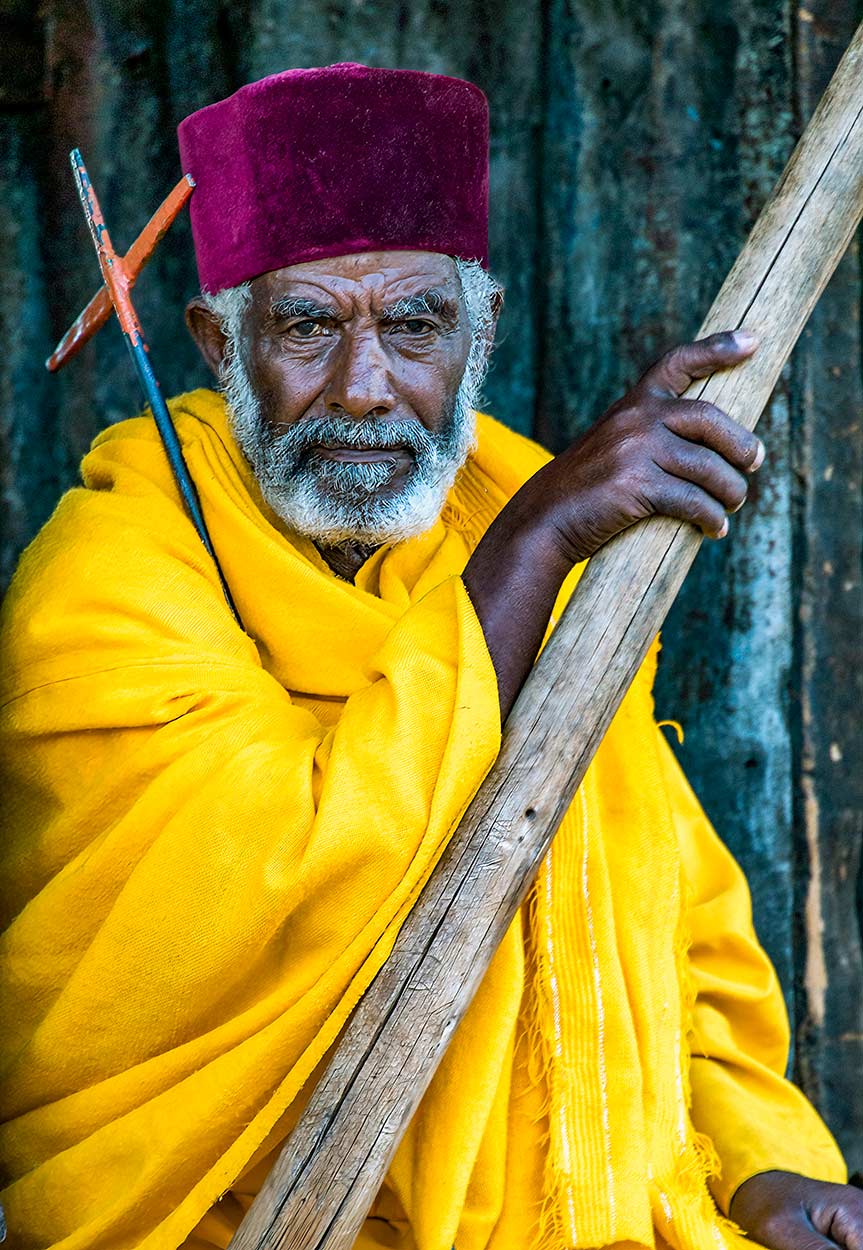
Frank Binder © All rights reserved.
Right: Bearing the Cross
Frank Binder © All rights reserved.
The sheer number of worshippers arriving for Genna far exceeds the limited supply of hotels and guesthouses in Lalibela. In response, much of the town transforms into a vast temporary campground. Open fields, church courtyards, and every available patch of ground become places of shelter as pilgrims spread blankets, erect simple tents, and prepare to spend several nights outdoors. Entire families gather around small cooking fires, sharing meals and stories while awaiting the Christmas liturgy.
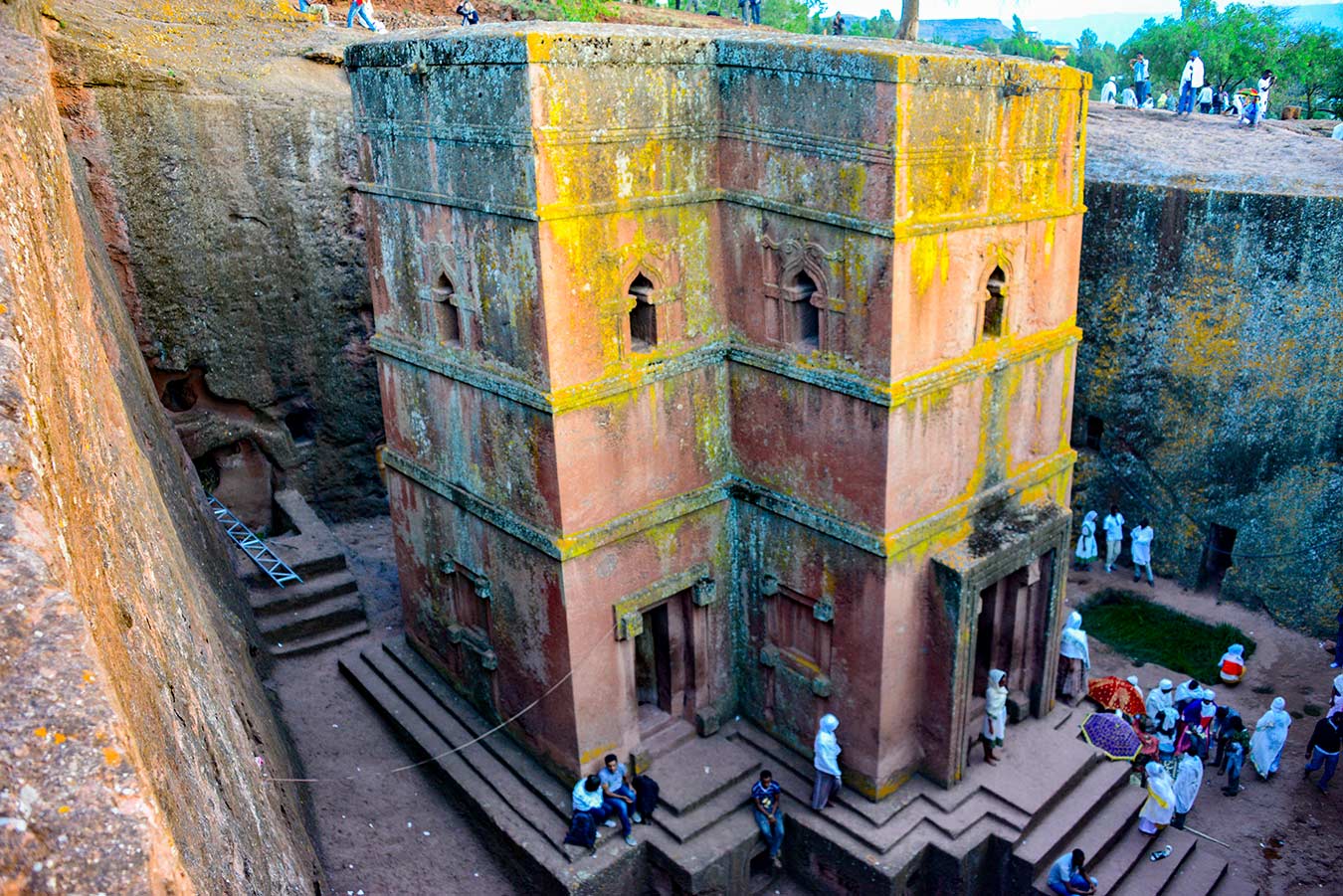
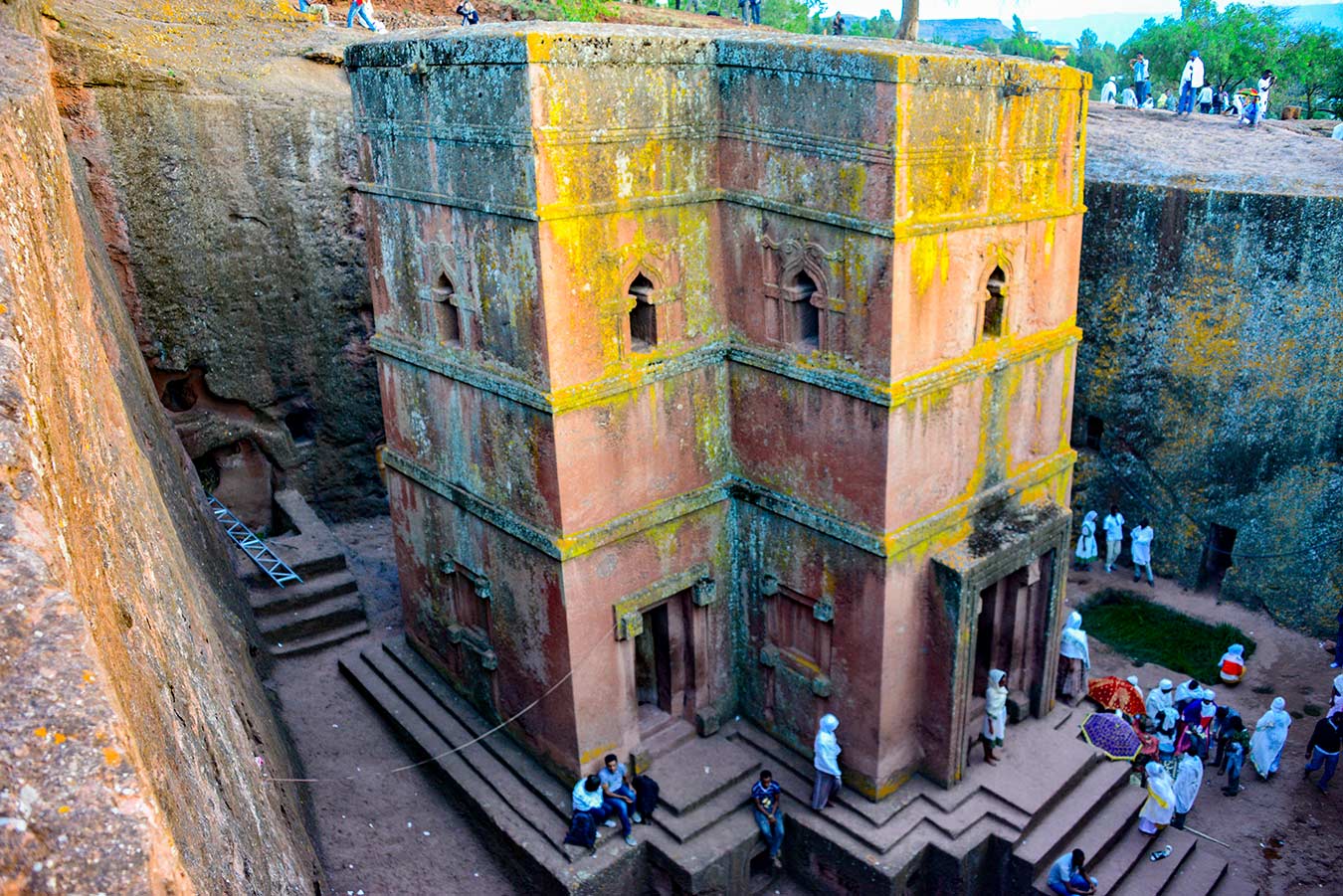
Unlike traditional churches built upward from the earth, Lalibela’s sanctuaries were excavated downward into the bedrock. Massive trenches surround the structures, revealing entire buildings that appear to have been sculpted from a single piece of stone.
The most iconic of these is Bet Giyorgis, the Church of Saint George, whose perfectly formed cross-shaped roof emerges from the earth like a monument to faith itself.
Frank Binder ©
All rights reserved.
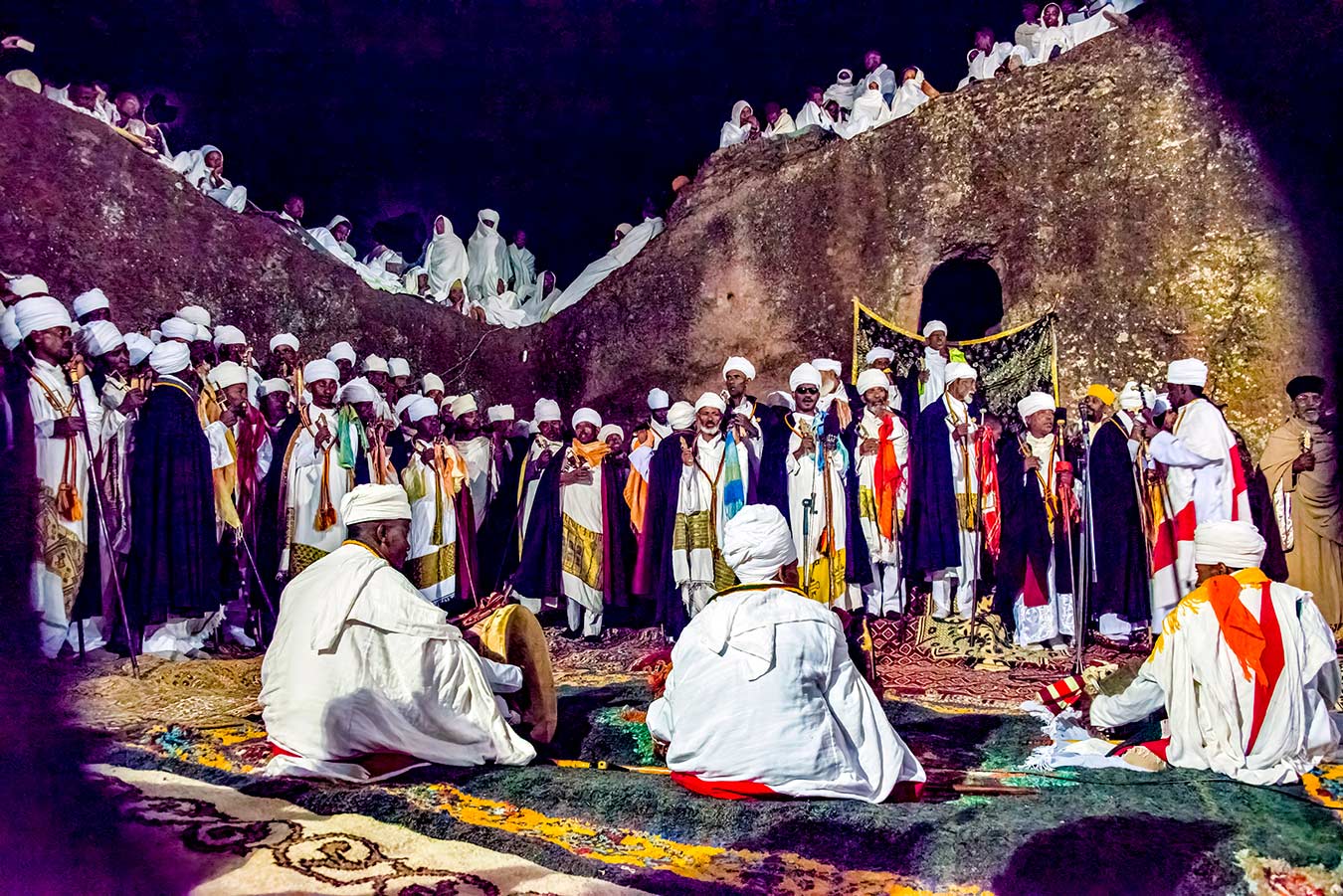
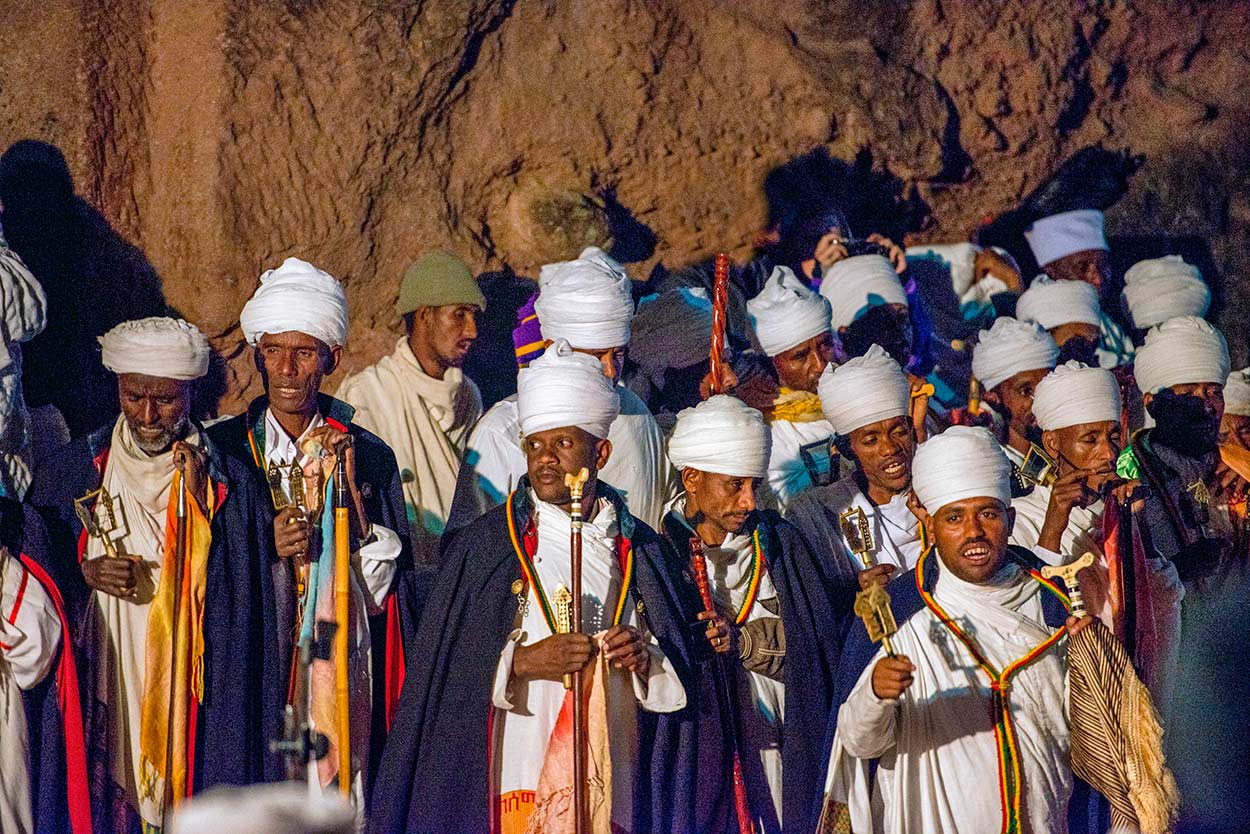
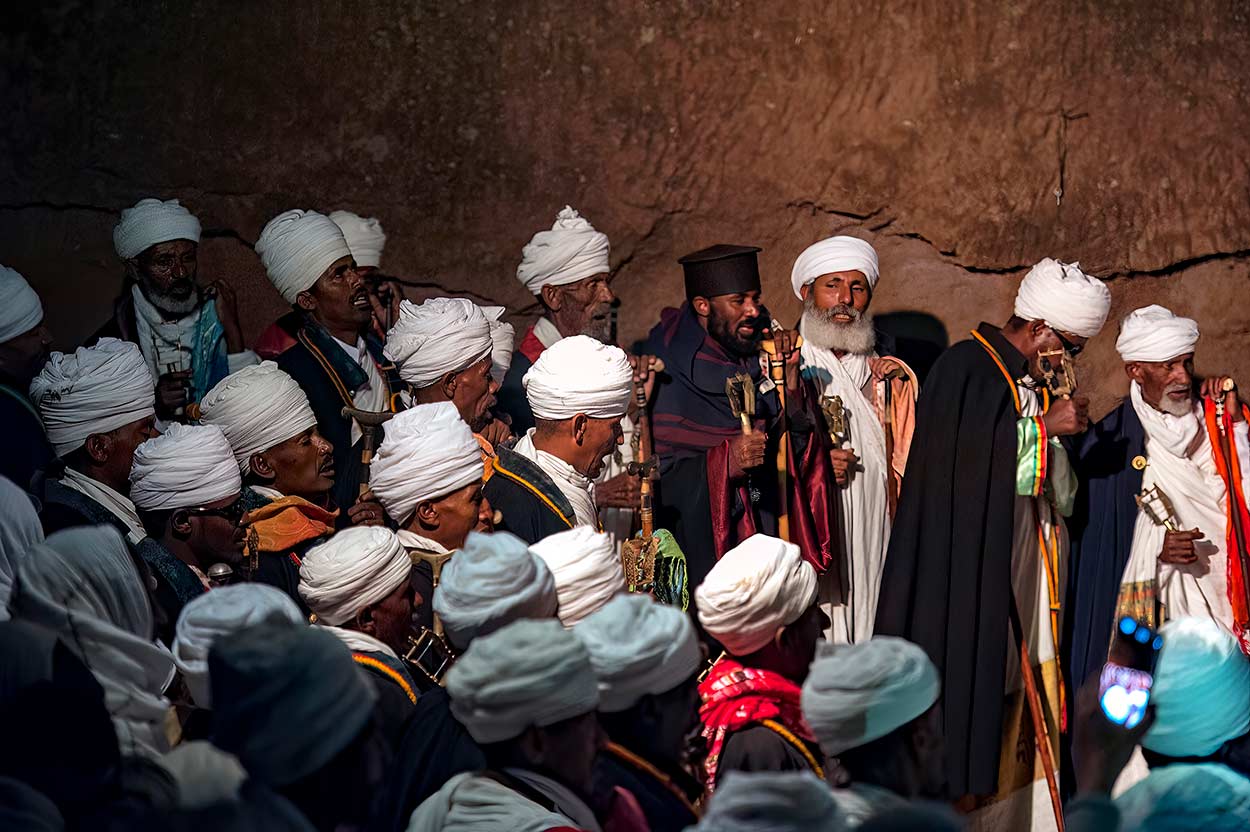
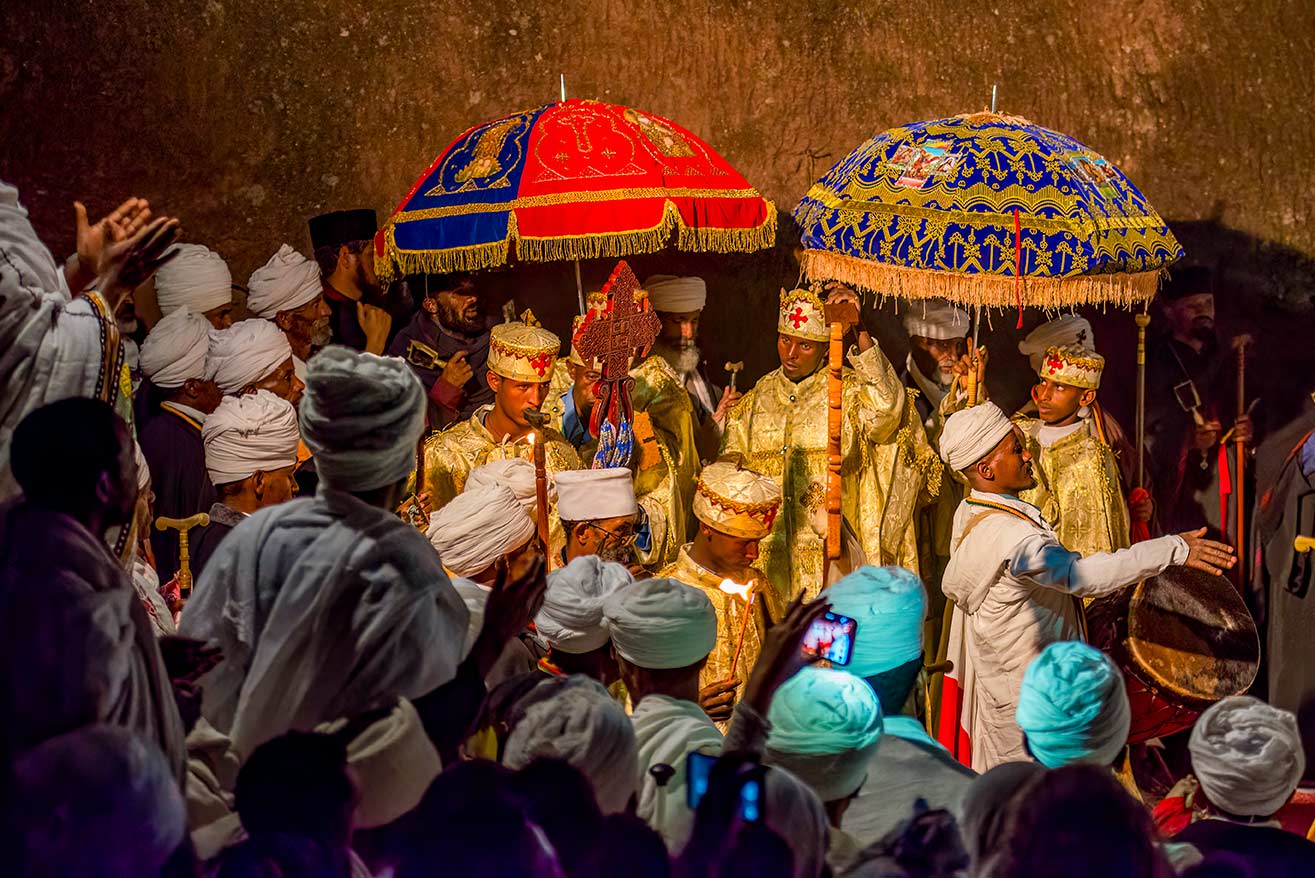
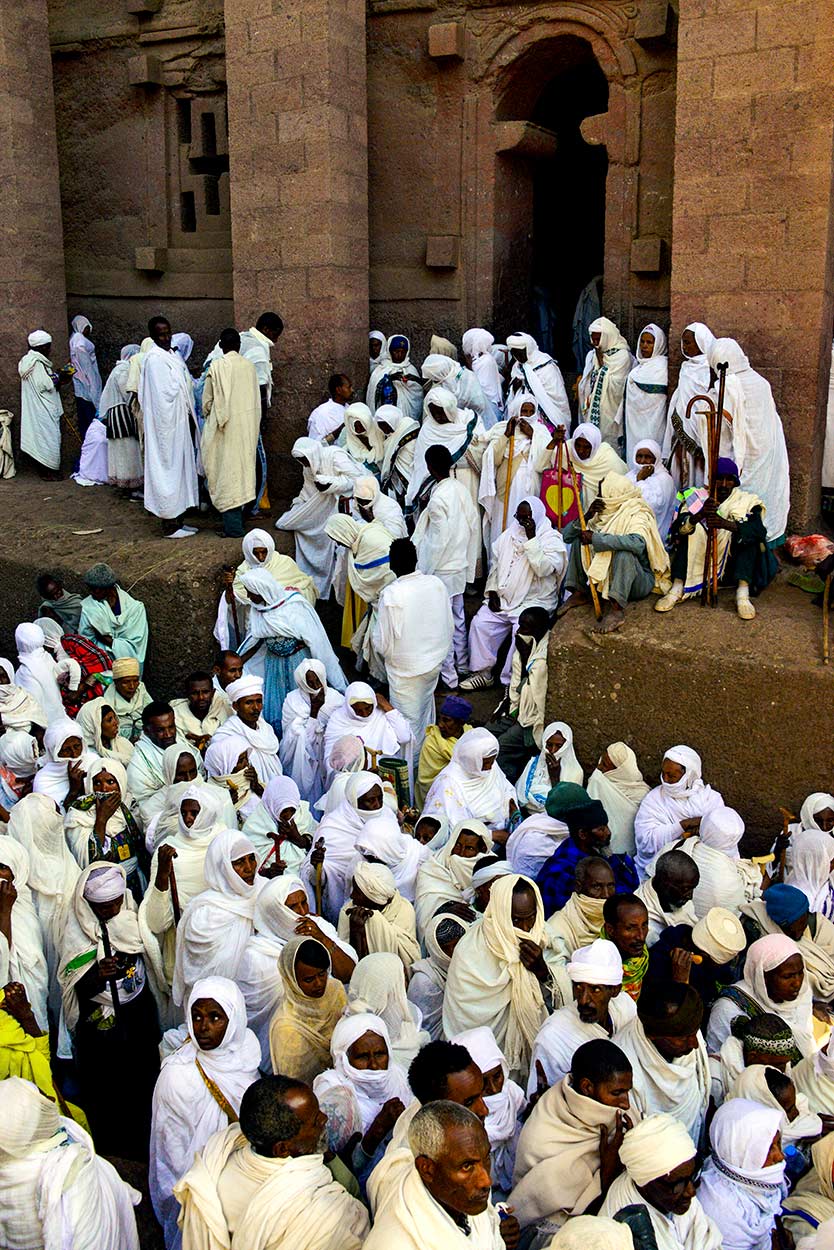
On Christmas Eve, the churches become the center of an immense religious gathering. Pilgrims spread blankets across courtyards and pathways, settling in for a night of prayer beneath the stars. Families huddle together against the mountain chill. Priests in richly embroidered robes move through the crowds carrying crosses and prayer staffs. The atmosphere is both solemn and celebratory, a blend of devotion and anticipation.
As midnight approaches, the chanting intensifies.
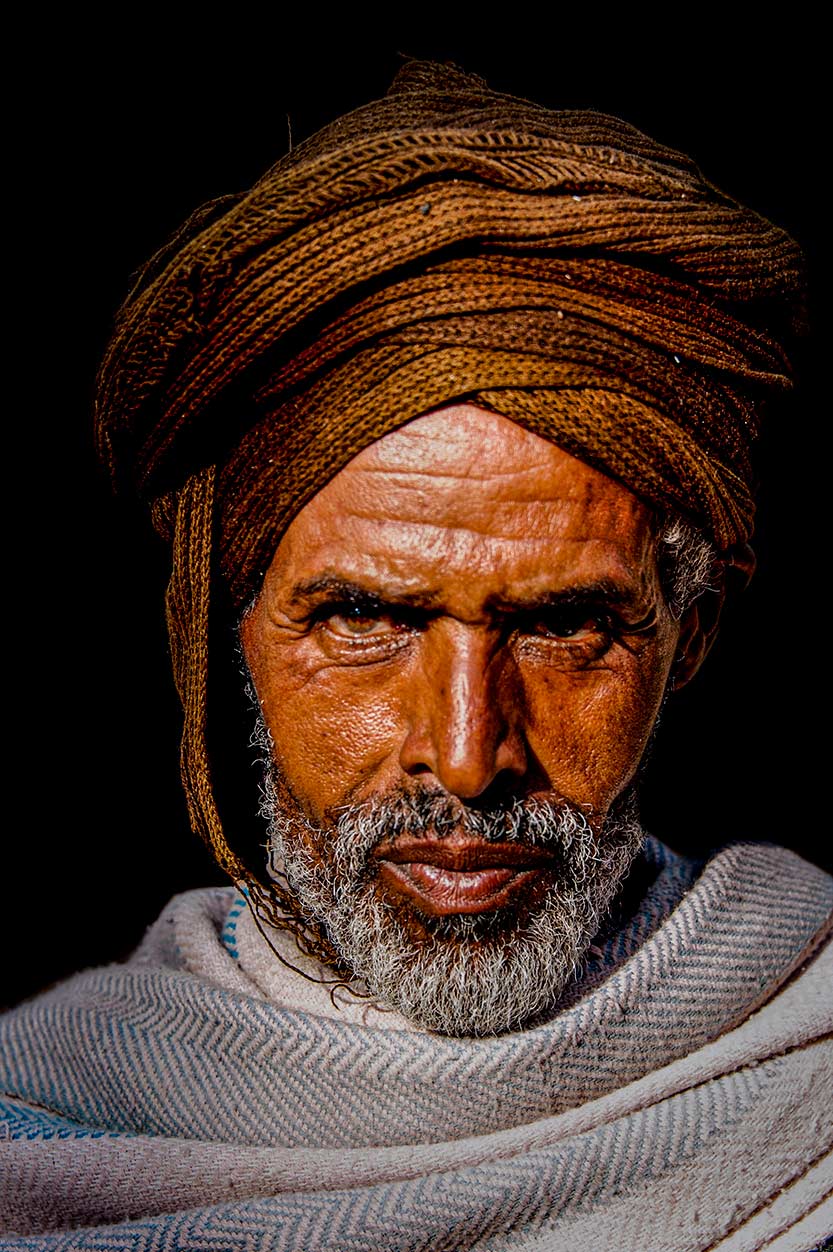
For the Ethiopian Orthodox faithful, Christmas is not merely a holiday; it is one of the most important events in the religious calendar. Worshippers gather shoulder to shoulder around the ancient churches, many holding candles whose flames illuminate faces etched with reverence and expectation. The rhythmic prayers, sung in the ancient liturgical language of Ge’ez, have changed little over centuries.
Frank Binder © All rights reserved.
The scene is unlike any Christmas celebration found elsewhere in the world.
There are no brightly wrapped gifts, no decorated trees, and no commercial distractions. Instead, the focus remains firmly on worship, community, and the enduring traditions of one of Christianity’s oldest branches. Ethiopia embraced Christianity in the fourth century, centuries before much of Europe, and many of the customs practiced in Lalibela today trace their roots deep into that history.
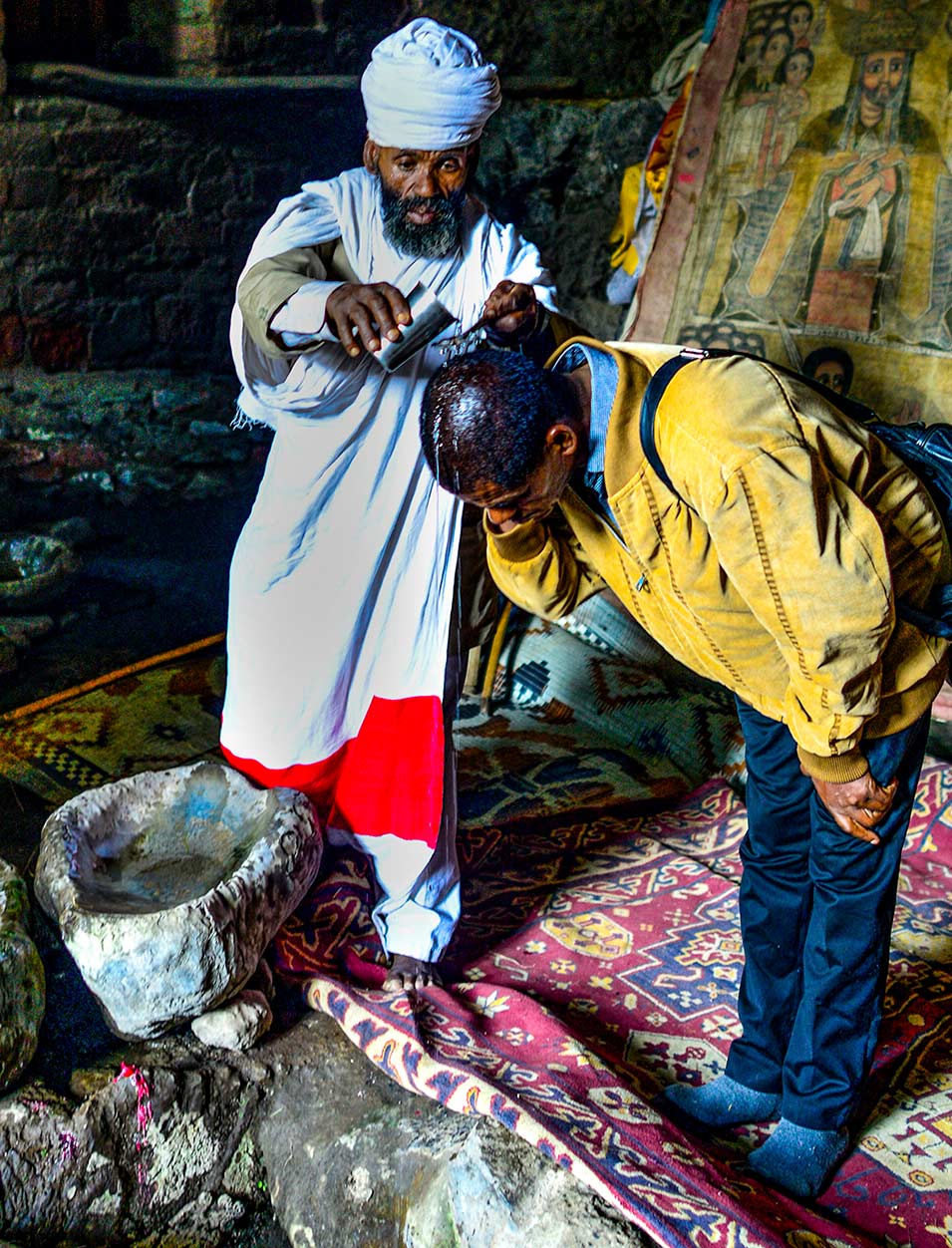
For photographers, Lalibela presents an extraordinary visual experience. The white garments worn by pilgrims create rivers of flowing fabric that contrast dramatically with the dark volcanic stone of the churches. Candlelight dances across weathered faces. Clouds of incense drift through shafts of morning light. Everywhere, faith becomes visible.
Frank Binder © All rights reserved.
Yet the most striking aspect of the celebration may be its timelessness.
Standing among the pilgrims before dawn, watching worshippers pray beside churches that have stood for more than 800 years, one can feel the centuries collapse. The same prayers have been spoken here by countless generations. The same rock walls have reflected their voices. The same stars have shone over the faithful gathered in expectation.
When the Christmas liturgy concludes, and daylight spreads across the Ethiopian plateau, pilgrims begin to disperse. Some return to nearby villages. Others face journeys of many miles home. The churches remain, silent once again, carved into the living stone of Lalibela.
For a brief moment each year, these ancient sanctuaries become the stage for one of the world’s most remarkable religious gatherings—
a celebration where history, architecture, and faith converge in a way found nowhere else on Earth.
In Lalibela, Christmas is not simply remembered.
It is lived.
-Frank Binder
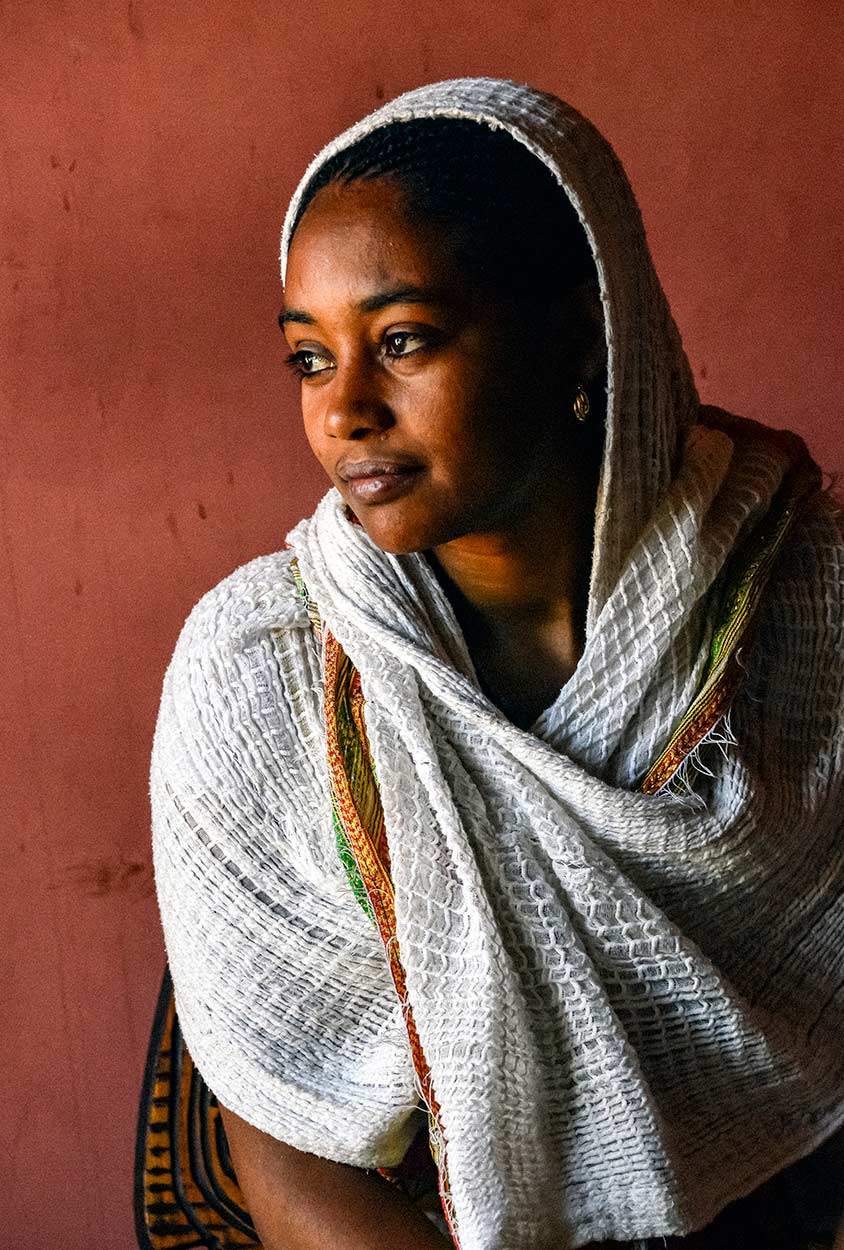
Right: Portrait of a young congregant
Frank Binder © All rights reserved.
Frank Binder

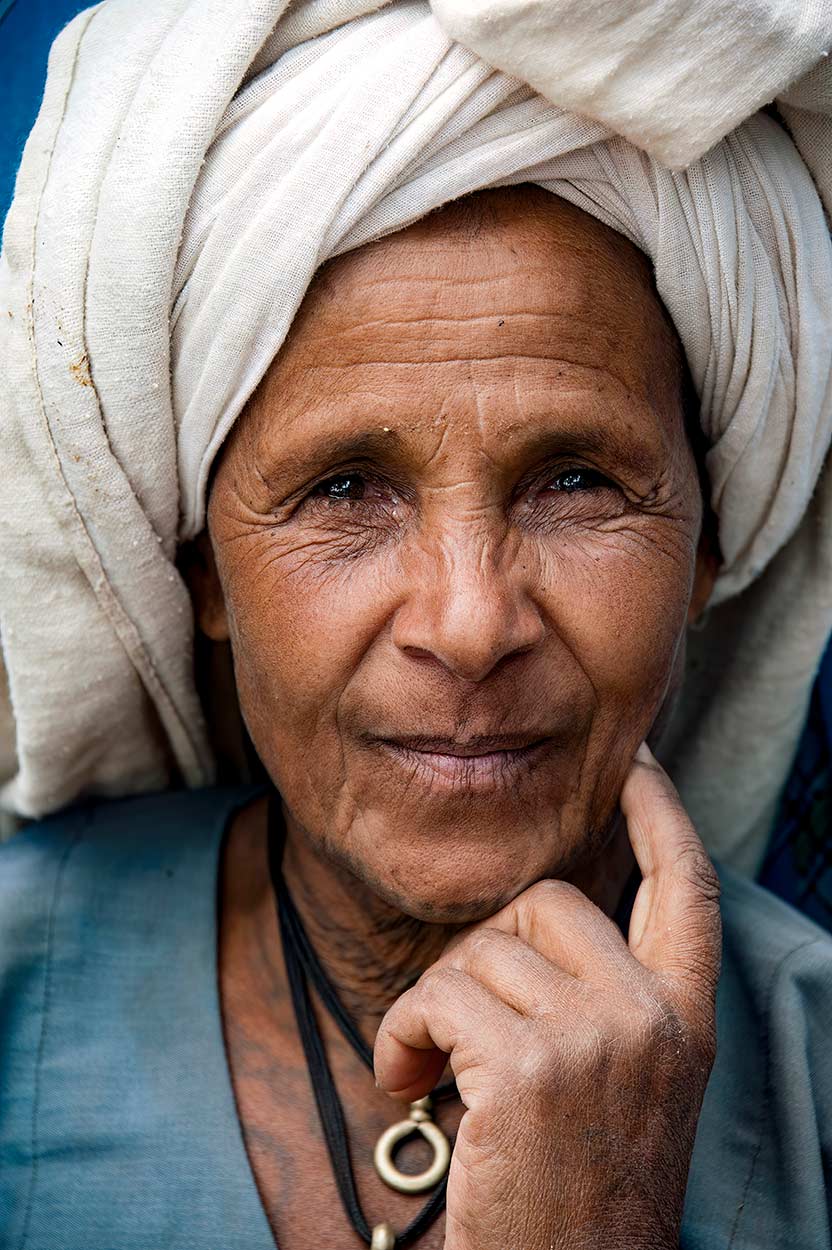
Right: Portrait of a Pilgrim
Frank Binder © All rights reserved.
“Over the last 15 years, my photography career has been dedicated to capturing the world’s wildlife and humanity in their most authentic and evocative moments.
From the majesty of the natural world to the intimate expressions of diverse cultures, my lens has sought to preserve and share these stories with passion and commitment.
Each image is a testament to my enduring love for the natural world and the rich tapestry of human experience.”
– Frank Binder
Frank Binder © All rights reserved.
Frank Binder is a distinguished fine art photographer based in the United States. His work is characterized by a deep sensitivity to his subjects, whether capturing the untamed essence of wildlife in its natural habitats or documenting nuanced aspects of human existence.
His portfolio includes several significant projects and series, each marked by meticulous attention to detail and a compelling narrative.
Binder has garnered international acclaim, having won numerous prestigious awards for his work.
Binder’s photographs are prominently featured in private collections worldwide, where they resonate with viewers for their emotional depth and technical brilliance.
Frank Binder © All rights reserved.