
Hadaka Matsuri
Okayama, Japan, 2026
By Costanza Rossi
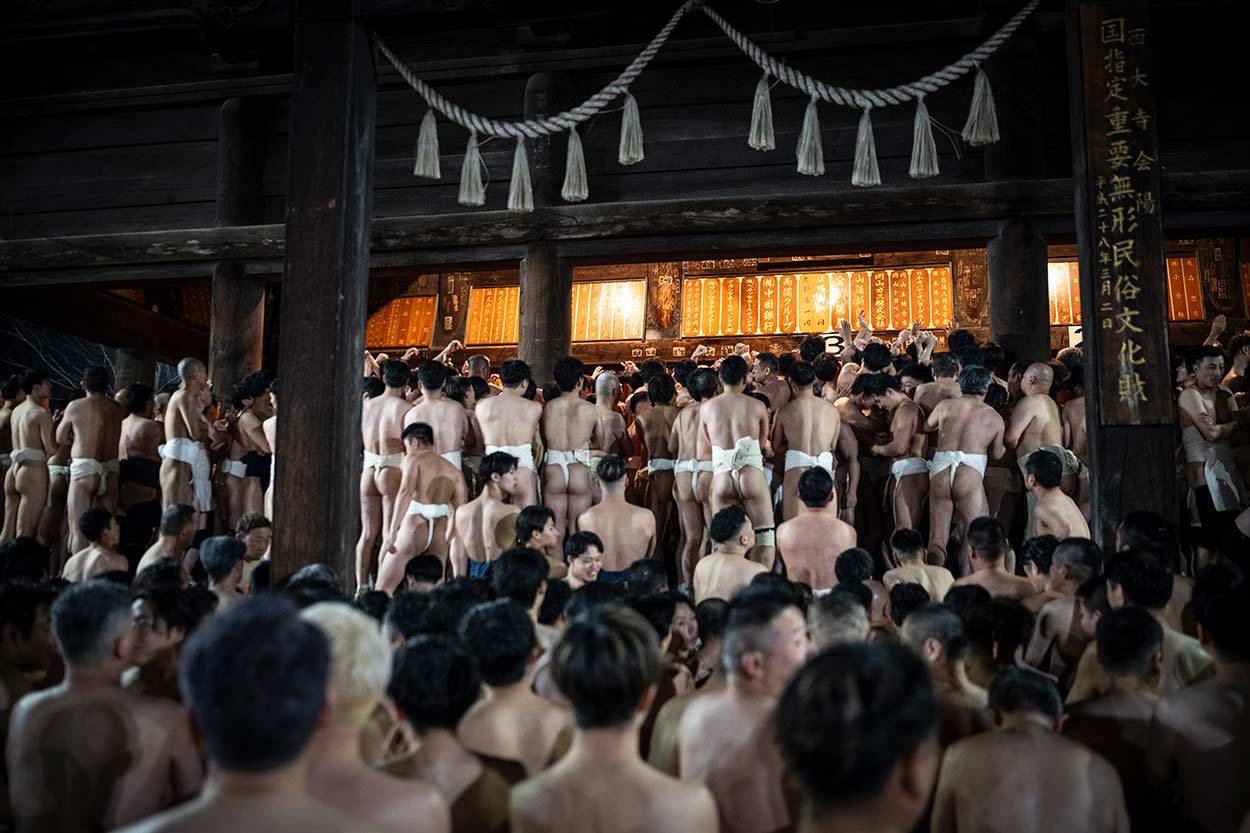
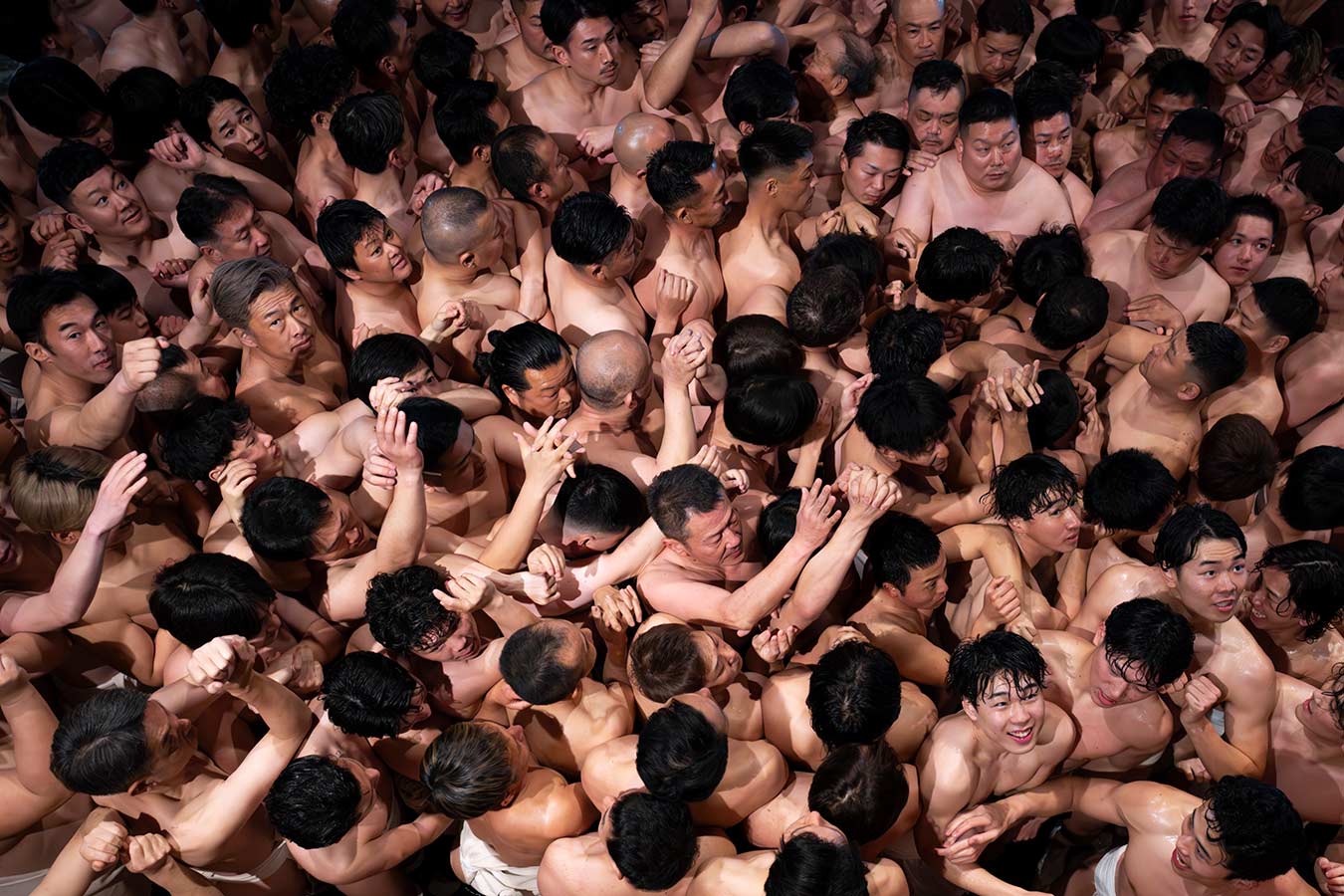
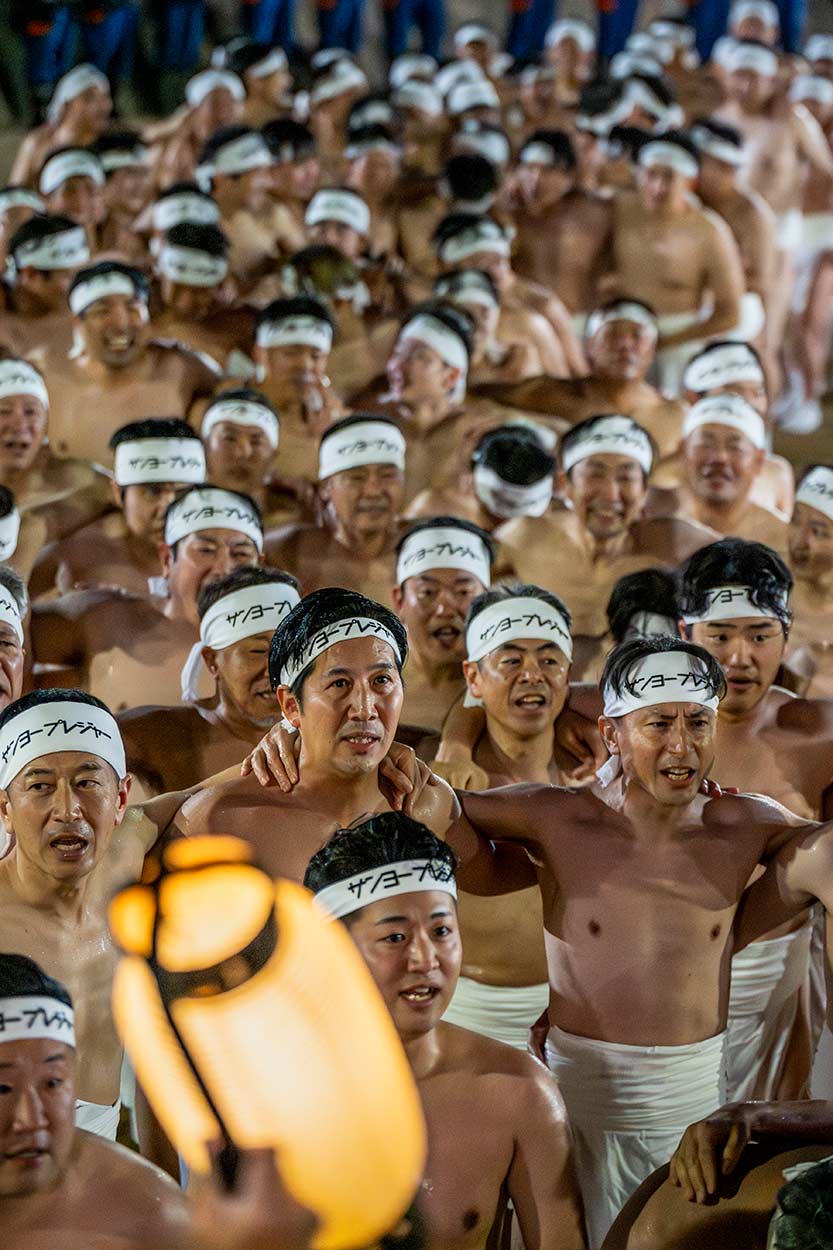
Thousands of men, naked but for a loincloth, fill the main hall of Saidaiji Kannon-in as the rite nears its climax.
Costanza Rossi © All rights reserved
Thousands of men, naked but for a loincloth, fill the main hall of Saidaiji Kannon-in as the rite nears its climax.
Costanza Rossi © All rights reserved
Boys take part in the children’s hadaka matsuri, held earlier in the day before the men’s rite; their loincloths bear the names of their local schools.
Costanza Rossi © All rights reserved
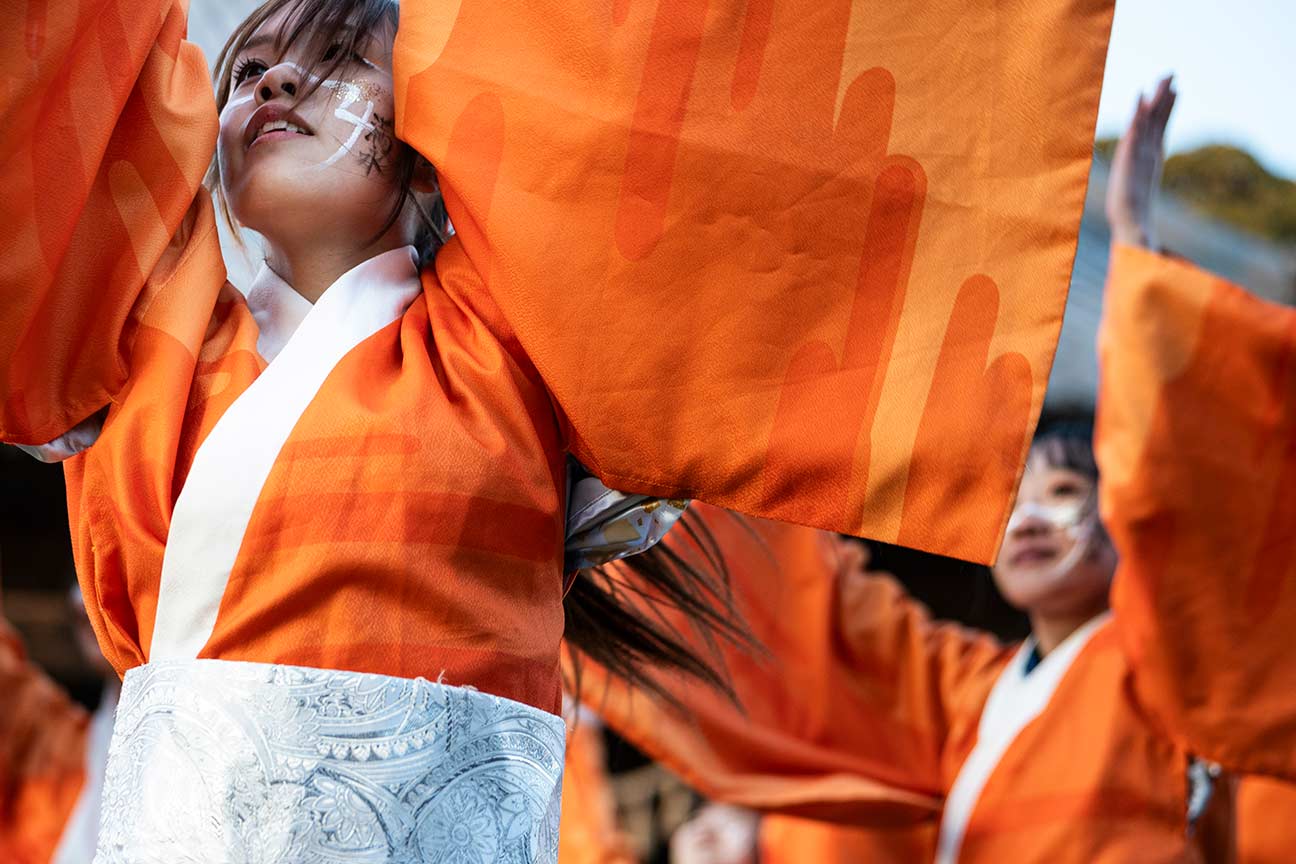
Boys take part in the children’s hadaka matsuri, held earlier in the day before the men’s rite; their loincloths bear the names of their local schools.
Costanza Rossi © All rights reserved
The Saidaiji Eyō is one of Japan’s oldest hadaka matsuri, or “Naked Festivals,” held every February at the Saidaiji Kannon-in temple in Okayama. It has continued, largely unchanged, for about five hundred years.
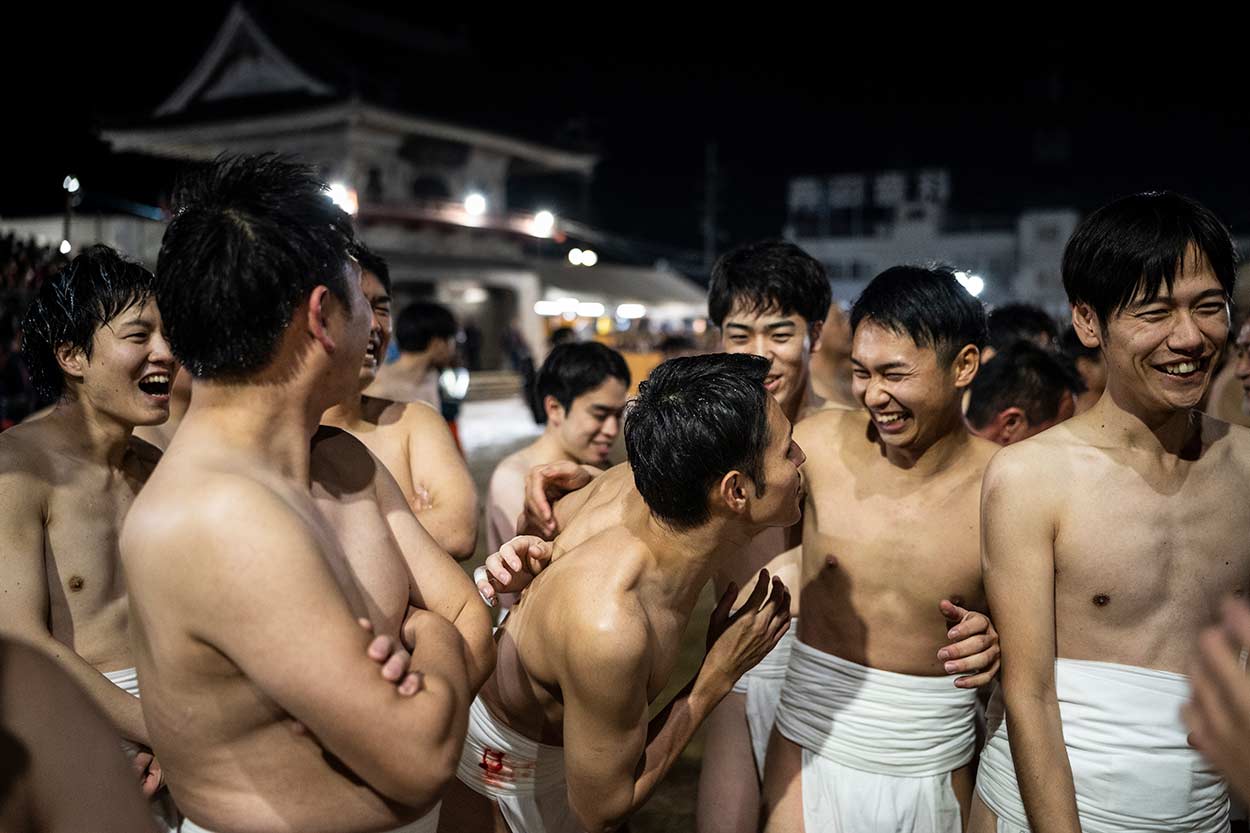
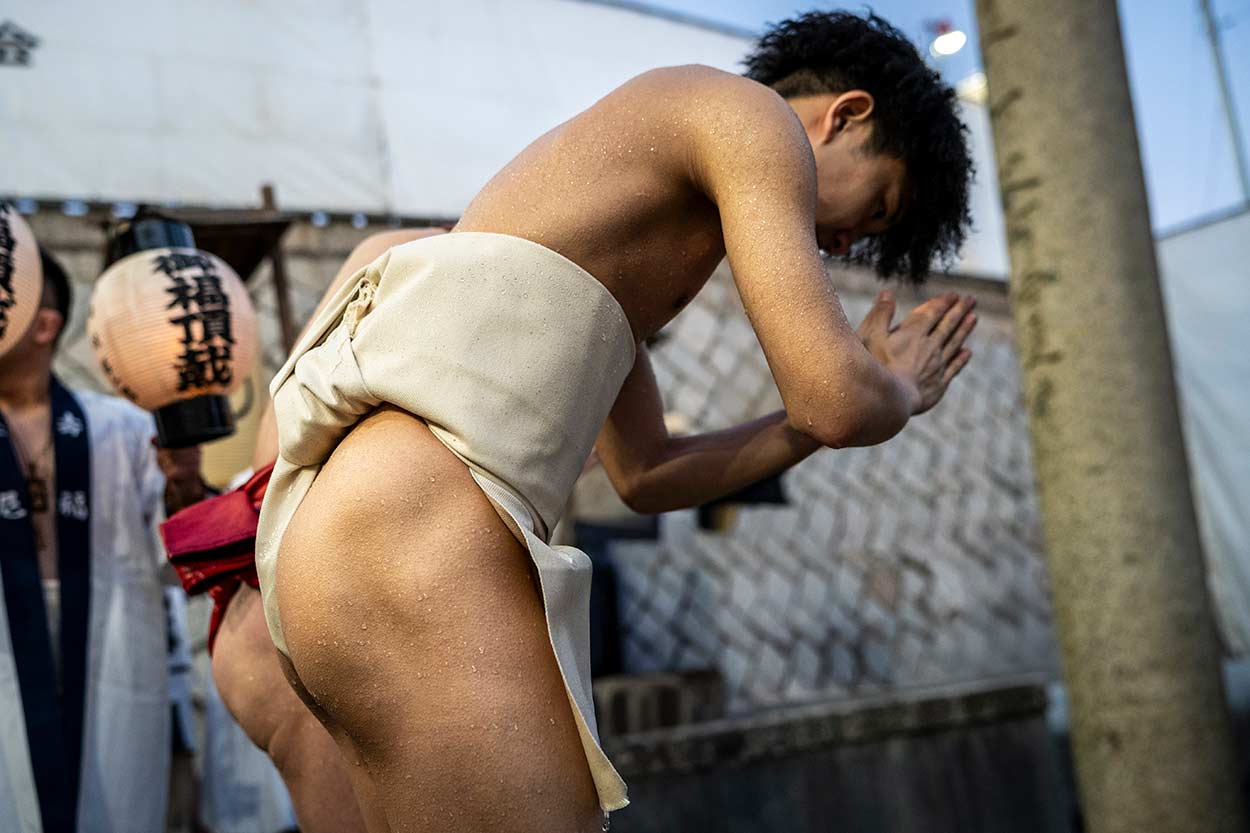
Thousands of men take part, wearing only a white loincloth and split-toe tabi. They purify themselves in cold water before entering the temple, and again throughout the long build-up to the final rite. Held in the depths of winter, it is at once an act of devotion and a test of endurance against the cold.
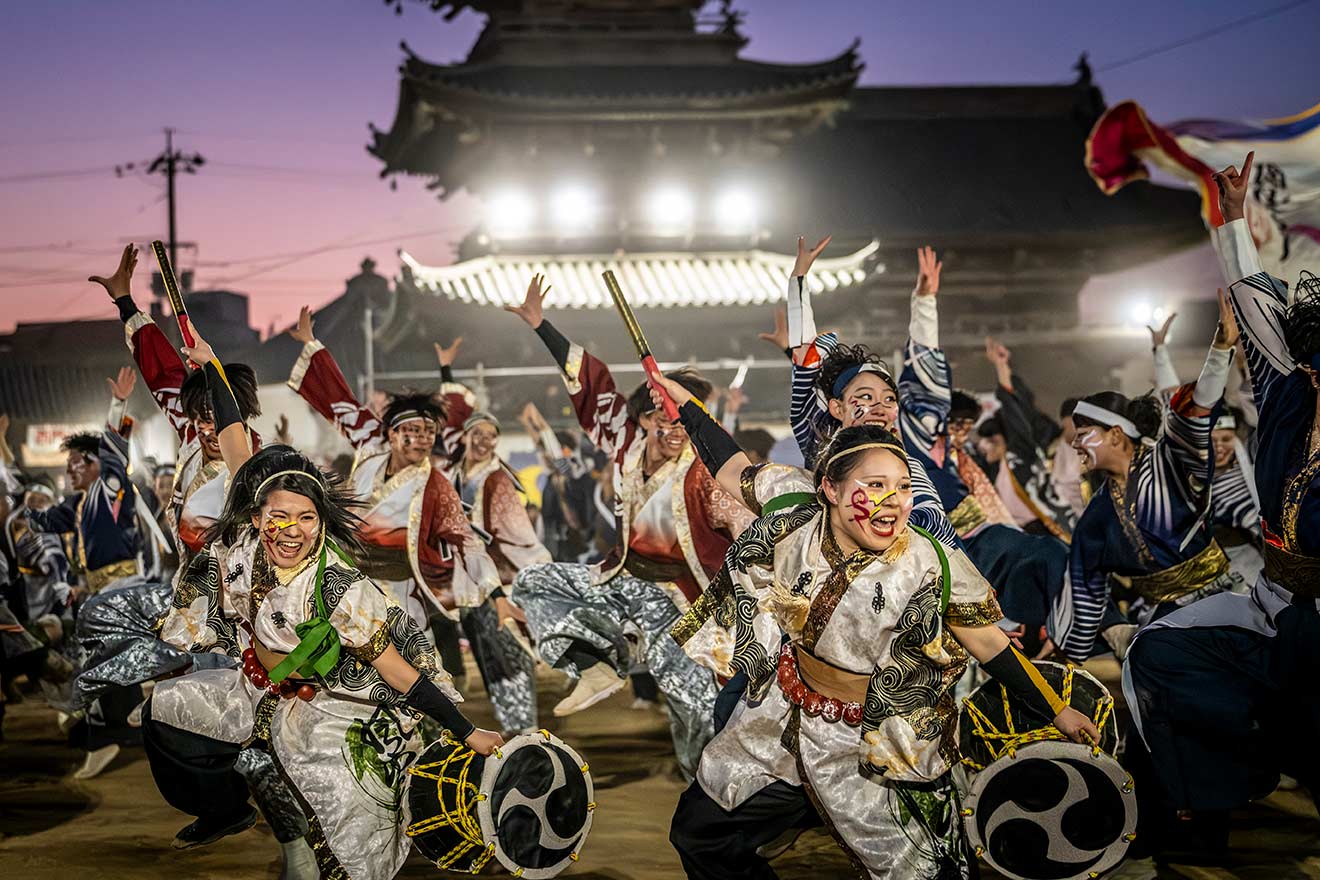
The event fills a whole day. In the afternoon, there is a children’s version of the festival — the same as the men’s, on a smaller scale — along with dances and families gathering at the temple.
Costanza Rossi © All rights reserved
Right: Purification.
Before entering the temple, and throughout the long wait before the main event, the participants purify themselves in freezing water — circling the temple, chanting, and immersing themselves again and again.
Costanza Rossi © All rights reserved
What drew me in the first place was a love of exploration and adventure, curiosity about other people and their lives, and an attraction to anything that takes me out of my comfort zone.
Before entering the temple, and throughout the long wait before the main event, the participants purify themselves in freezing water — circling the temple, chanting, and immersing themselves again and again.
Costanza Rossi © All rights reserved
The men’s rite begins only after dark, and builds gradually. A series of processions, purifications, and rituals heightens both the spiritual intensity and the sense of anticipation, drawing out the suspense.
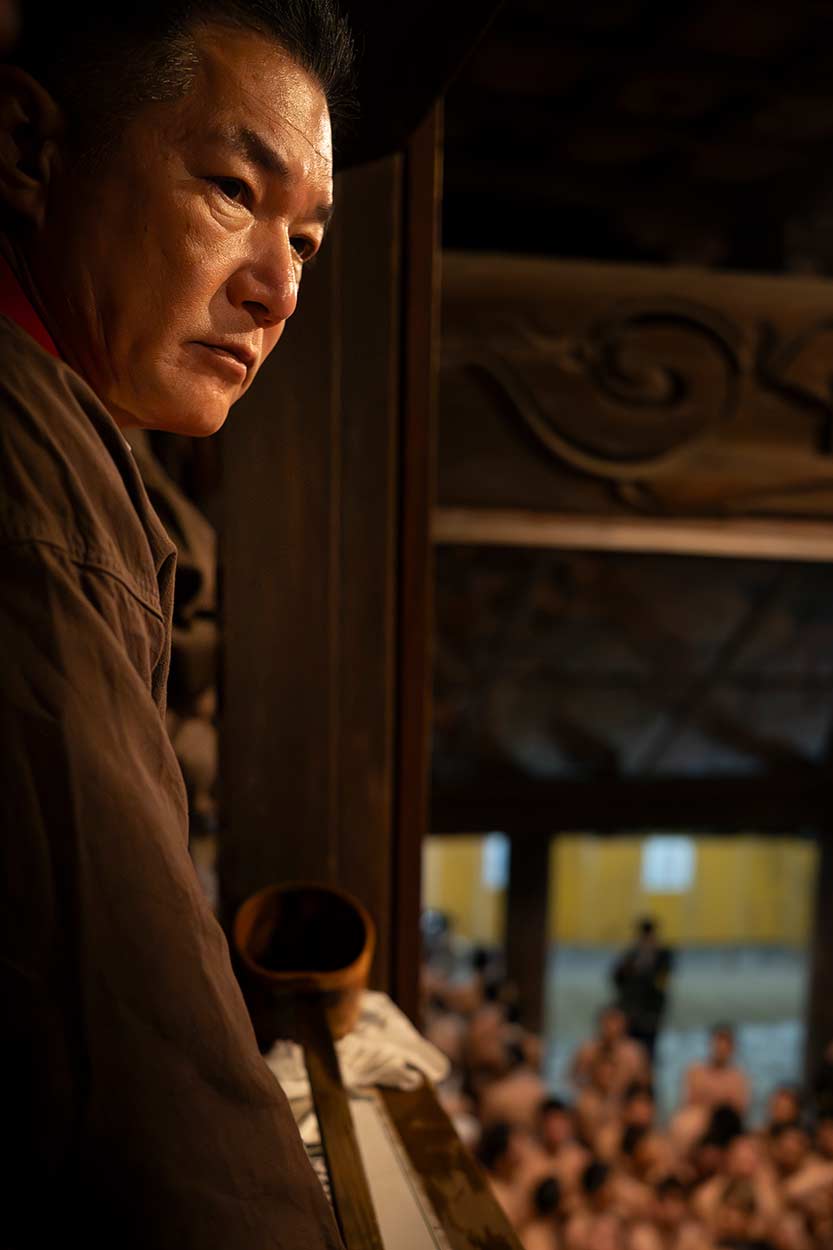
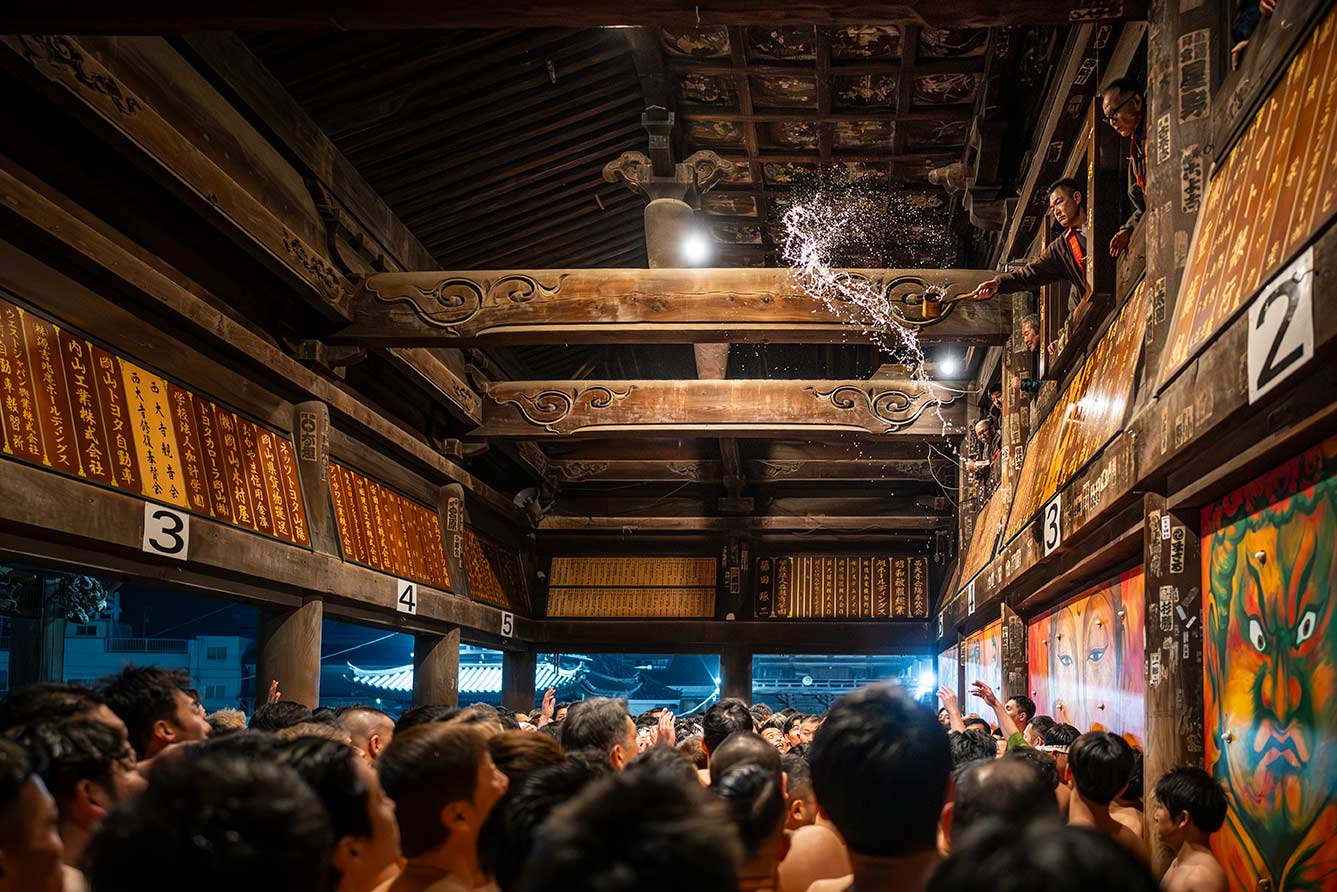
The climax comes at around nine in the evening: the lights of the whole temple go out for a few seconds while the priests drop a pair of small sacred sticks, the shingi, into the crowd from a window above.
The men push and wrestle to seize one and carry it out of the hall. Whoever manages it is called fukuotoko, the “man of fortune,” and is believed to receive a year of good fortune. The festival is listed as an Important Intangible Folk Cultural Property of Japan.
The series follows the festival in sequence: the afternoon gathering and the cold-water purification, the crowd pressed into the main hall, and the final struggle in the darkness.
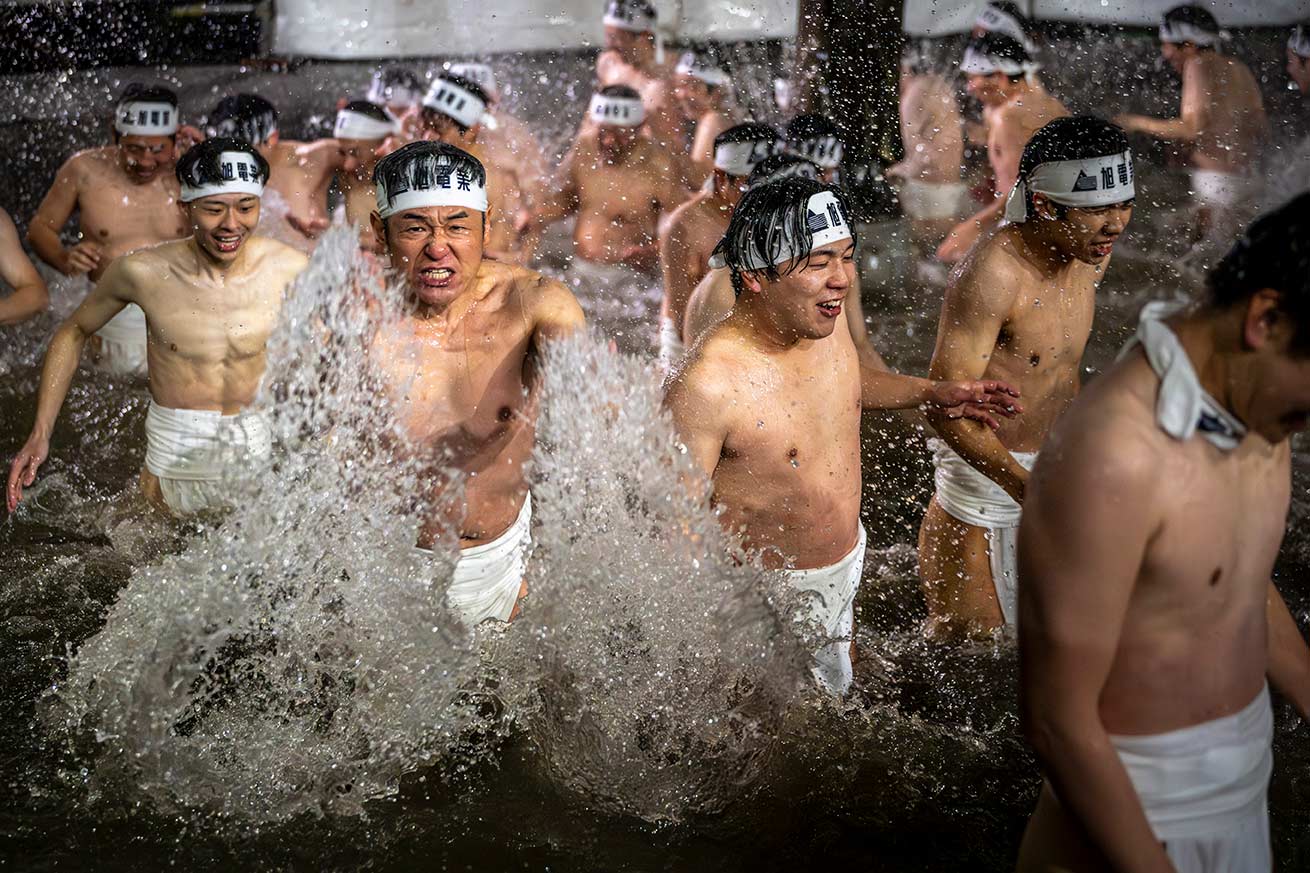
Before entering the temple, and throughout the long wait before the main event, the participants purify themselves in freezing water — circling the temple, chanting, and immersing themselves again and again.
Costanza Rossi © All rights reserved
Costanza Rossi
Costanza Rossi © All rights reserved
Right: Purification.
Costanza Rossi © All rights reserved
“I started taking photographs to record my own travels — the places I passed through and the people I met along the way — until it became much more than an occasional pastime. Travel and photography have grown together in me over many years; they have become so intertwined that I can no longer tell one from the other.
Over time, the work has moved from simply documenting where I was to the stories I found there — social, cultural, and environmental subjects, and, increasingly, questions of human dignity, identity, and ways of life under pressure in a changing present. I try to spend real time with the people and places I photograph rather than passing through.
At the moment, I am working on reportage projects built on immersive fieldwork, as well as on new scientific publications.”
– Costanza Rossi
Costanza Rossi is an Italian documentary photographer with a background in marketing, communication, and digital media. Her work ranges from travel to social, cultural, and environmental subjects, and is increasingly focused on contemporary social issues and human-centered stories that resonate beyond the moment they capture. After many years based in London, she now lives and works nomadically, traveling almost full-time.
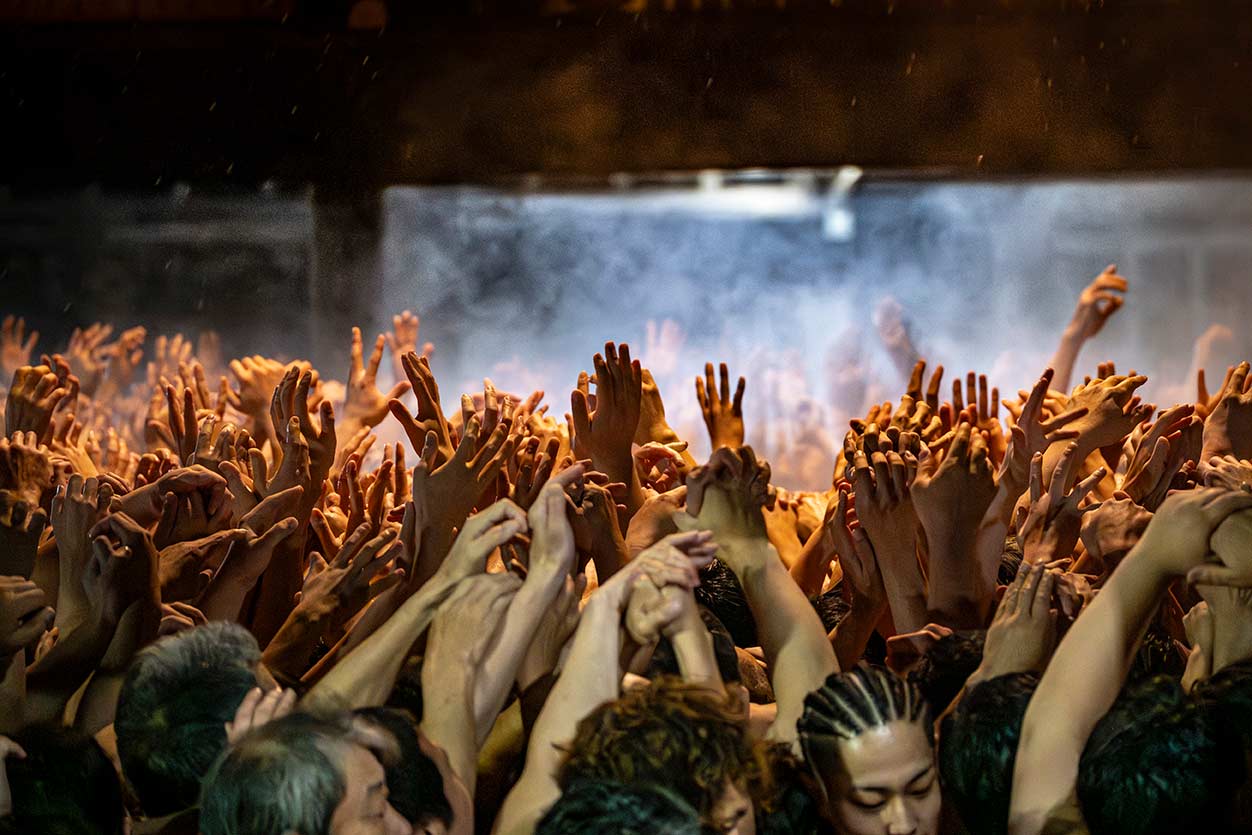
The struggle for the sacred sticks is so fierce that injuries are common every year. Once the scramble eases, the shingi have found their winners, and the rite has been carried into another year.
Costanza Rossi © All rights reserved
Her photographs have been shown in solo and group exhibitions internationally, including two recent solo shows — at the Natural History Museum of Salento (Italy) in 2025 and at the Palazzo Ducale in Melpignano (Italy) in 2026. She is the co-author of The Hidden Worlds of the Surma People, a photographic book with an educational purpose, combining images with explanatory text and first-hand narrative, about the Surma people of southern Ethiopia, published by Pensa Editore in association with the Natural History Museum of Salento.
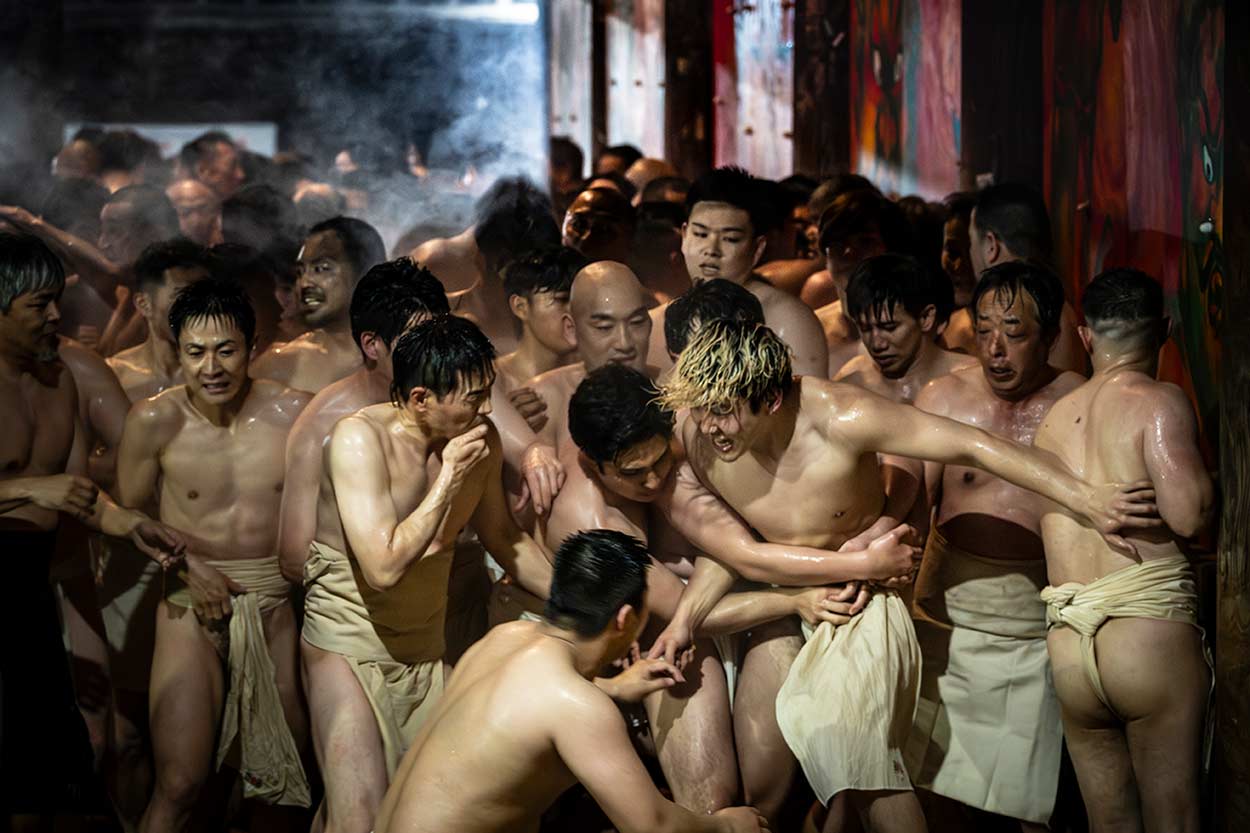
The struggle for the sacred sticks is so fierce that injuries are common every year. Once the scramble eases, the shingi have found their winners, and the rite has been carried into another year.
Costanza Rossi © All rights reserved