
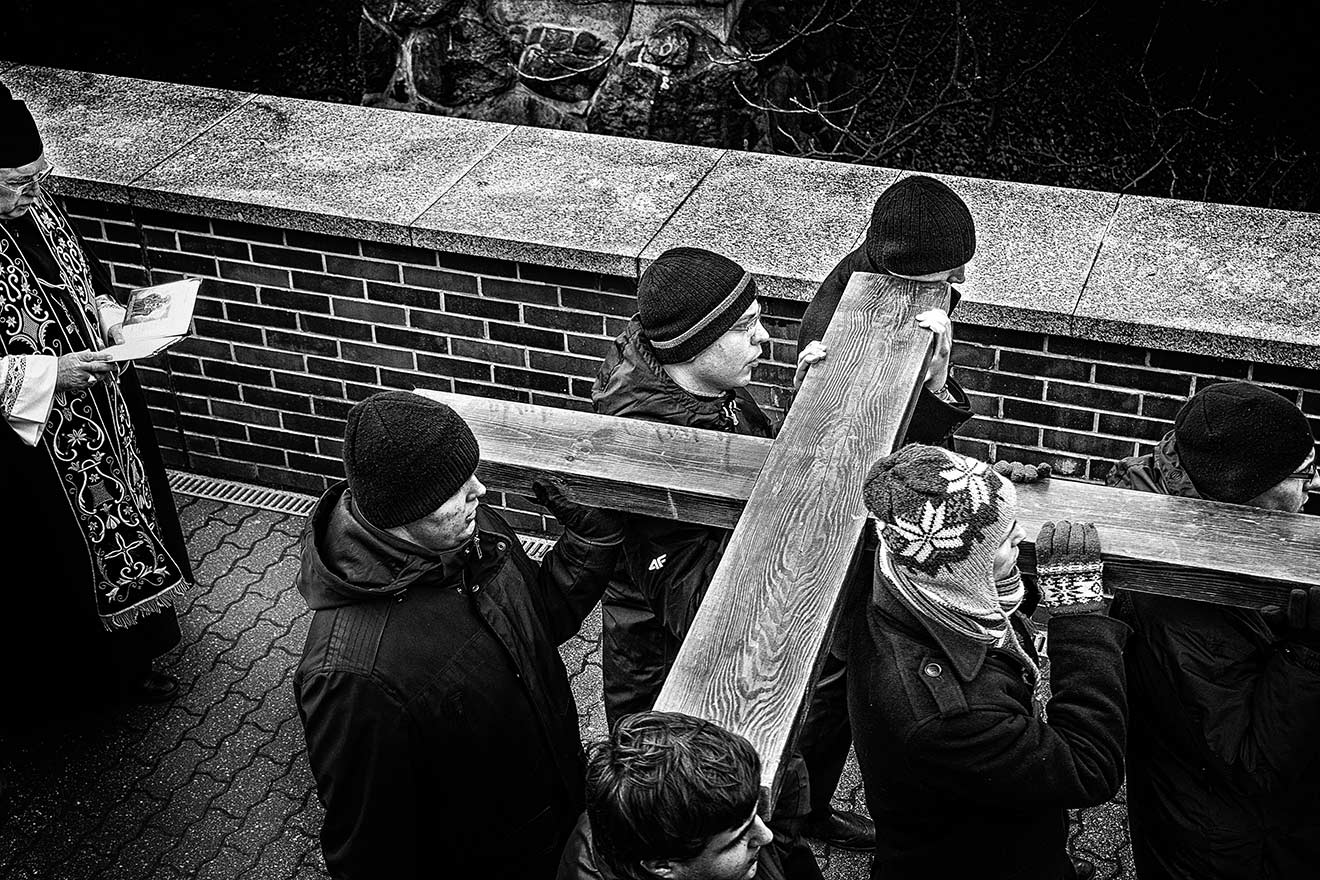
Very Bright Summit
Jasna Gora, Częstochowa, Poland, 2013 – 2016
By Arkadiusz Kubisiak
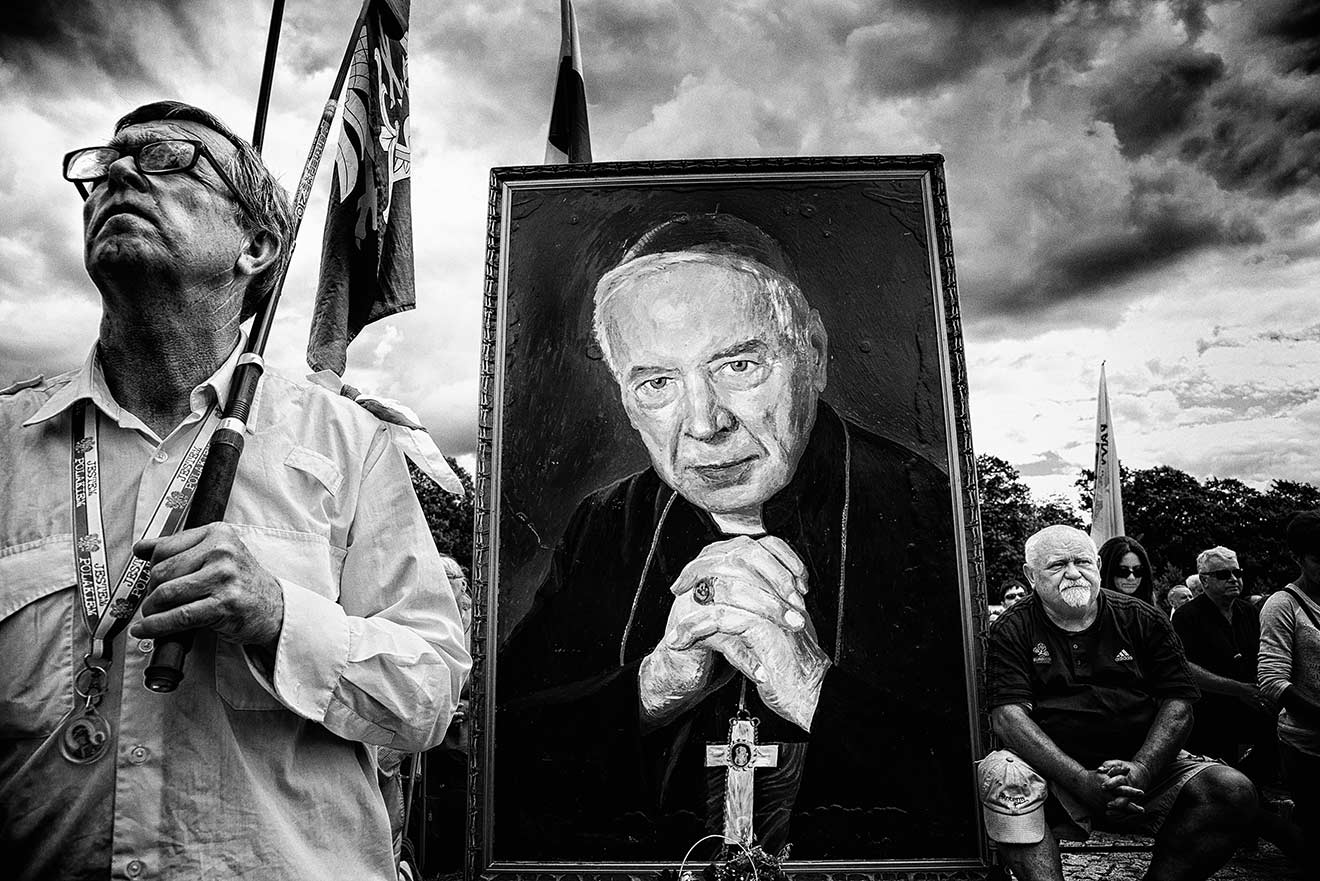
of Servant of God Cardinal Stefan Wyszyński (1901–1981), the Primate of Poland.
Arkadiusz Kubisiak © All rights reserved.
“For a long time, I have wanted to explore the phenomenon of faith. Few aspects of human experience reach as deeply into our inner lives, touching our beliefs, conscience, values, and individual ways of understanding the world.”
– Arkadiusz Kubisiak
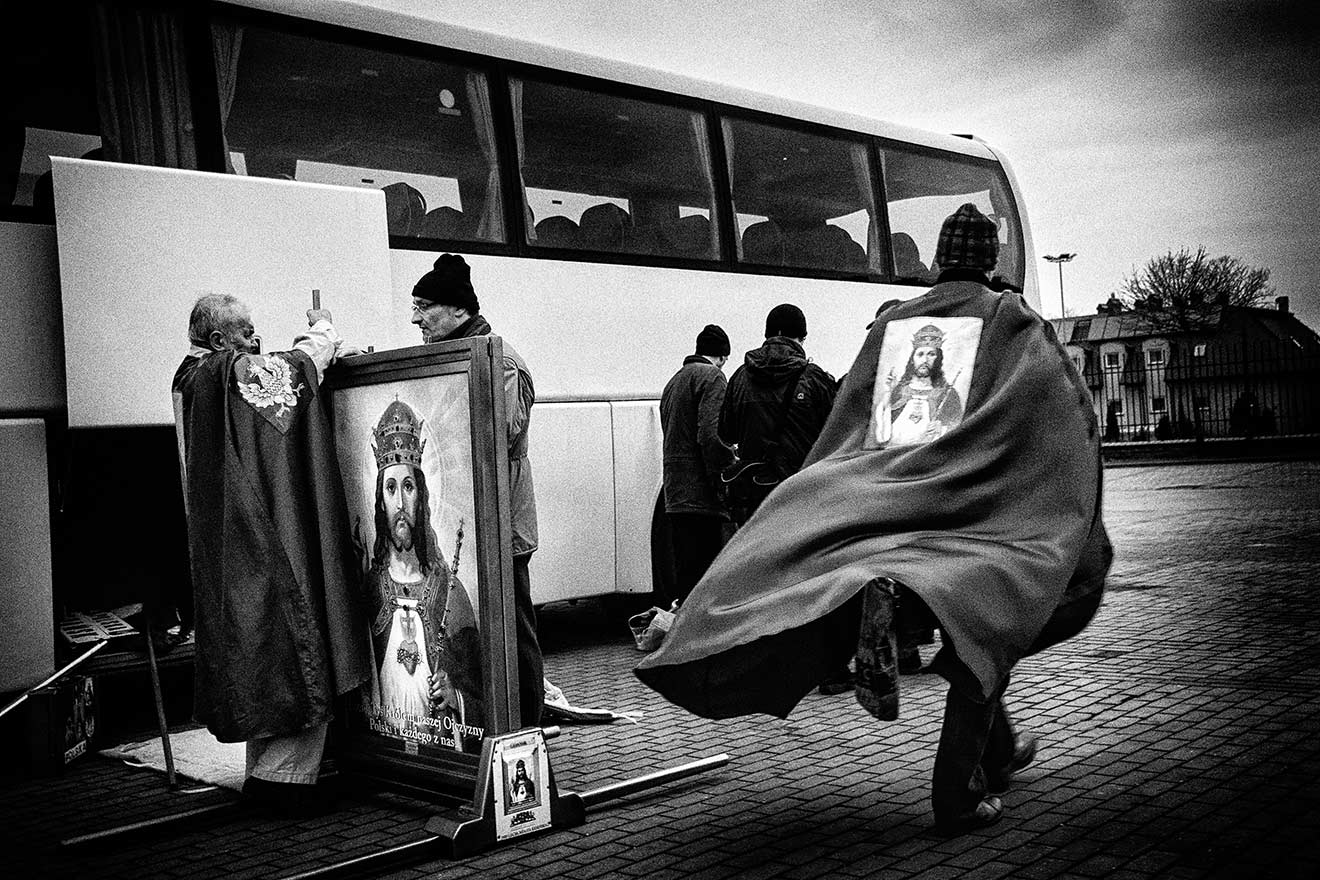
after carrying it throughout pilgrimage ceremonies.
Arkadiusz Kubisiak © All rights reserved.
The Pauline Monastery in Częstochowa, Poland, was founded in 1382. It is the most important shrine dedicated to the Virgin Mary in Poland and one of the most significant Marian pilgrimage sites in the world. For centuries, it has attracted pilgrims seeking spiritual guidance, prayer, and inspiration. Today, nearly 4 million pilgrims and visitors from 74 countries travel to the monastery every year.
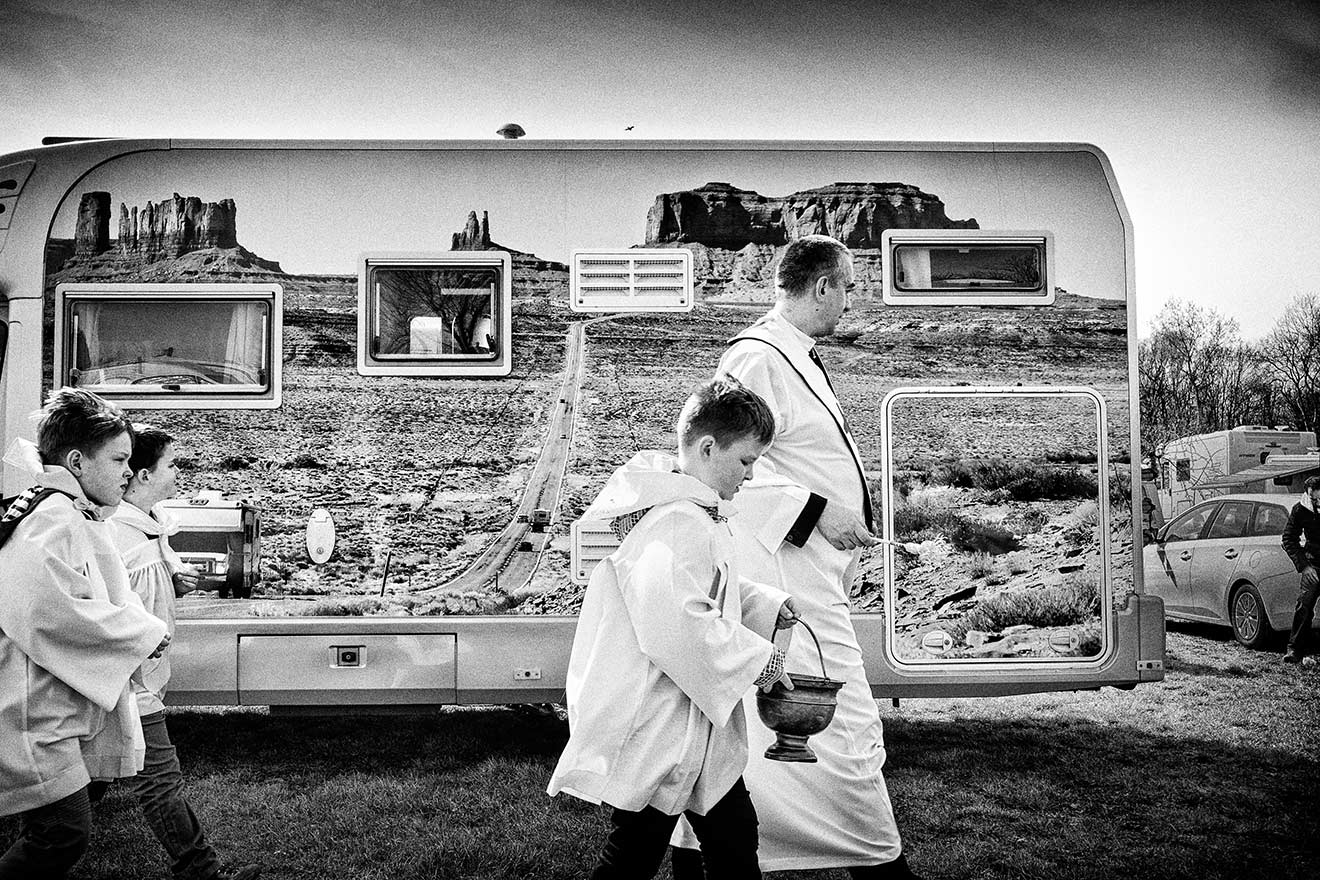
Priest Mariusz Chmura, accompanied by three altar servers, blesses the vehicles and their occupants.
Arkadiusz Kubisiak © All rights reserved.
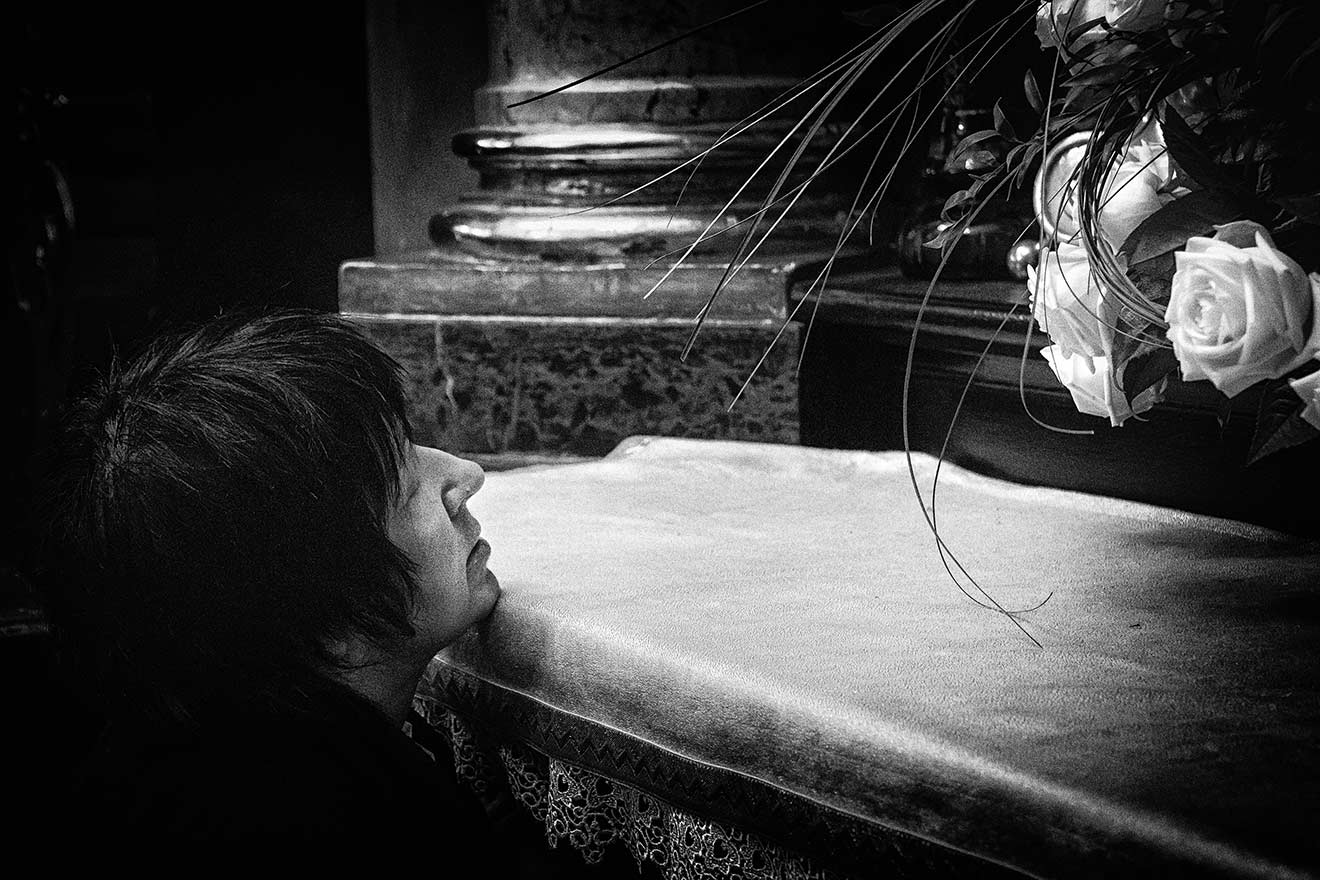
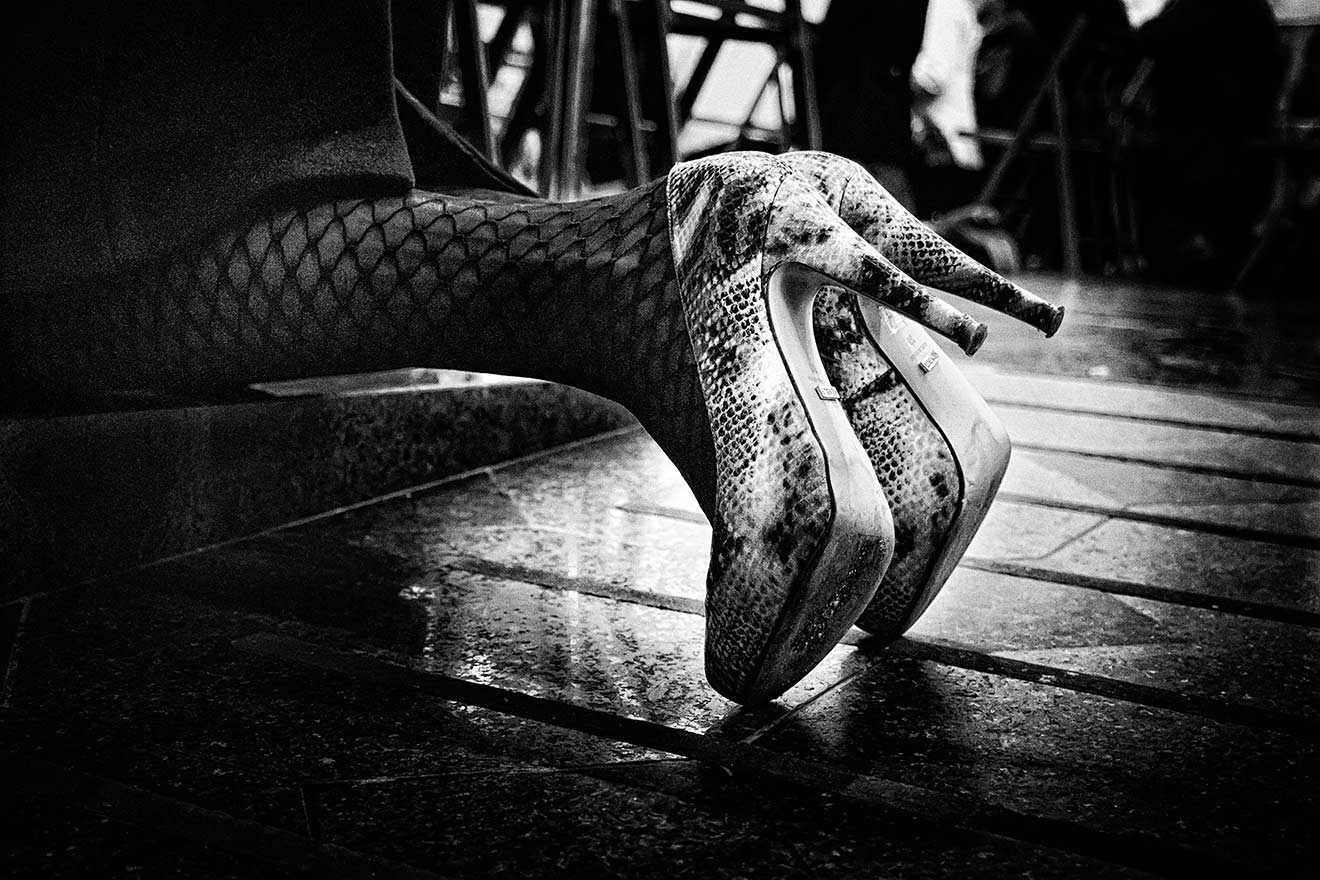
faith and prayer represent a final source of hope in moments of personal crisis.
Right: Easter Monday. A woman prays on her knees inside the Basilica, one of the many sacred spaces at Jasna Góra that remain open to pilgrims throughout the year.
Arkadiusz Kubisiak © All rights reserved.
Since its founding, walking pilgrimages have been the most popular way to reach the shrine. This tradition dates back to the Middle Ages and remains an important expression of faith and devotion. It is also customary for people representing the same professions, such as miners, firefighters, farmers, and other occupational groups, to make pilgrimages together as a sign of solidarity and gratitude.
The monastery’s greatest treasure is the miraculous icon of the Virgin Mary, whose origins remain shrouded in mystery. The image depicts the Mother of God holding the Child Jesus in her left arm and is venerated by millions of faithful from around the world.
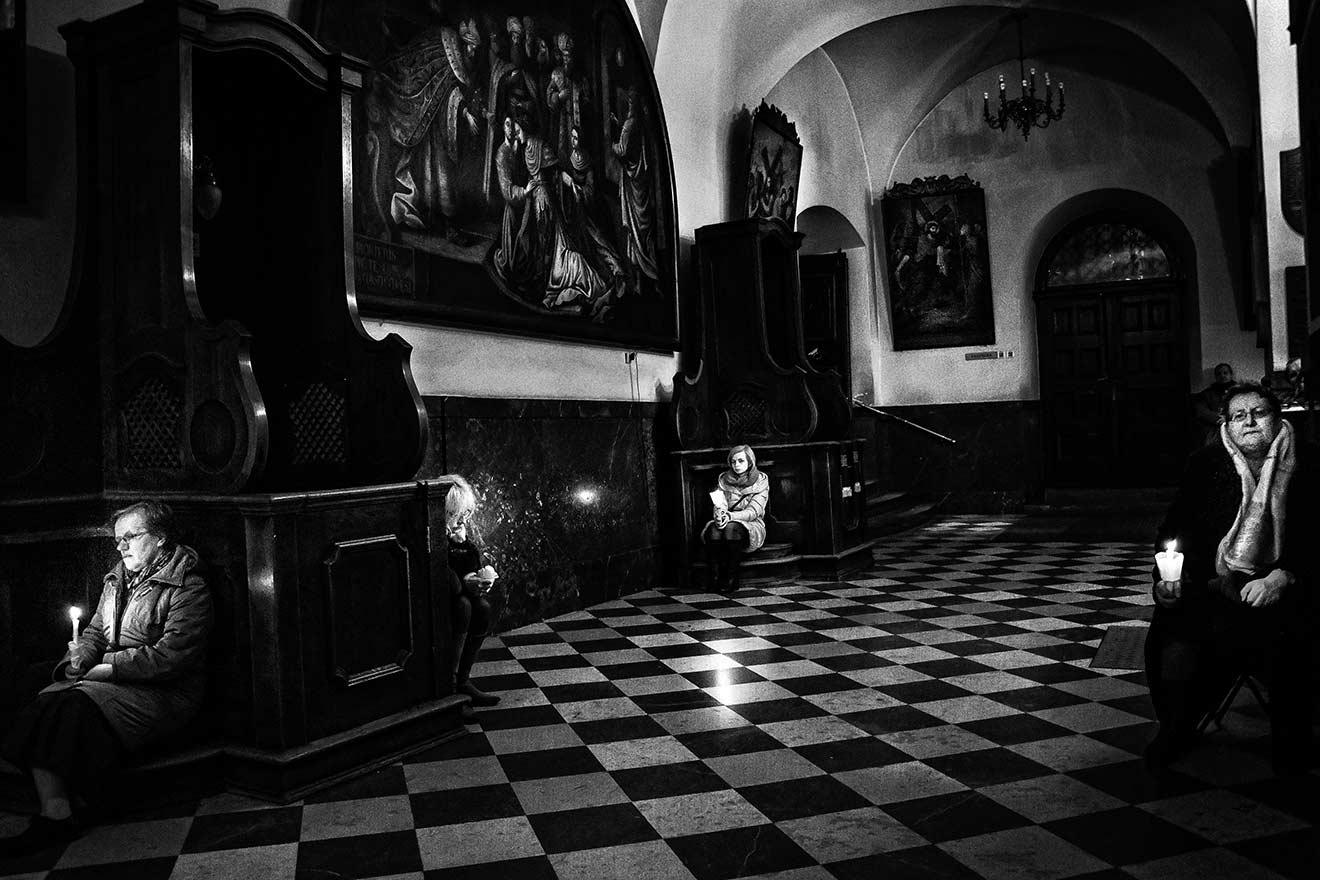
Arkadiusz Kubisiak © All rights reserved.
The icon is housed in the Chapel of Our Lady, one of the most sacred places within the monastery complex. The chapel’s walls are adorned with thanksgiving votive offerings and gifts presented to the Madonna by pilgrims and visitors in appreciation of graces received.
The entire monastery stands on a hill known as the Bright Mount (Jasna Gora in Polish). Because of its religious, historical, and cultural significance, the site is widely regarded as the spiritual capital of Poland and remains one of the country’s most important symbols of faith and national identity.
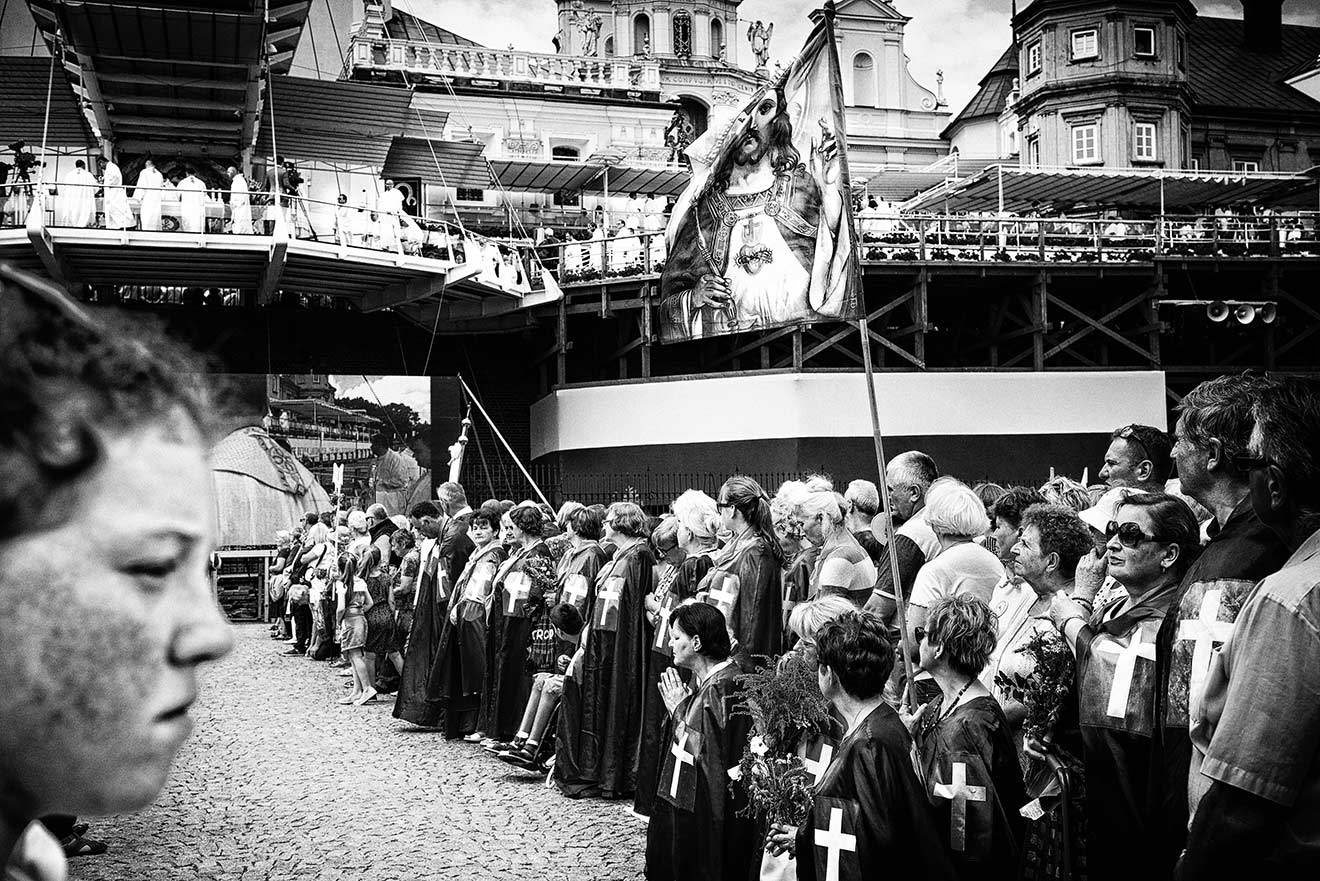
Arkadiusz Kubisiak © All rights reserved.
Over more than three years of photographing at Jasna Góra, I witnessed the lived experience of faith. This direct encounter became the foundation of the project. For me, such experience is essential in documentary work; it shapes not only the photographs themselves but also the way they are made.
I never doubted that if I were to speak about faith through photography, Jasna Góra would be the place to do so. With more than six centuries of history and a long-standing pilgrimage tradition, it remains one of the most important religious sites in Poland.
The people who come here do so with profound commitment and devotion. Among the many things I observed, what struck me most was the sincerity, authenticity, and intensity of their faith.
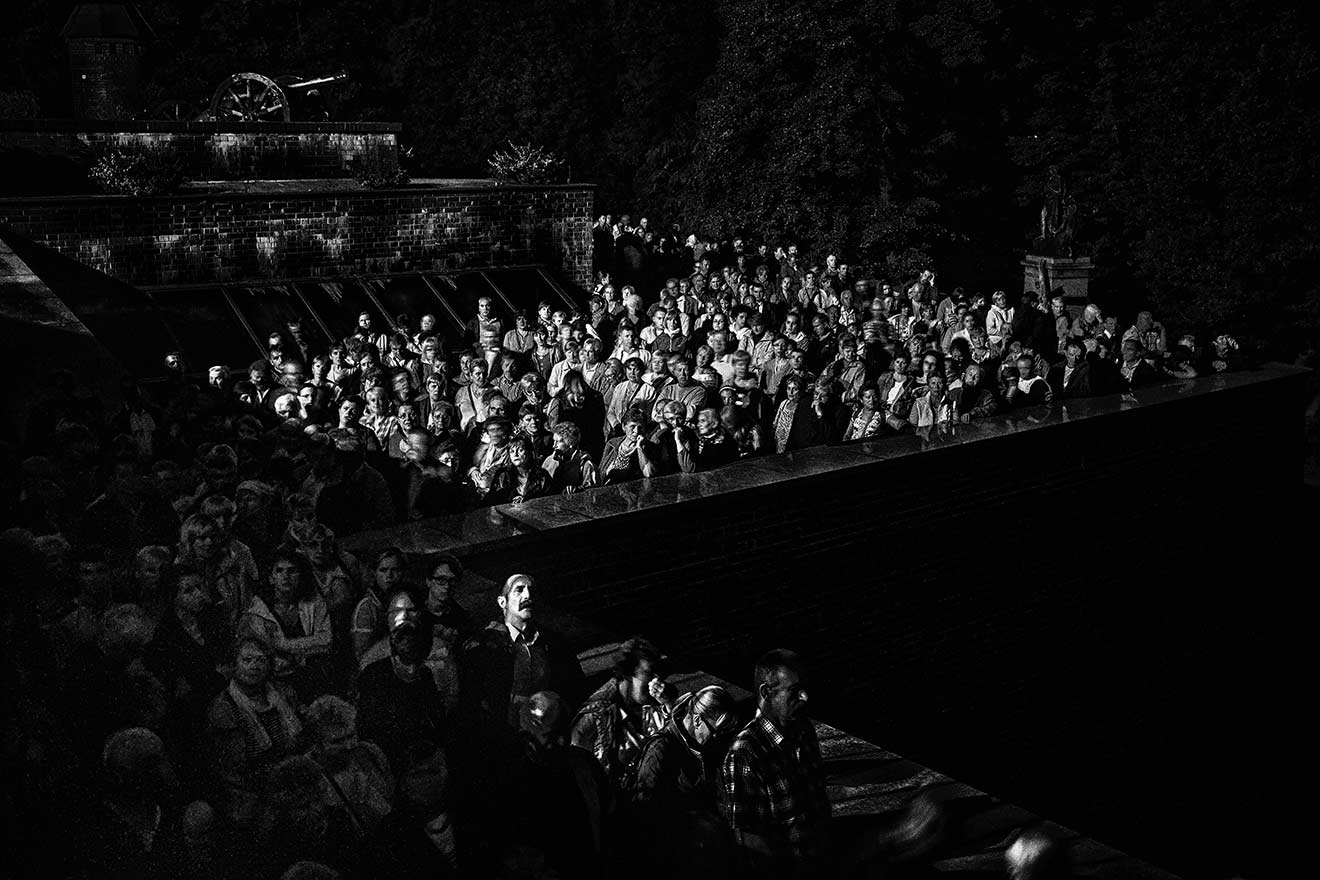
during the National Pilgrimage of Polish Farmers.
Arkadiusz Kubisiak © All rights reserved.
Jasna Góra offers a unique opportunity to witness faith in many forms: in intimate, personal rituals as well as in vast collective gatherings that can draw crowds of up to 200,000 people.
It is a place where individual spirituality and communal experience exist side by side.
While working on this project, I became something of a pilgrim myself.
I followed the paths of those I photographed, standing among the crowds regardless of the weather. I spent nights in pilgrims’ accommodations and shared meals in modest eateries.
The experience became more than a photographic undertaking. It was a personal journey—one that remains inseparable from the photographs and continues to enrich my understanding of the people and stories they capture.
- Arkadiusz Kubisiak,. Very Bright Summit
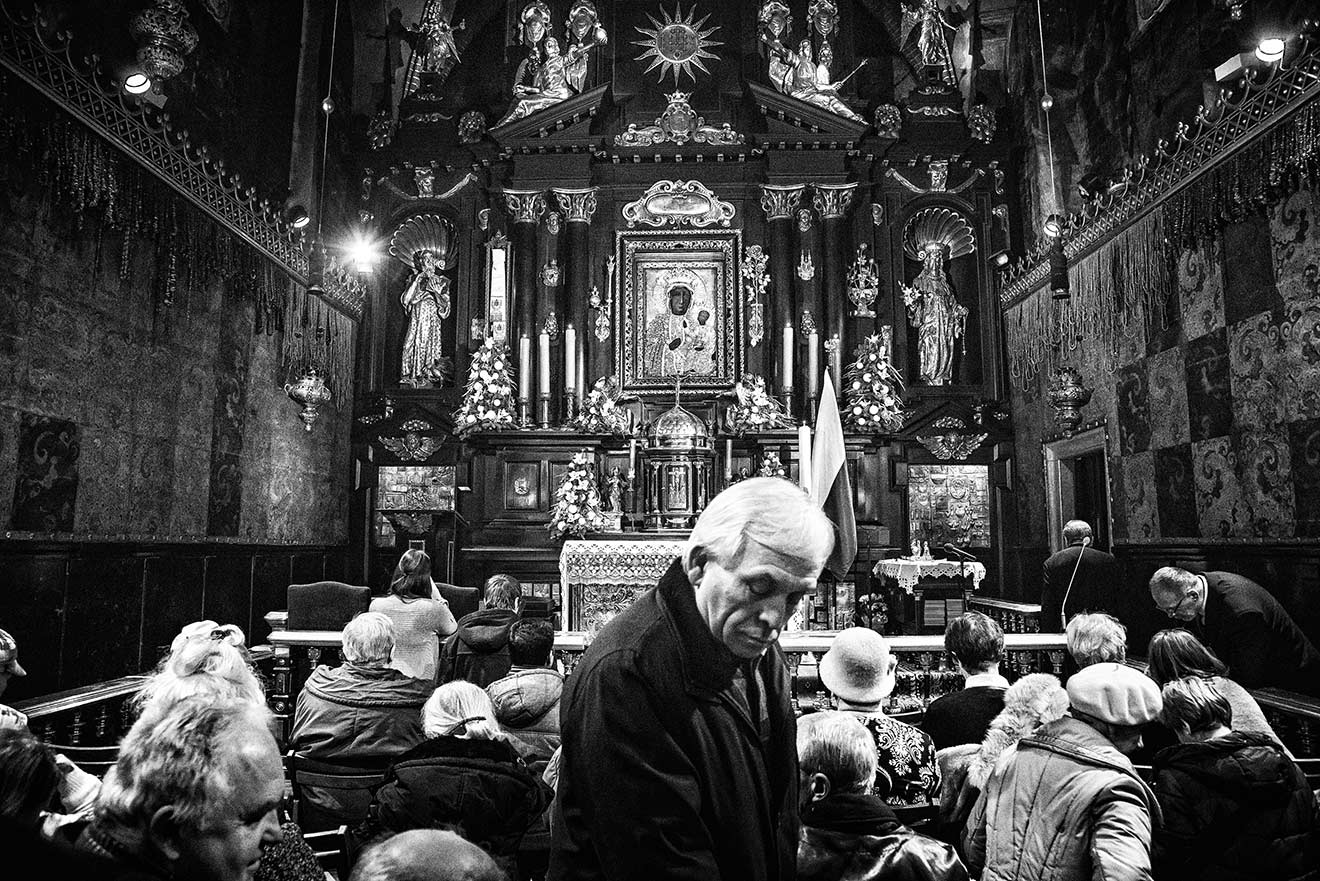
It houses the Miraculous Icon of the Madonna, royal insignia, and a golden rose presented by Saint John Paul II,
together with a fragment of the belt he wore during the 1981 assassination attempt.
Arkadiusz Kubisiak © All rights reserved.
Arkadiusz Kubisiak
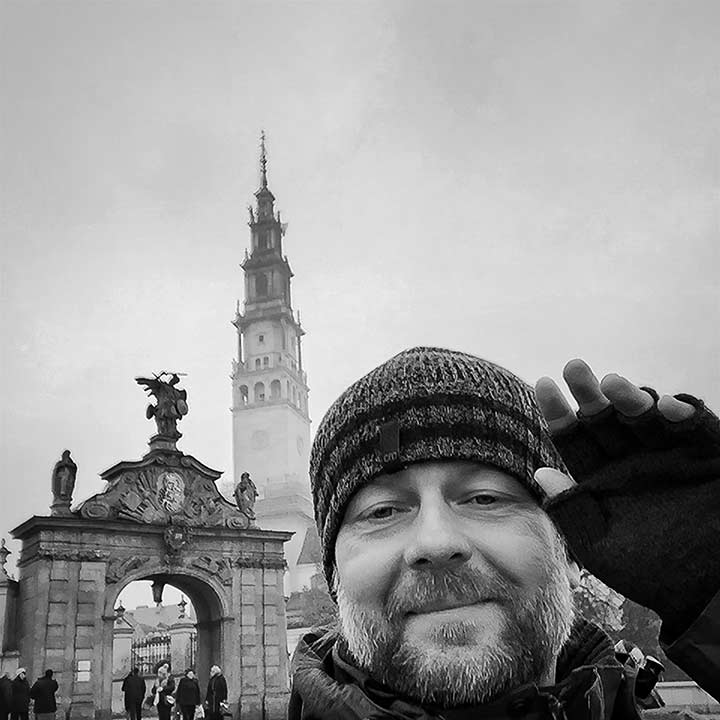
Jasna Góra offers a unique opportunity to witness faith in many forms: in intimate, personal rituals as well as in vast collective gatherings that can draw crowds of up to 200,000 people. It is a place where individual spirituality and communal experience exist side by side.
- Arkadiusz Kubisiak,. Very Bright Summit
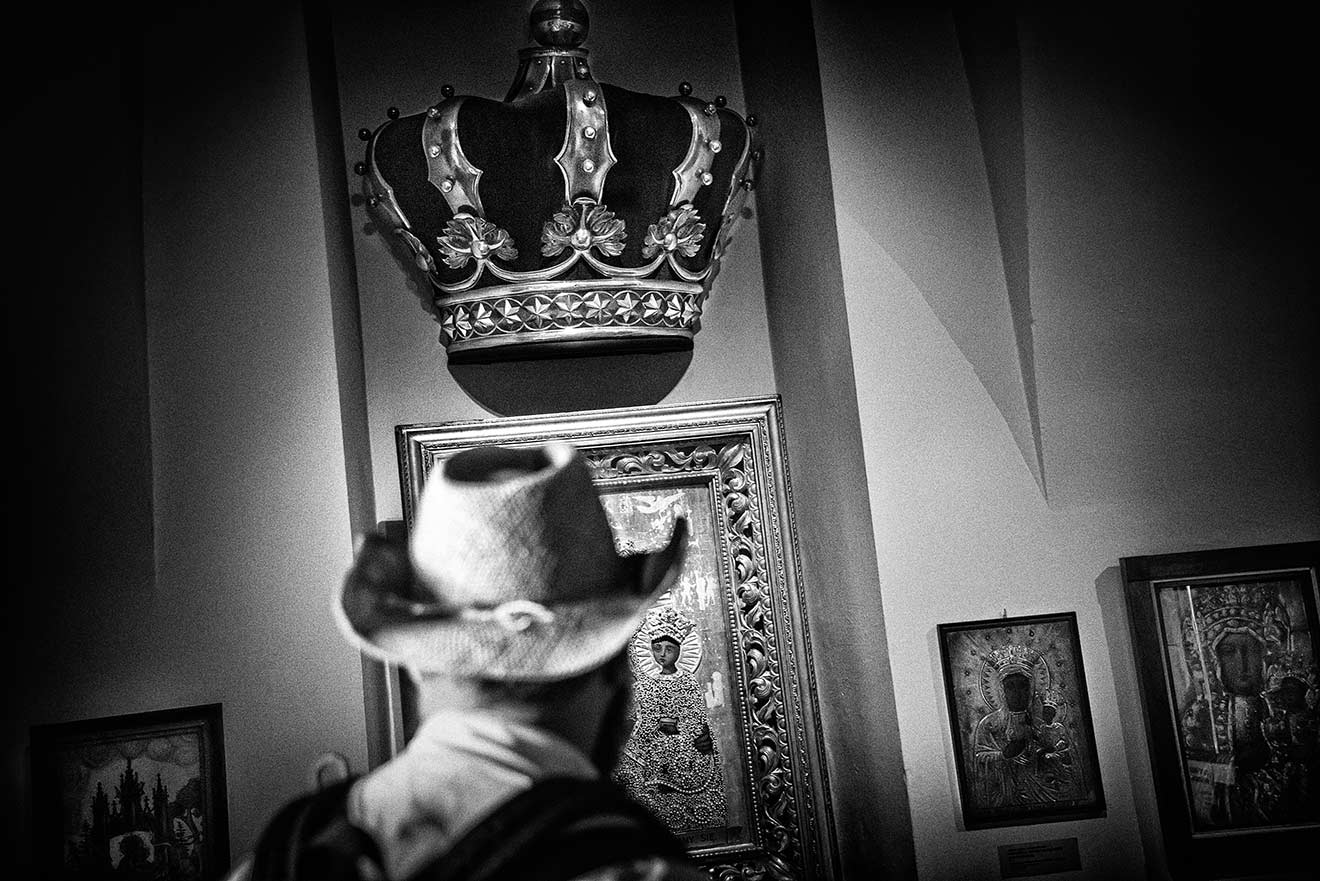
Arkadiusz Kubisiak © All rights reserved.
Arkadiusz Kubisiak, is a Documentary and portrait photographer. For over 18 years, he has been developing authorial photographic projects, primarily long-term series. Kubisiak is a graduate of the European Academy of Photography in Warsaw and a member of the Association of Polish Art Photographers.
His work focuses on the human subject seen within the context of place, history, and relationships. He has portrayed highlanders from the village of Ciche in the Podhale region, as well as participants in the June 1976 workers’ protests in Radom. He has also photographed pilgrims at Jasna Góra and explored the people and urban space of Warsaw, tracing the city from its historical layers to the present day.
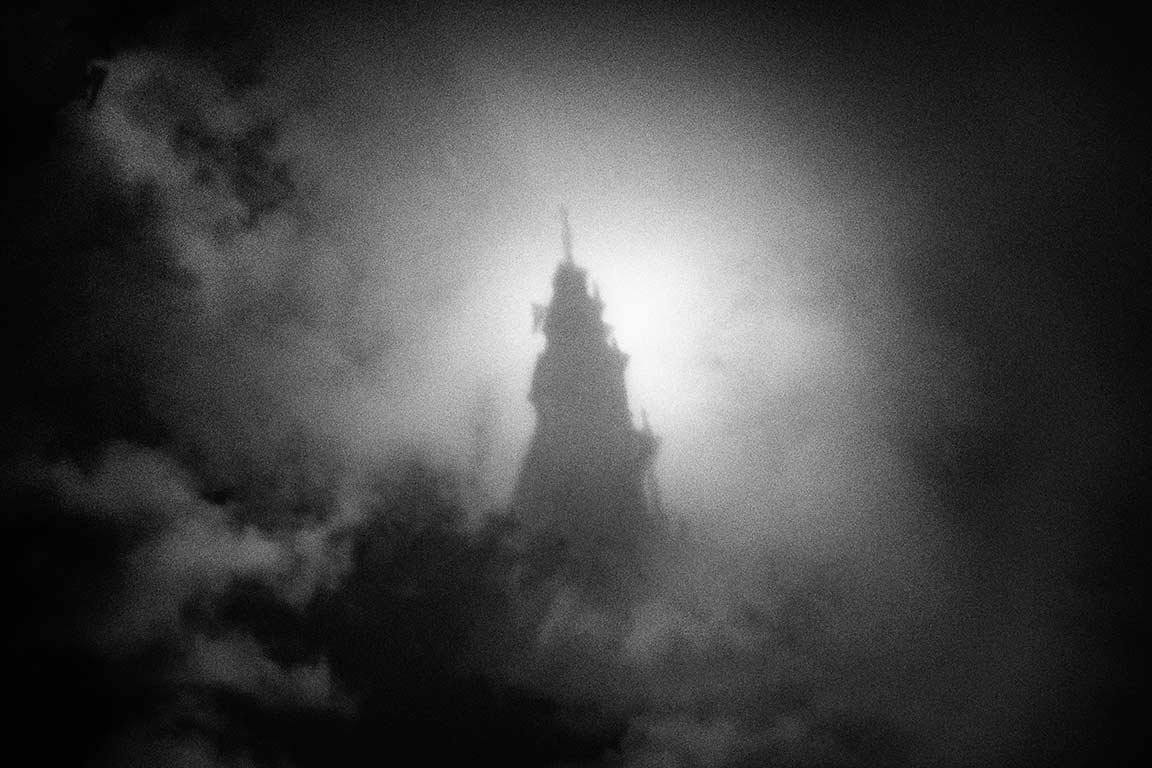
The rare optical effect creates an almost mystical spectacle.
Arkadiusz Kubisiak © All rights reserved.
For nearly a year, Arkadiusz Kubisiak documented the Laundry Room Theatre at a center for people with intellectual disabilities, creating an intimate record of relationships, everyday life, and artistic activity within the group.
Kubisiak is the author of numerous solo exhibitions and a recipient of national and international photography awards. His work has been published in the Polish and international press and in authorial books. He has served as a juror for the international photography award.
He shares his experience through artist talks and in photography schools.