
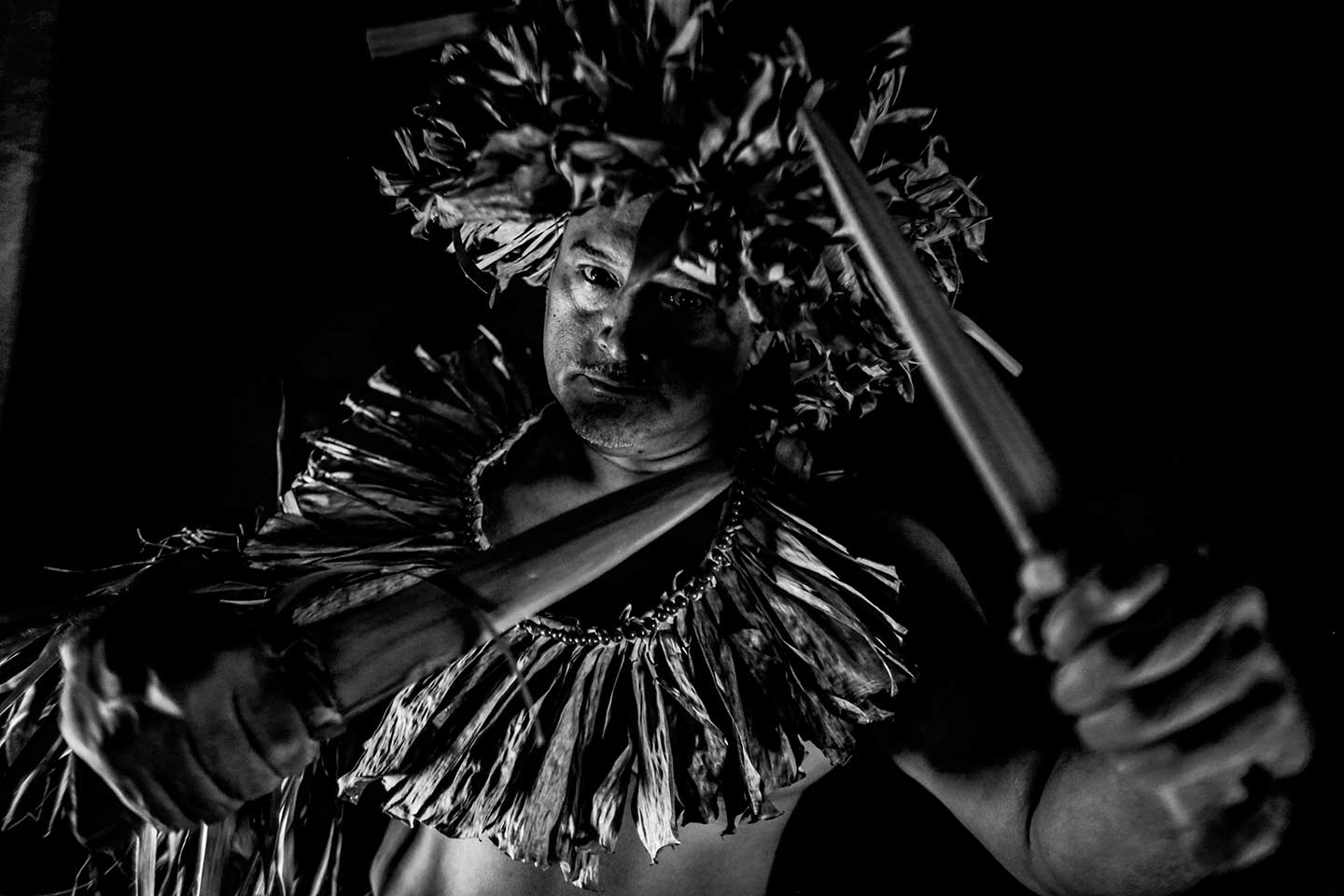
The Encounter
Collaborative work by photographer Grégory Boissy and journalist Delphine Barrais
Grégory Boissy and Delphine Barrais
© All rights reserved.
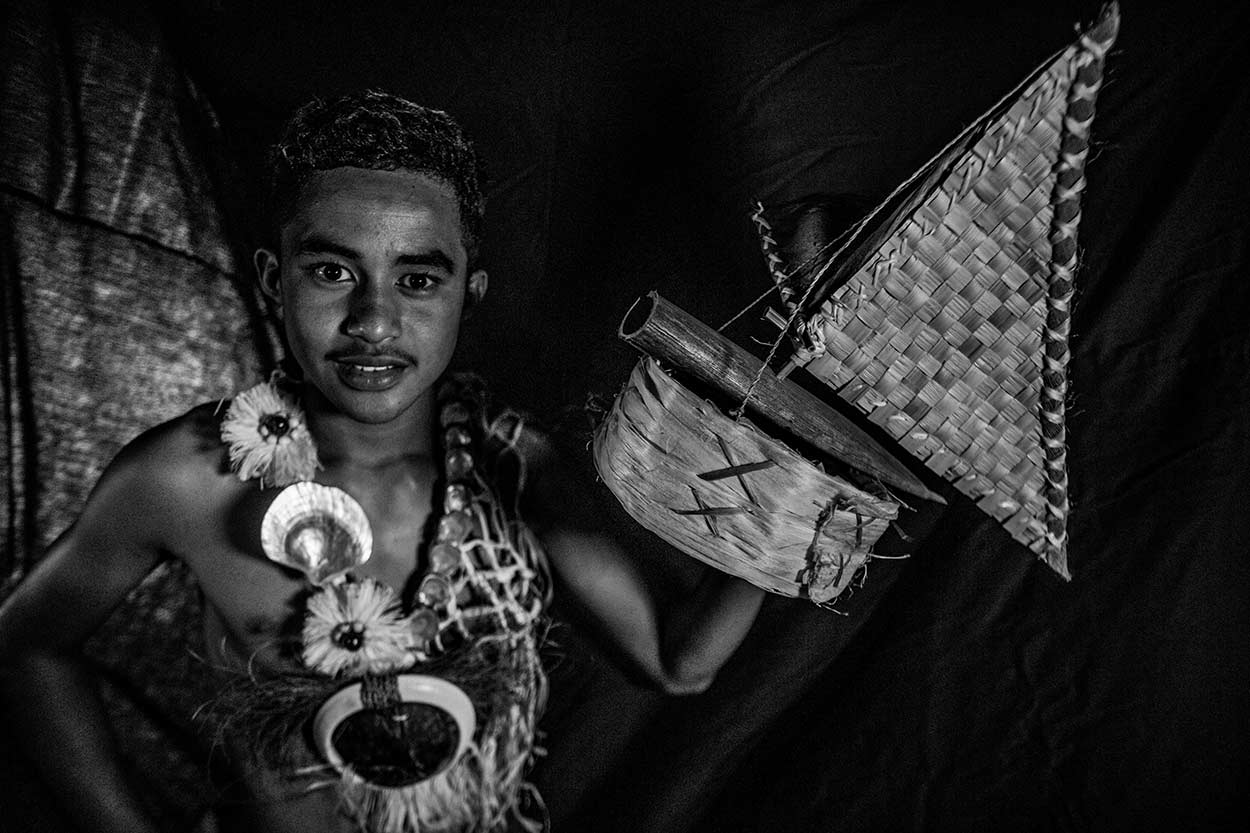
Each island in the Polynesian archipelagos has its own personality, its own voice. Dance, song, language, art, culture, traditional skills: so many forms of expression intimately connected to each territory’s geography, environment, and history.
What might, at first glance, appear to be a uniform space is, in fact, to borrow the words of Tongan thinker Epeli Hau’ofa, “a sea of islands.” Look more closely, and each island reveals its own particularities, identity, and vision of the world.
The proof is in the images.
Grégory Boissy and Delphine Barrais
© All rights reserved.
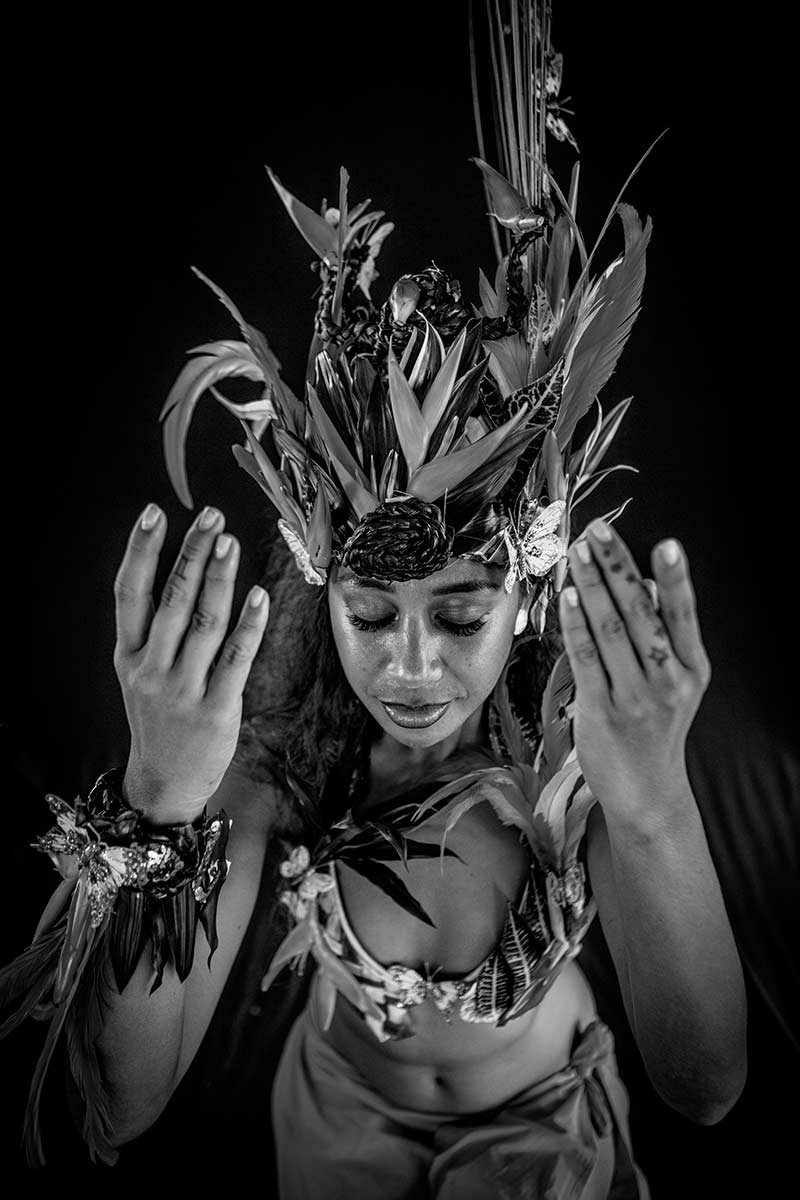
Right: Portrait-‘Ari’i merahi’-bora bora.
Grégory Boissy and Delphine Barrais
© All rights reserved.
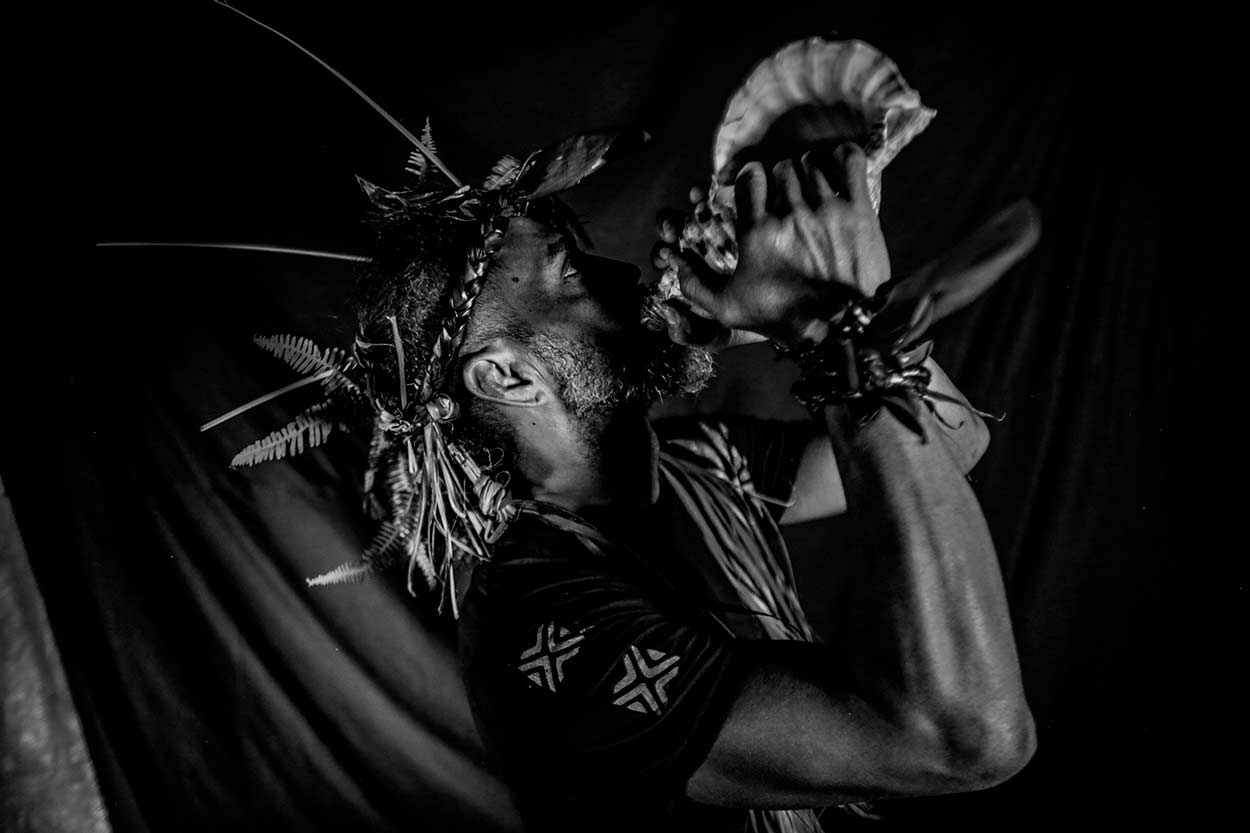
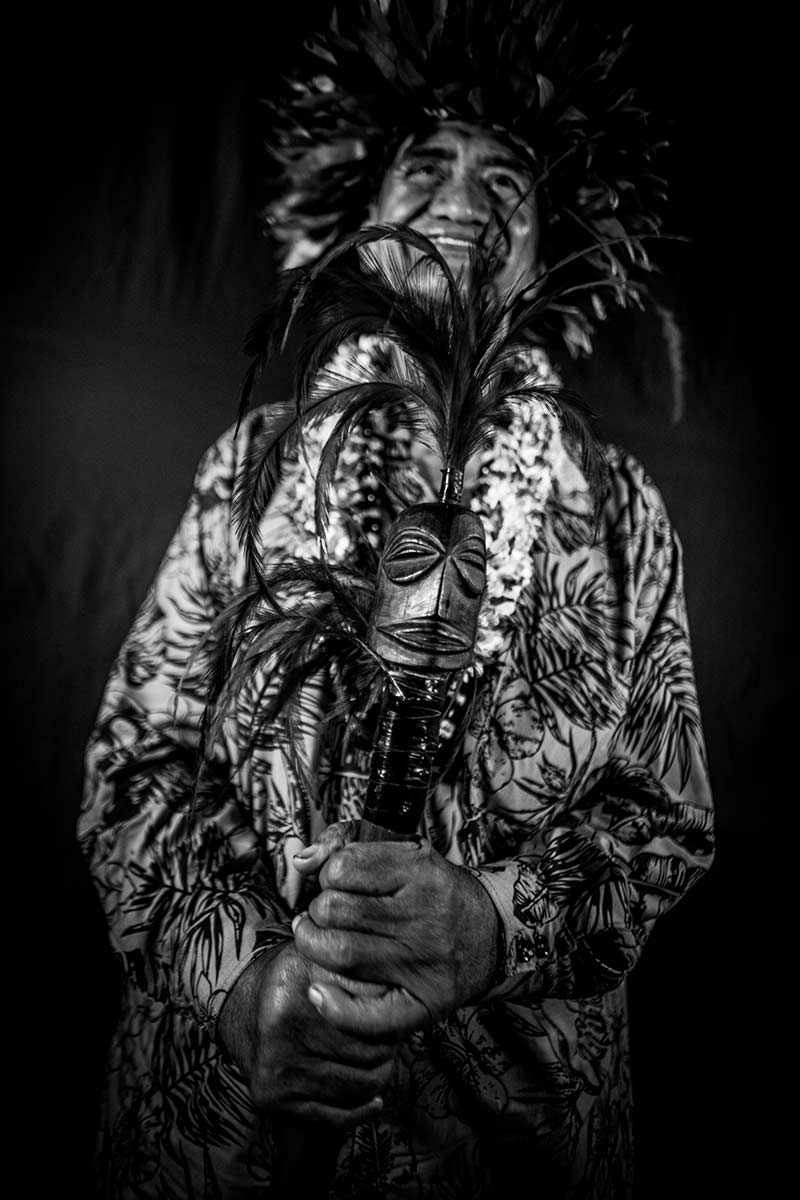
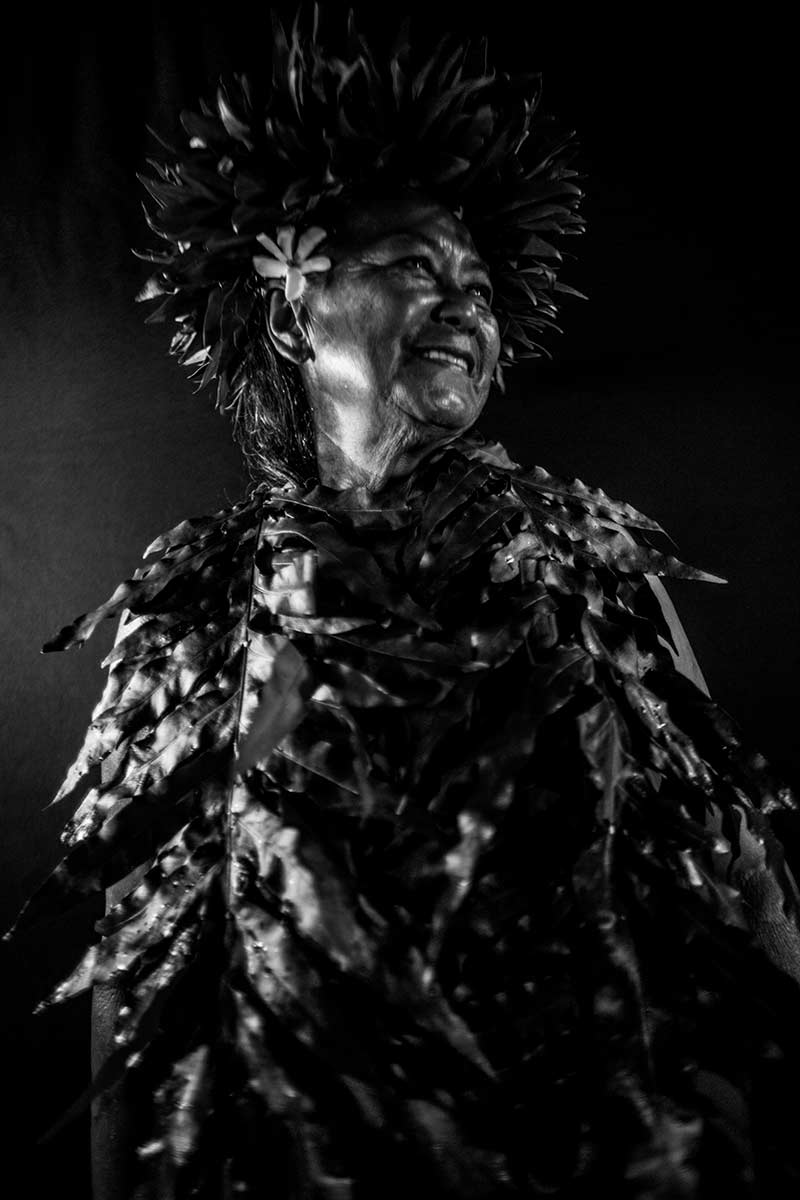
In landmark documentary series such as Te Farereira’a (“The Encounter”), the camera becomes a gateway, making it possible to deconstruct the exoticized representations of the Pacific. Far from tourist clichés, the duo is committed to restoring the dignity and uniqueness of its subjects, particularly through raw portraits made in ephemeral studios, on the sidelines, or behind the scenes of cultural gatherings.
© All rights reserved.
This collaborative work by photographer Grégory Boissy and journalist Delphine Barrais, combining photography and writing, brings together a series of portraits of traditional artists photographed during several cultural events in French Polynesia: in the Austral Islands in November 2022, at Heiva i Bora Bora in July 2026, and at Nuuroa Fest i Tahiti in August 2026.
The people photographed live in Rurutu, Tubuai, Rapa, Raivavae, Rimatara, Bora Bora, and Tahiti. All agreed to take part in the portrait sessions, stepping in front of the camera as they entered or left the stage.
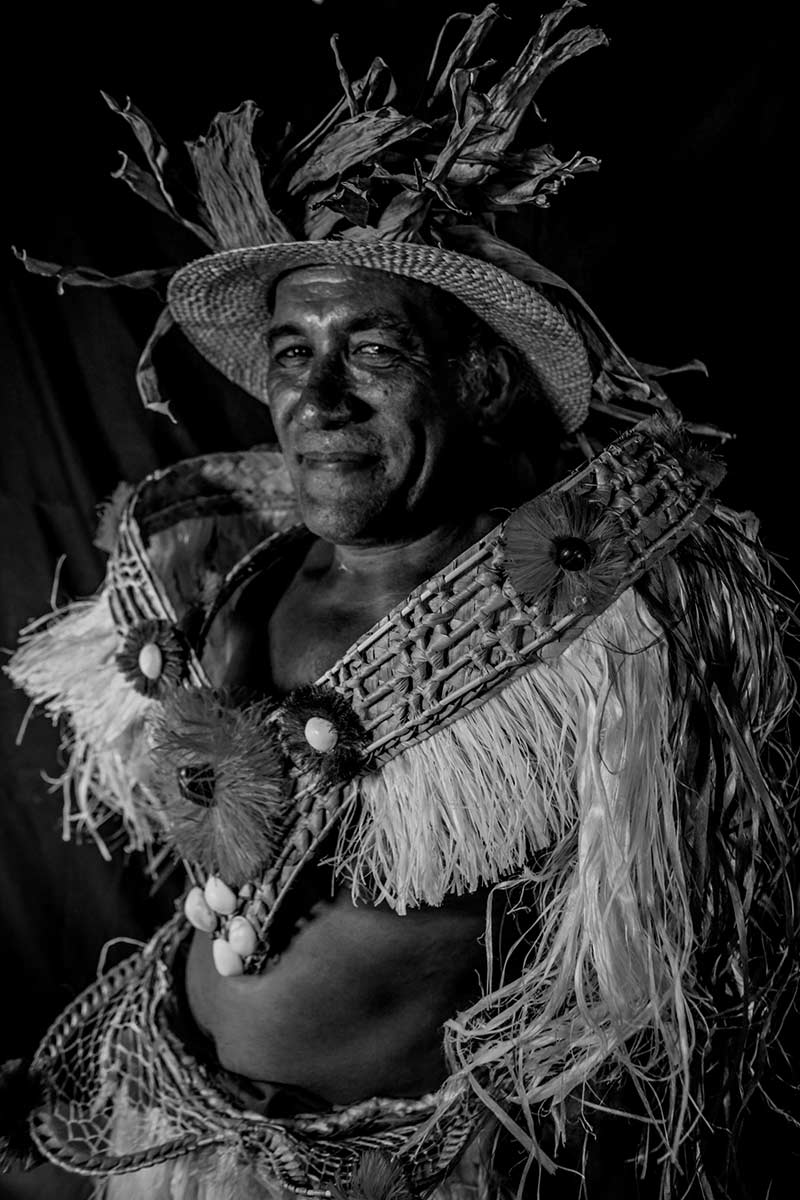
Backstage, an improvised studio — a sheet stretched out and two spotlights — is set up without prior notice. The aim is to capture those suspended, rare, and precious moments when nervousness, anticipation, excitement, fatigue, and euphoria come together.
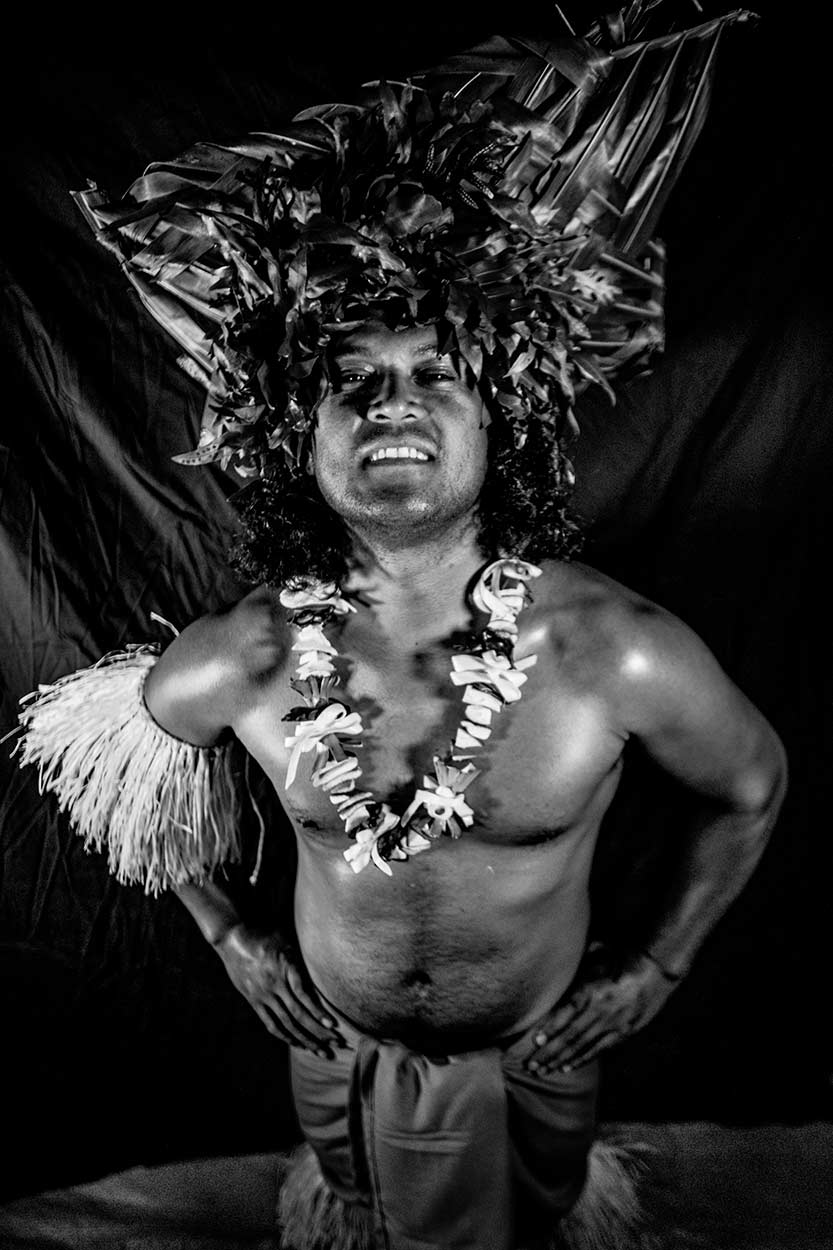
Dancers, singers, choreographers, and musicians step in front of the camera with confidence, simplicity, and authenticity, sometimes under the amused and complicit gaze of their loved ones. Before the performance, they still carry the stress and adrenaline of hours of waiting. After the show, their faces and bodies seem charged with a new energy, a power that is difficult to contain.
No instructions are given. Each person chooses their own pose, the group’s composition, and the accessories they want to keep with them. The portrait then becomes an encounter, a space of freedom where the artist presents themselves as they wish to be seen.
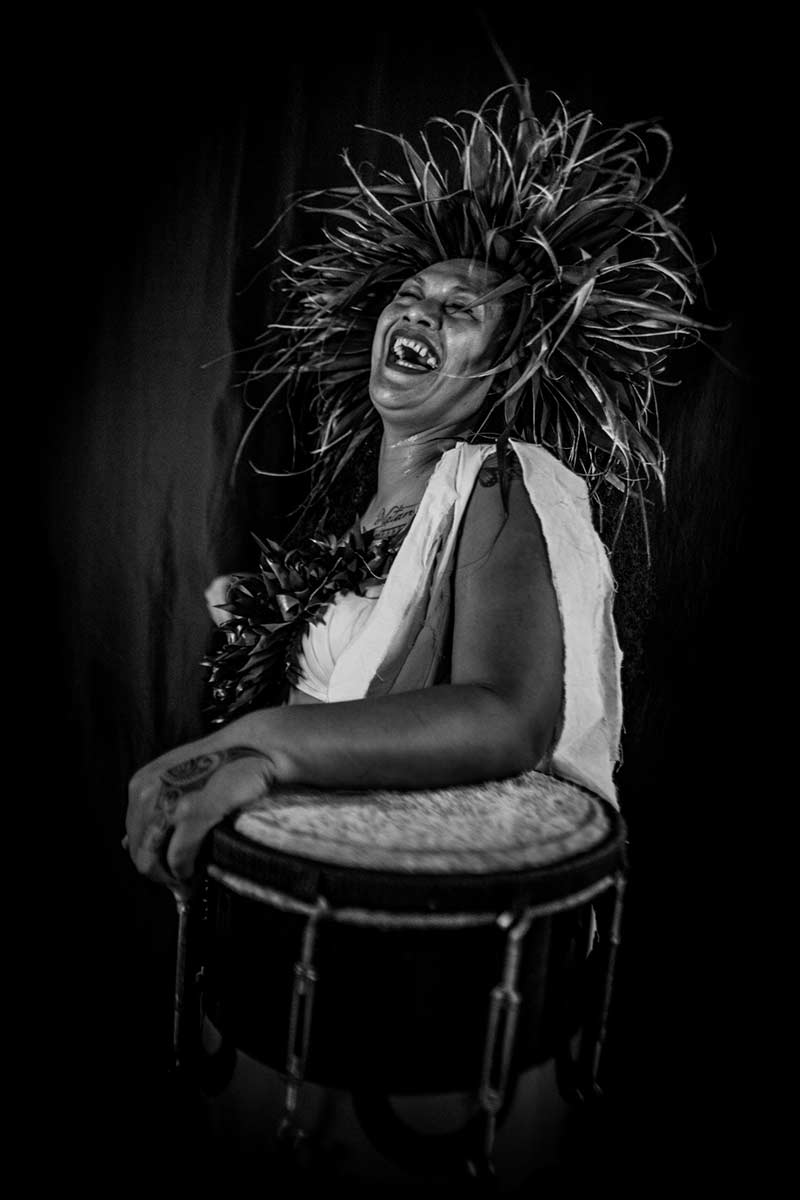
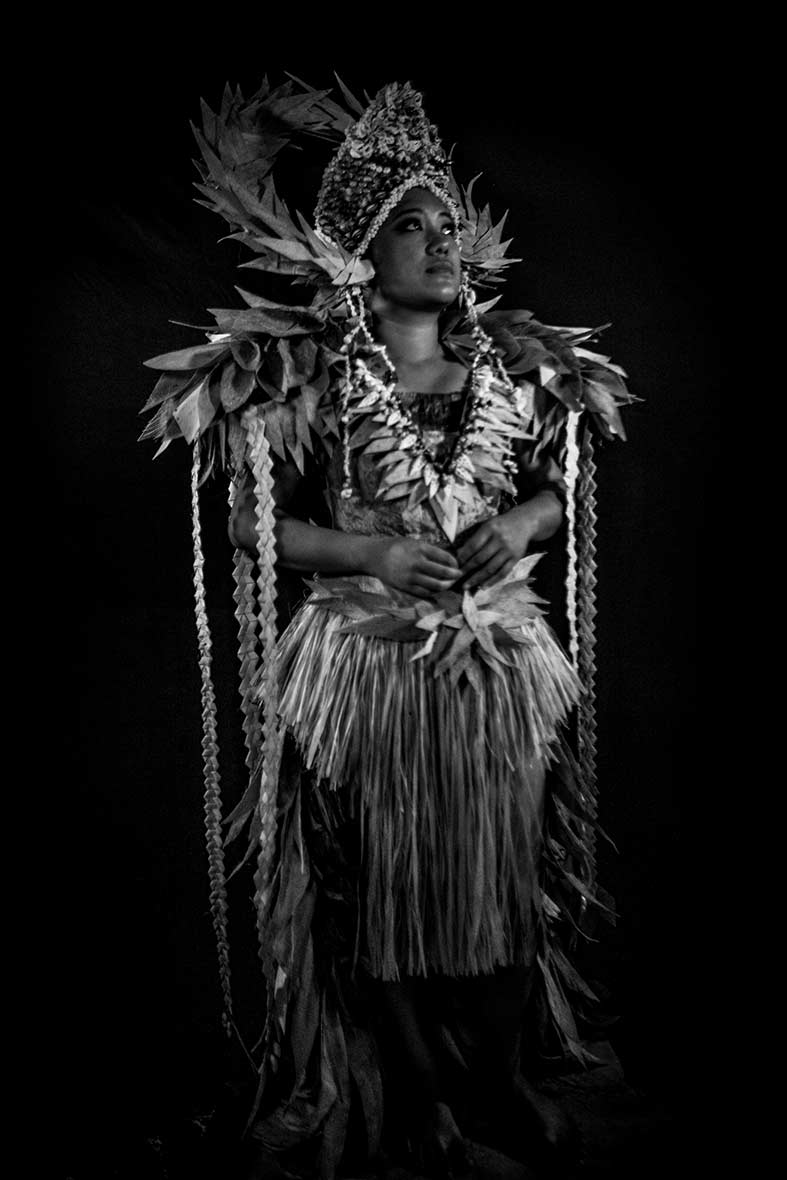
Right: Portrait-‘Iripa’-bora bora-polynesie francaise.
Grégory Boissy and Delphine Barrais
© All rights reserved.
Grégory Boissy
I first arrived in French Polynesia in 1994 and settled there permanently in 2006. My work is primarily editorial and aimed at the press. I am a founding member of the Paris-based photo agency IP3 PRESS, established in 2005. I served as the photo correspondent for Agence France-Presse (AFP) and Getty Images in Polynesia from 2006 to 2019. I worked as a photographer for ‘Les Nouvelles de Tahiti’ from 2006 to 2014. I contributed to ‘Tahiti Pacifique’ magazine in 2015–2016 and again from 2020 to 2023.
I also worked as a photojournalist for the ‘Tahiti Infos’ news outlet from 2020 to 2023. Since 2006, I have collaborated with the in-flight magazines of Polynesian airlines Air Tahiti Nui and Air Tahiti, as well as with Tahiti Tourisme, the tourism magazine ‘Honuatere’, and the vocational training magazine ‘Hono’ite’. Today, I focus on long-term projects in Polynesia and across the Polynesian Triangle.”
- Grégory Boissy. Photographer
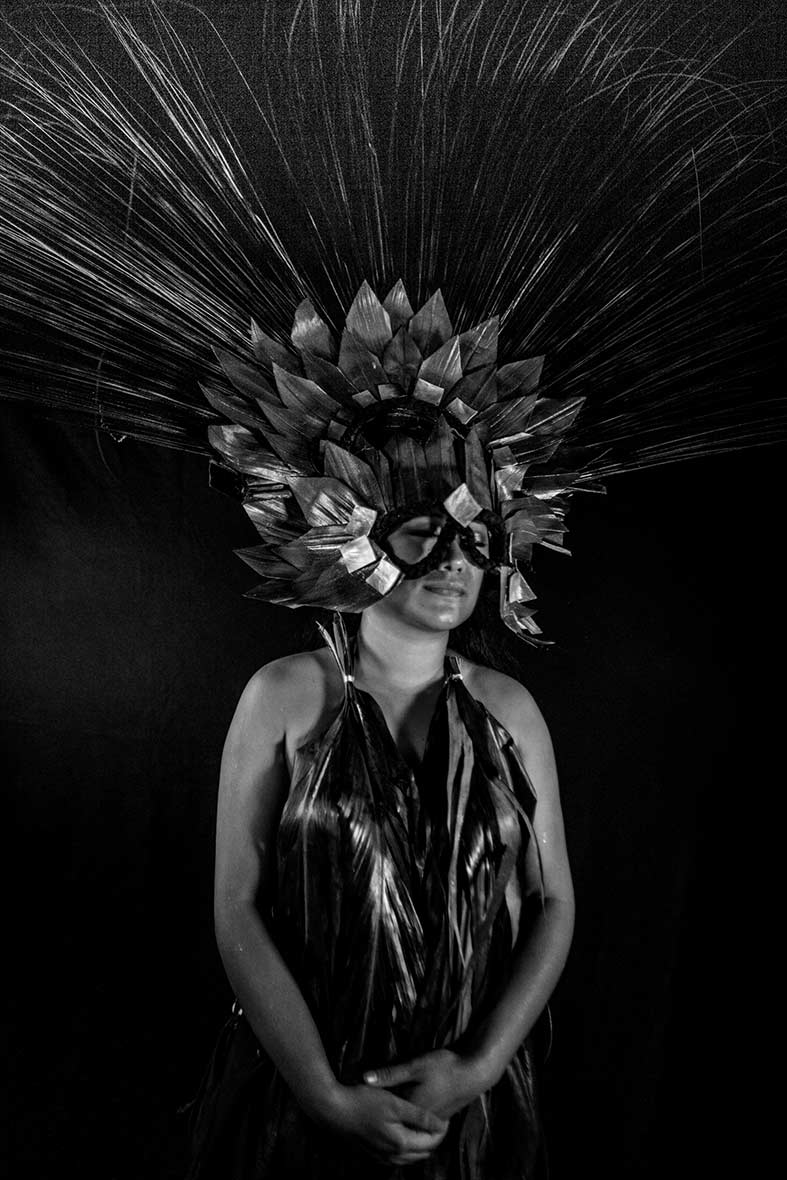
Right: Portrait-‘hi’oraa papû’-iles australes-rapa-polynesie francaise.
Grégory Boissy and Delphine Barrais
© All rights reserved.
Delphine Barrais
I have been a freelance journalist since 2002. Based in Paris for ten years, I worked for both specialized (scientific) and general-interest media, regularly reporting from Asia and Africa on social issues.
Since 2012, I have been based in Polynesia, working for local and national media outlets (print and radio). Alongside this, I launched a business as a family biographer.
I prefer to produce in-depth reports, working in the field as part of a duo with a photographer to gain a broader perspective and the most comprehensive view possible of the subjects covered.”
- Delphine Barrais – Co-author
Grégory Boissy and Delphine Barrais
© All rights reserved.
Aesthetically, black and white plays a prominent role in the signature style of Grégory Boissy. By eliminating color, the attention is focused on the textures, the light, the texture of the skin, and the intensity of the looks, giving the faces and scenes of everyday life a timeless and memorial quality. Influenced by the great figures of Humanist photography, his tonal treatment favors assertive contrasts which strengthen the anchoring in reality.
Grégory Boissy and Delphine Barrais
© All rights reserved.
A Vibrant Archive of the Contemporary World
Grégory Boissy and Delphine Barrais have developed a visual approach that goes beyond mere aesthetic capture, immersing itself in the social and cultural reality that surrounds it. In this documentary series, the camera becomes a bridge through which to deconstruct the exoticized representations of an Instagrammed, overexposed, and distorted world.
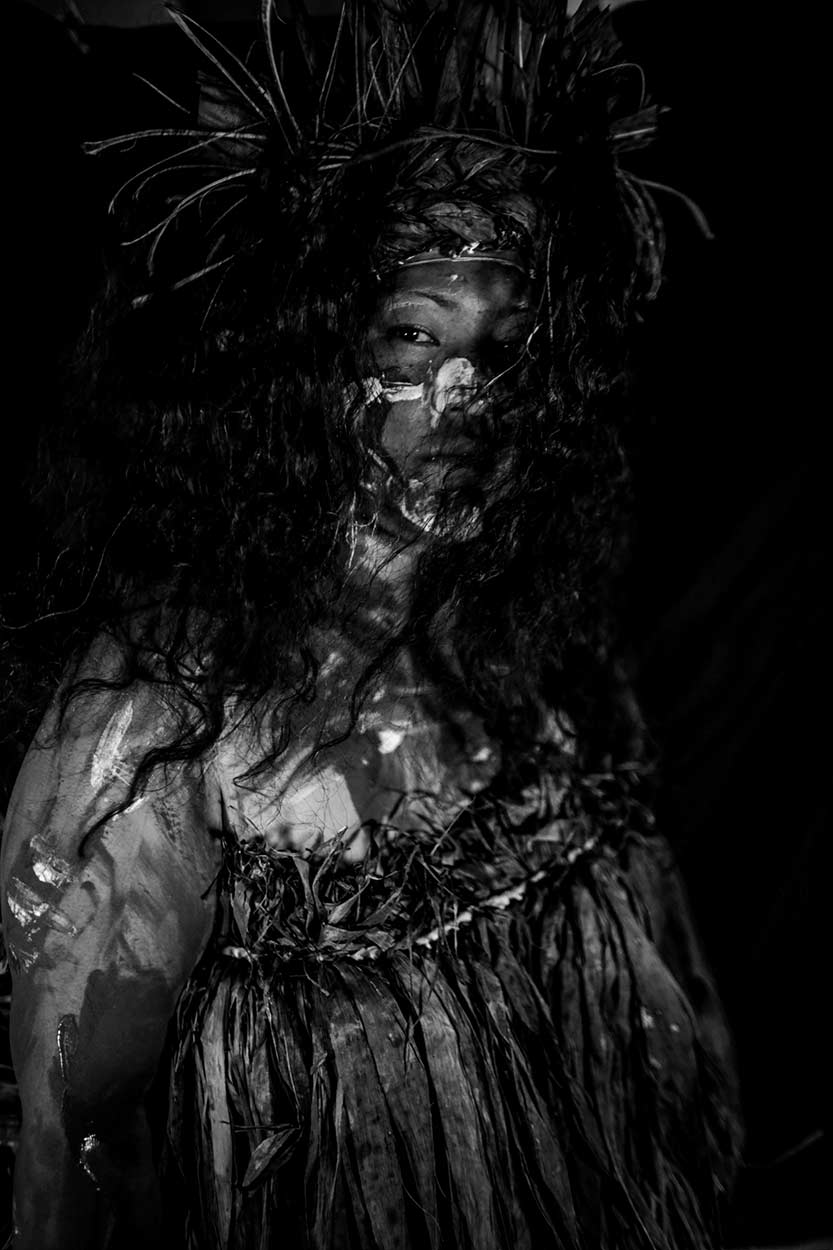
Black and white is a way of looking beyond the surface. By removing color, the image focuses on what is essential: textures, materials, gestures, gazes, and details. Contrast reveals what lies behind appearances — the intensity of emotions and the strength of bodies.
Black and white thus offers another way of seeing Polynesia, a more intimate perspective in which light and shadow become witnesses to emotion. Favoring time, patience, and respect for communities, the duo offers a vibrant, deeply humanist visual archive of the contemporary world.
Grégory Boissy and Delphine Barrais
© All rights reserved.
Grégory Boissy and Delphine Barrais
© All rights reserved.
A Living Culture
Grégory Boissy and Delphine Barrais are the living witnesses of a deeply vibrant culture that cannot be reduced to folklore. Behind every costume lie hours of work: imagining, gathering, weaving, assembling. Some costumes require up to a week to prepare.
In Polynesia, every performance is unique. The theme, music, song lyrics, and choreography are constantly reinvented. Months of rehearsals may precede a performance that lasts only an hour.
These portraits are therefore not simply about showing artists in costume. They make visible the gestures, emotions, commitment, and transmission that lie behind the stage.
This documentary project exploring the cultural expressions of the Polynesian islands is still ongoing. Further photographic sessions are planned in the Tuamotus, in Rangiroa, and in the Marquesas, on Hiva Oa, on the occasion of the 30th anniversary of Matava’a in December 2027.
The project will then extend across the Polynesian Triangle, a vast geographical and cultural region of the Pacific Ocean defined by three points: Hawai‘i to the north, Aotearoa (New Zealand) to the west, and Rapa Nui (Easter Island) to the east.
Grégory Boissy and Delphine Barrais
© All rights reserved.
Instagram: @tefarereiraa_larencontre
project website: tefarereiraa-larencontre.pixpa.com
Gregory Boissy | @gregory_boissy | www.gregoryboissy.com
Delphine Barrais | @one_minute_lost_in | ginkio.com/delphine-barrais