
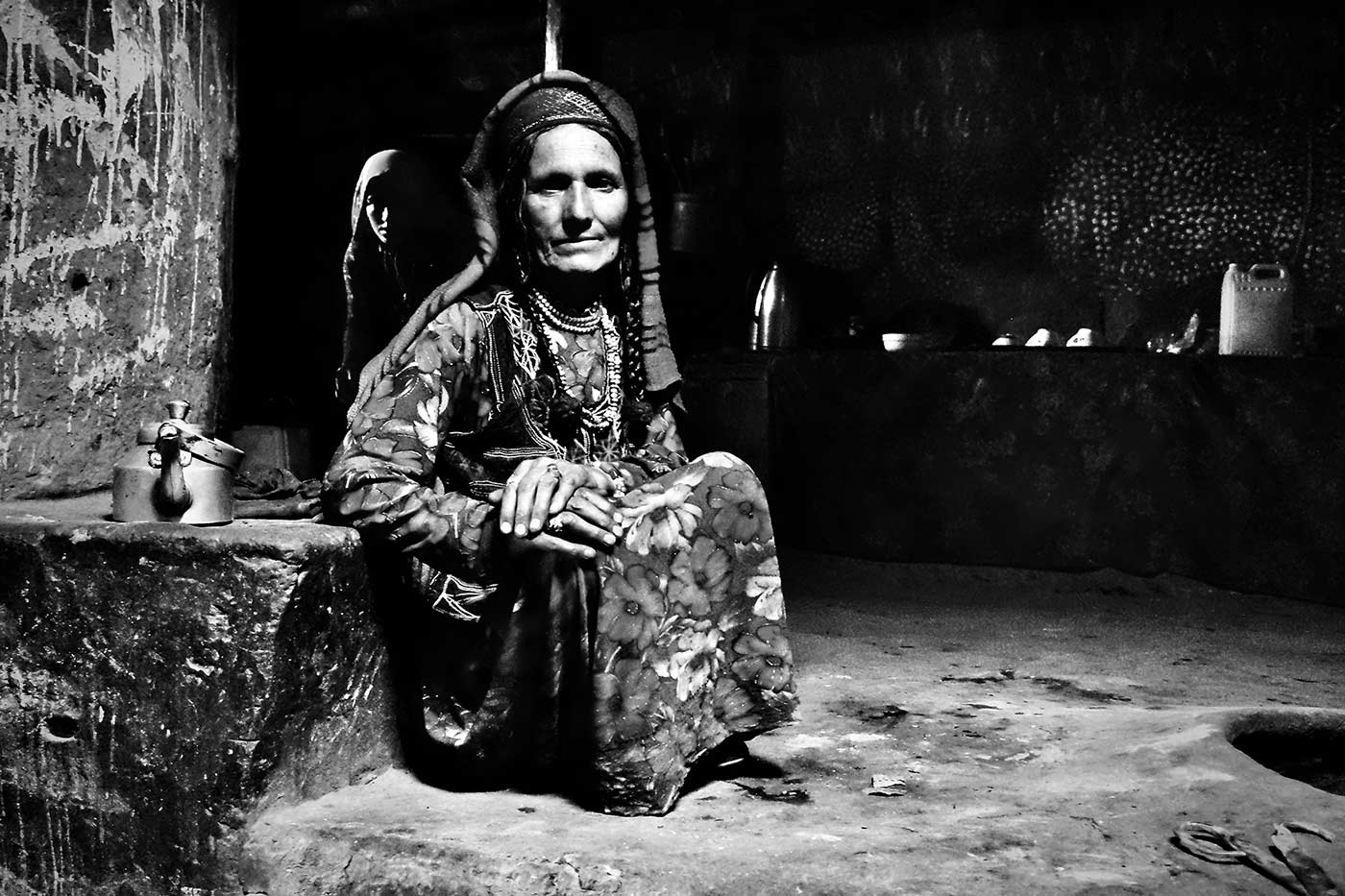
Inside Wakhi Houses
By Holger Hoffmann
Holger Hoffmann © All rights reserved.
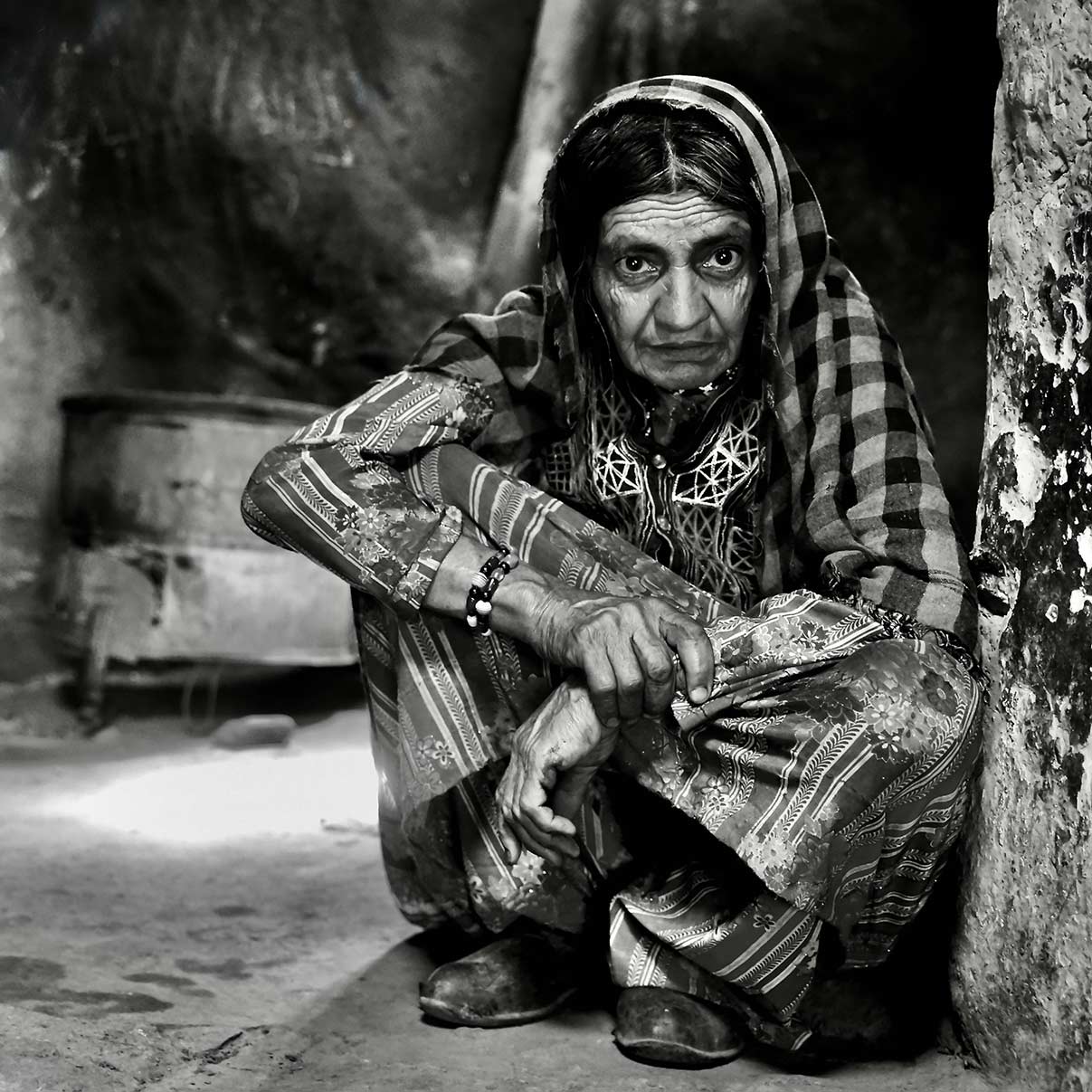
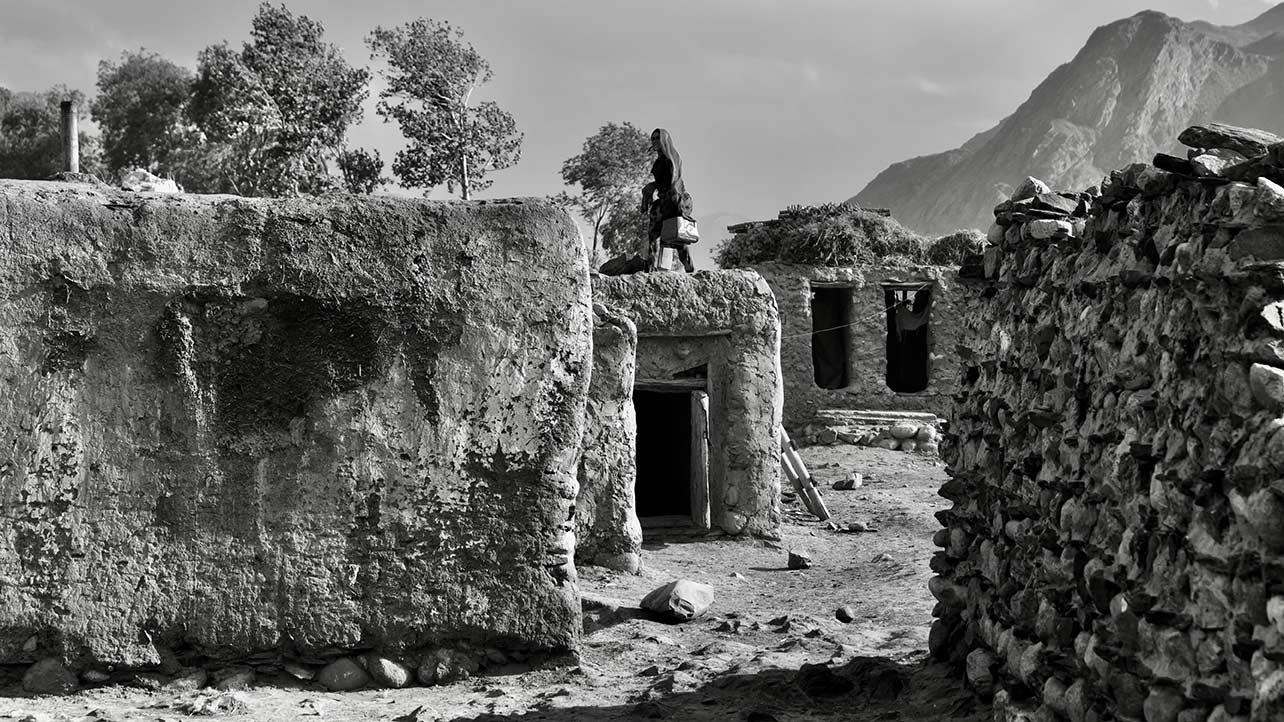
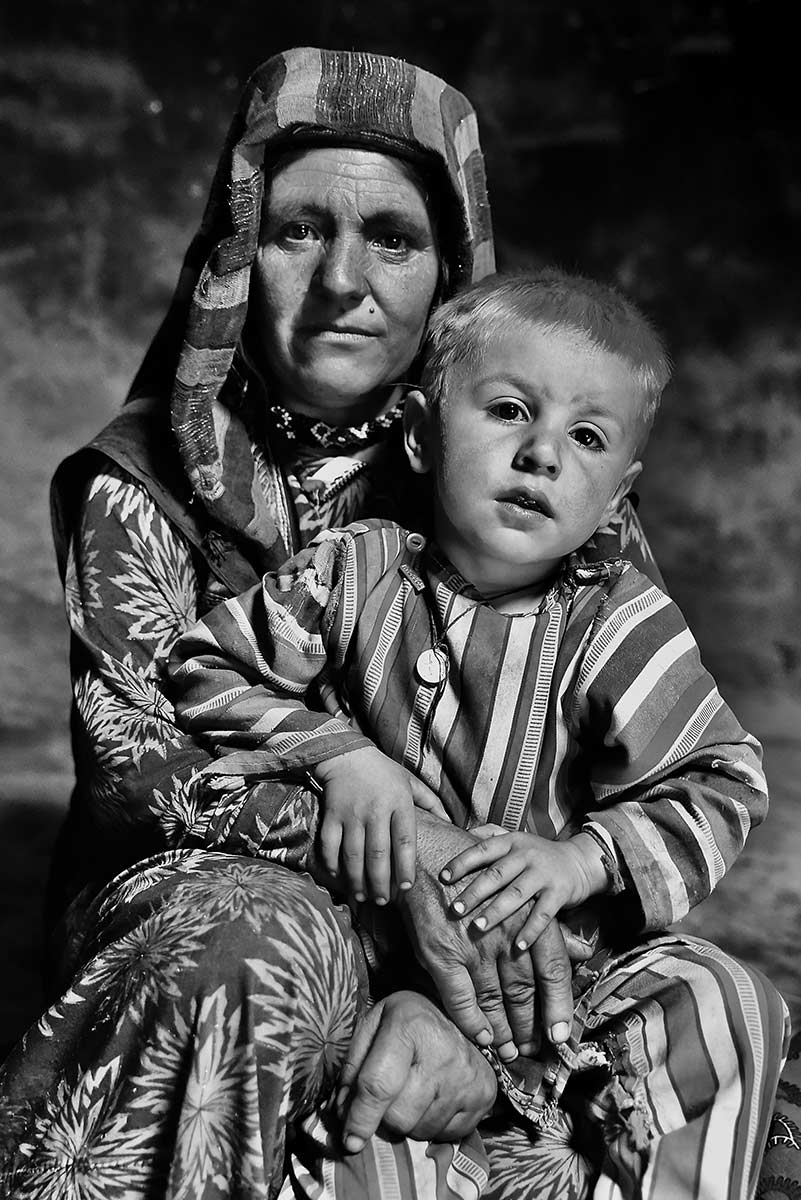
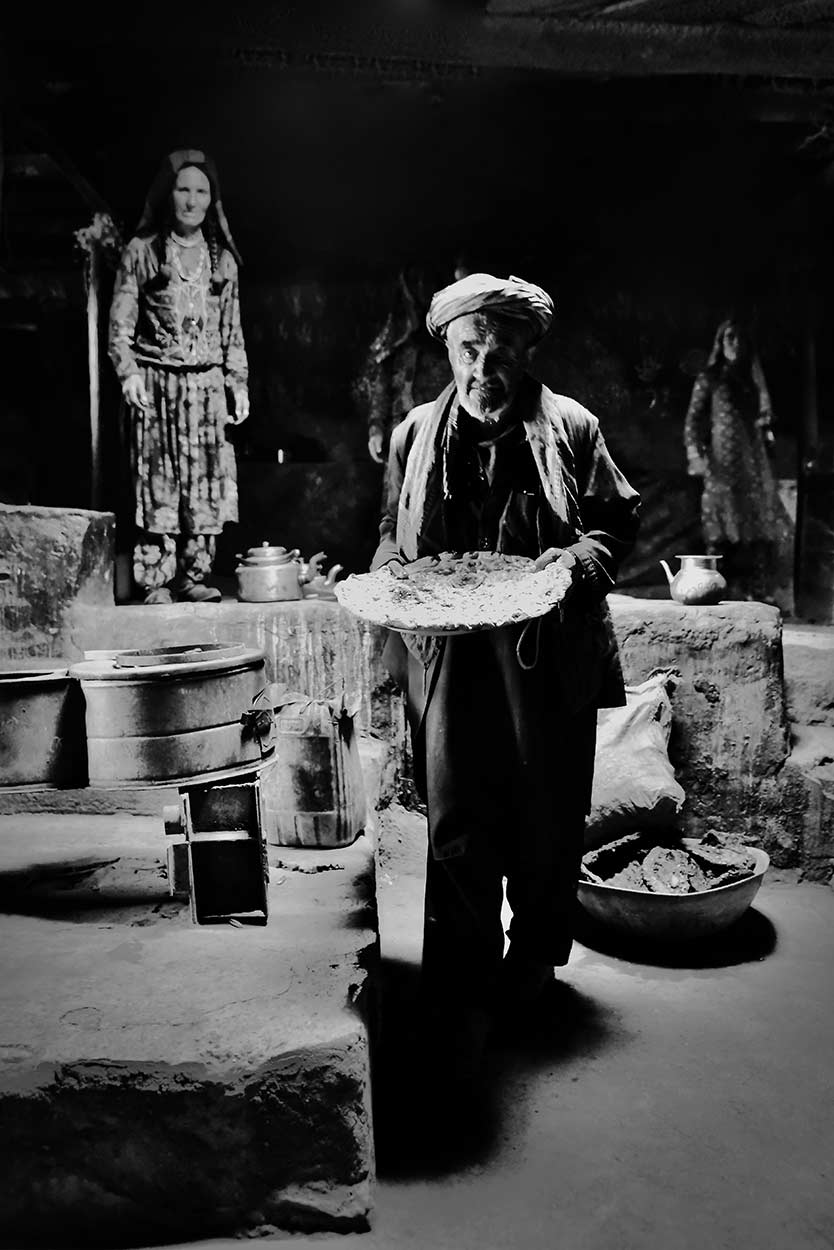
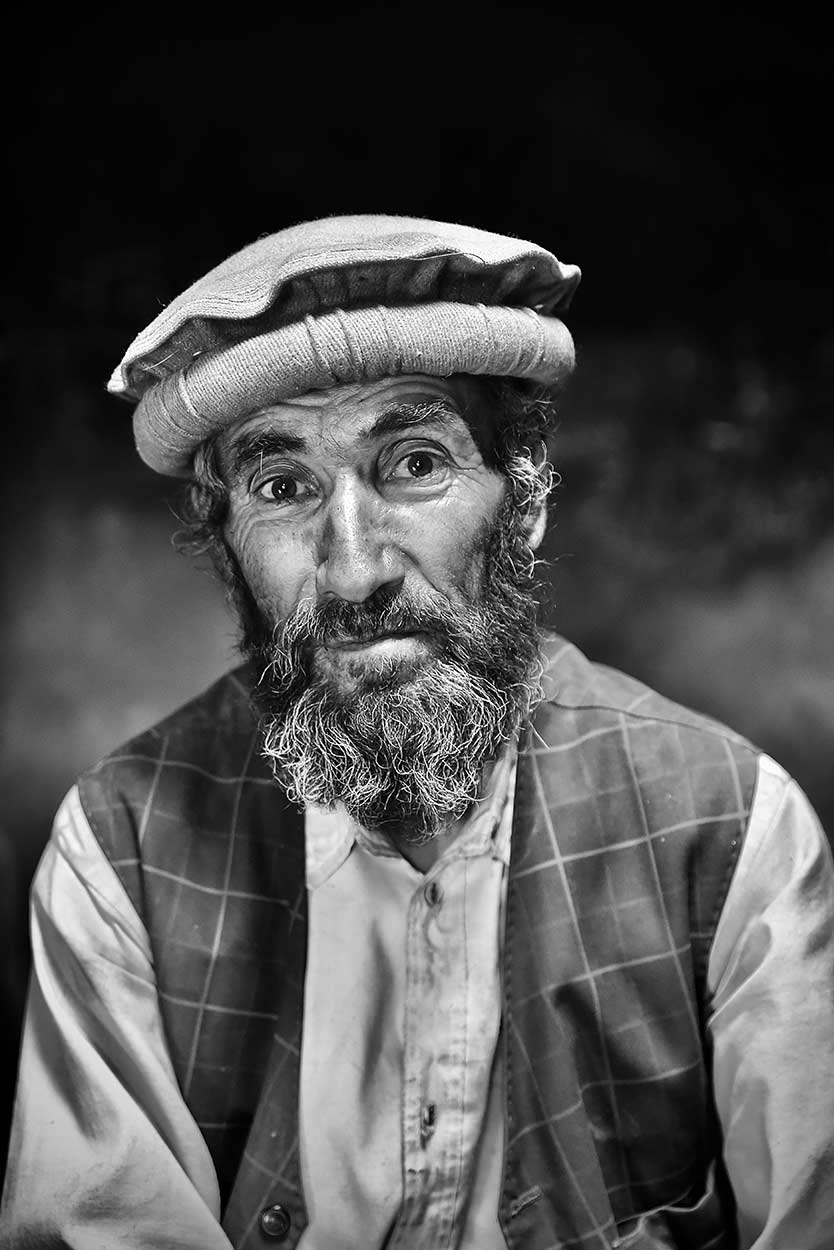
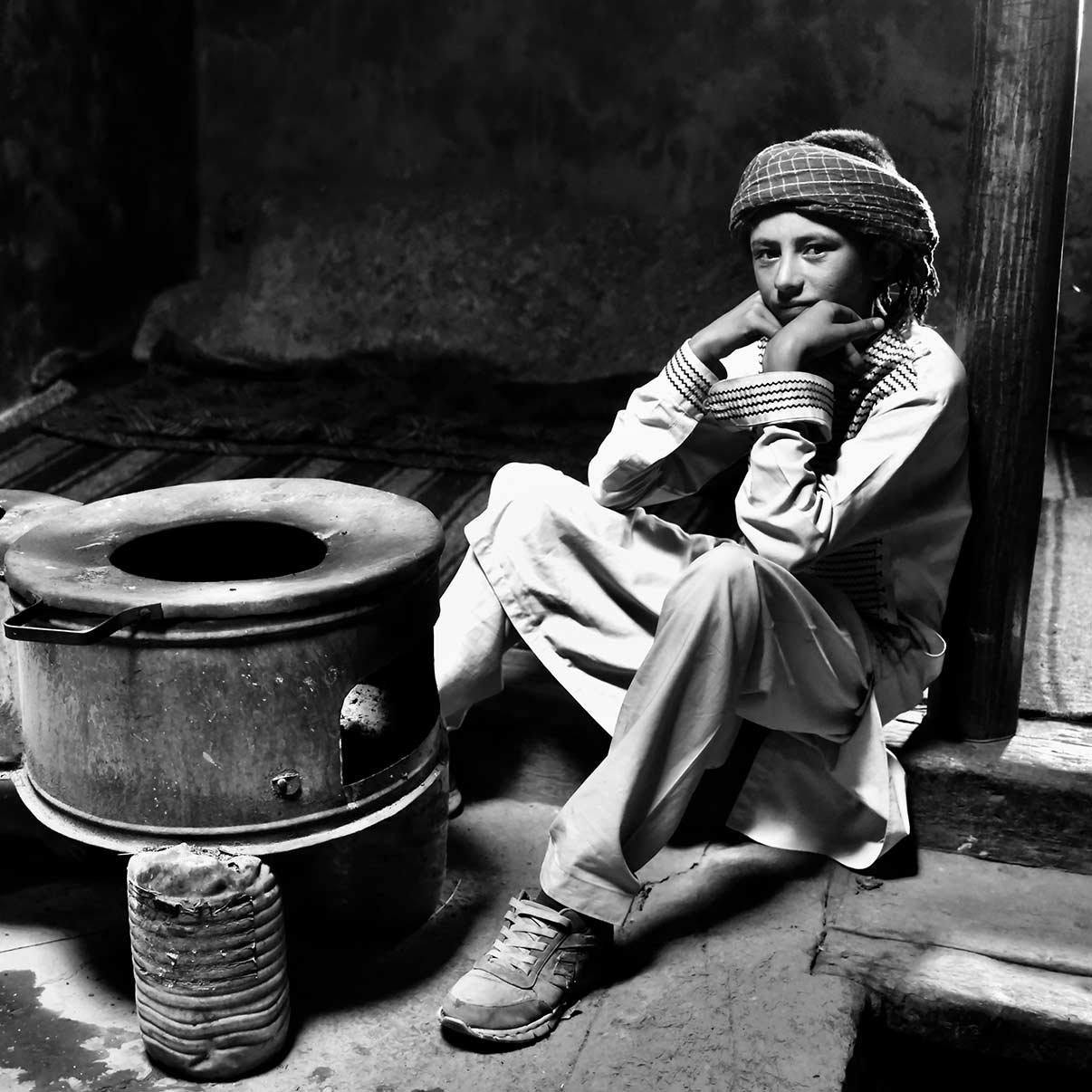
The Afghan Wakhi people call traditionally built houses “Chid.” What makes them special is that they are largely windowless. The only light comes through a skylight in the central room’s ceiling. This helps to keep the room warm in winter and cool in summer. Some of the houses are over 100 years old.
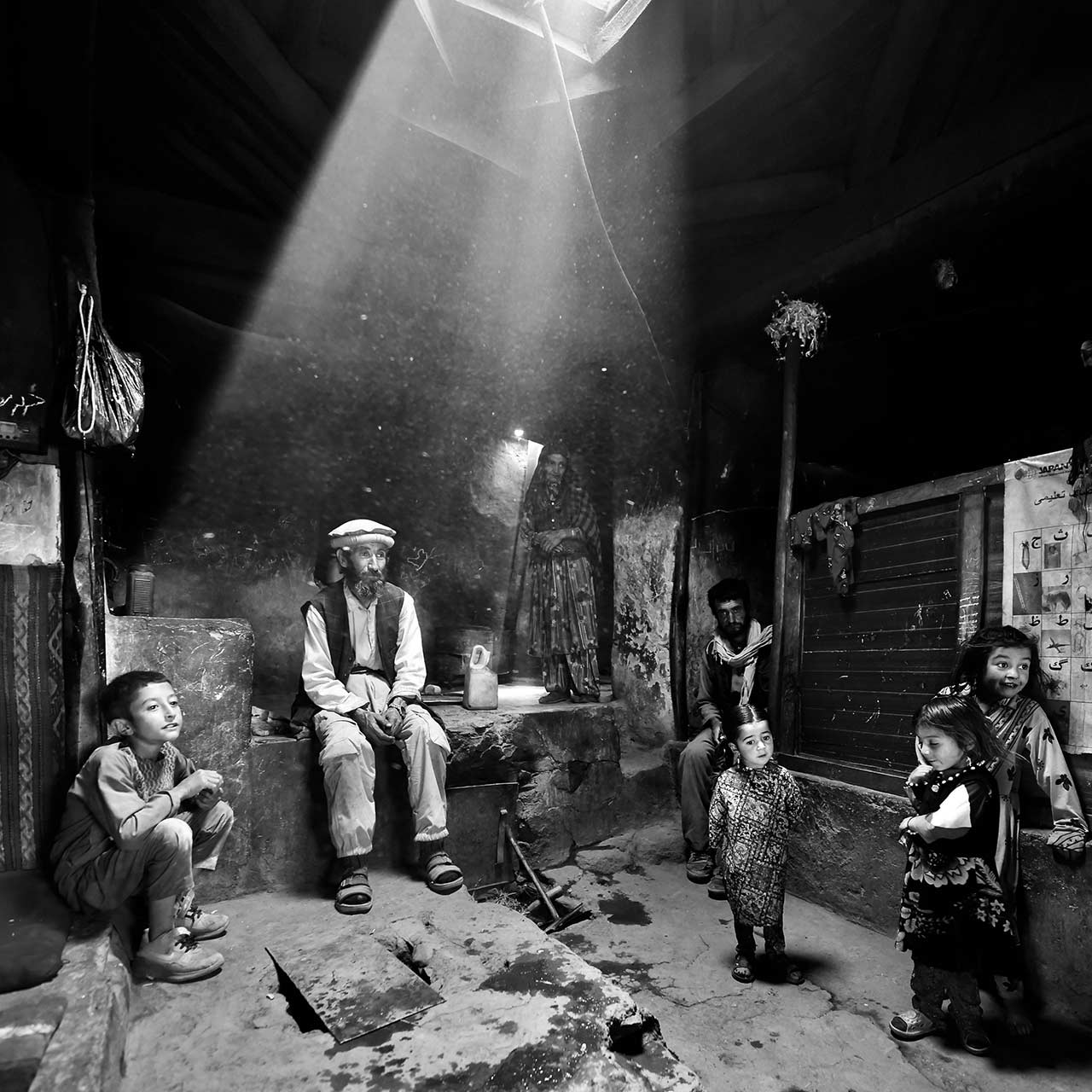
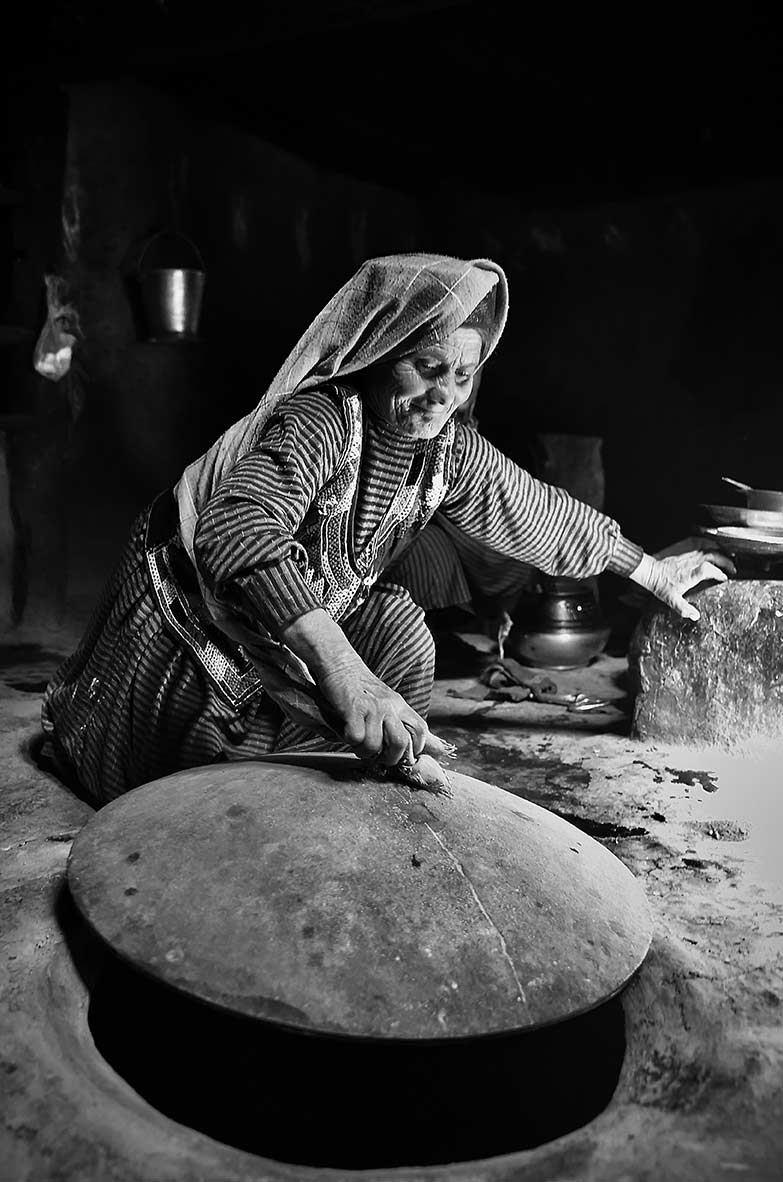
To enter the central room, I have to lower my head and feel my way through a dark, narrow, winding corridor. Then I step through the door and find myself in the large, square room, blinded by the light bundled into a beam. At the front is a stage-like platform, the kitchen, and thus the women’s domain. On the sides are platforms covered with carpets, blankets, and pillows, used during the day for sitting and eating and at night for sleeping.
Holger Hoffmann © All rights reserved.
The Wakhi culture is strongly influenced by pre-Islamic Zoroastrianism (in which the seven elements of creation—humans, animals, plants, soil, fire, air, and water—play a pivotal role) and the affiliation with the Shiite religious community of the Ismailis. The entire house is filled with Zoroastrian and Ismaili symbolism, such as the five large wooden pillars that support the roof. They represent both the five Zoroastrian gods and the five members of Ali’s family: Muhammad, his son-in-law Ali, Muhammad’s daughter Bibi Fatima (Ali’s wife), and their sons Hassan and Hussein.
The skylight is a wooden structure with four concentric, square, box-like layers representing the four Zoroastrian elements: earth, water, air, and fire. The carvings on the ceiling beams also have specific meanings. On “Nouruz,” the New Year and Spring Festival, the walls are decorated with figures and ornaments using willow wreaths dipped in flour.
Holger Hoffmann © All rights reserved.
For the Wakhi, the willow symbolizes new life because, in spring, it is the first tree to awaken from a long sleep. On the pillars, I see bunches of wheat ears, which are placed there at the beginning of the harvest to pray for a bountiful harvest.
Holger Hoffmann © All rights reserved.
Inside Wakhi Houses
Holger Hoffmann © All rights reserved.
Holger Hoffmann
Right: Inside Wakhi Houses
Holger Hoffmann © All rights reserved.
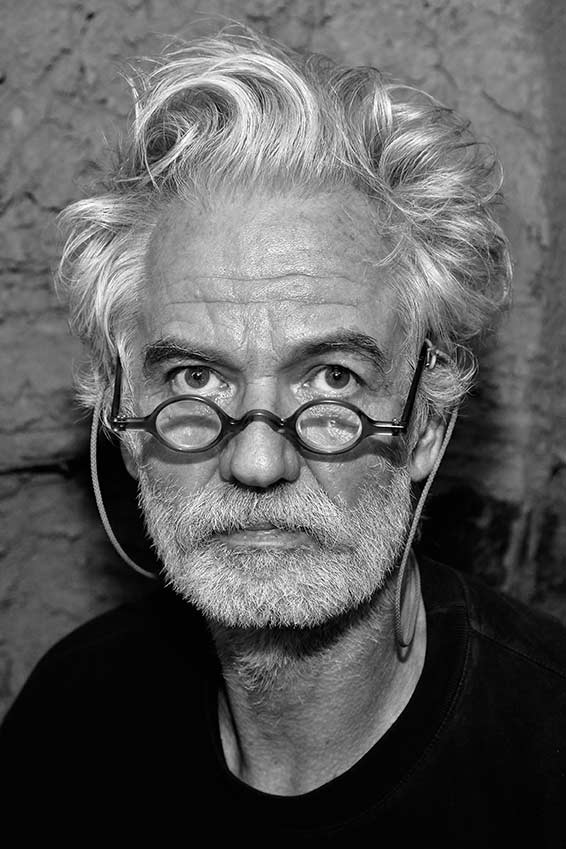
Holger Hoffmann is a Swiss travel and documentary photographer. He and his wife, Sylvia Furrer, have already traveled to 110 countries. The longer they travel together, the more fascinated they become by the customs and everyday life of the indigenous people who preserve their traditional culture. They deeply respect these people, who live in remote areas under harsh conditions, such as the extreme cold of Siberia, the hot desert of the Danakil, the humid jungles of West Papua, or the high altitude of the Himalayas. Nomadic peoples have become a major focus of their recent travels.
Holger Hoffmann has published travel and photo reports in various magazines.
Holger Hoffmann © All rights reserved.
email: info@chaostours.ch
Visit: chaostours.ch
instagram: @chaostours.ch
@chaostours.ch_bw